
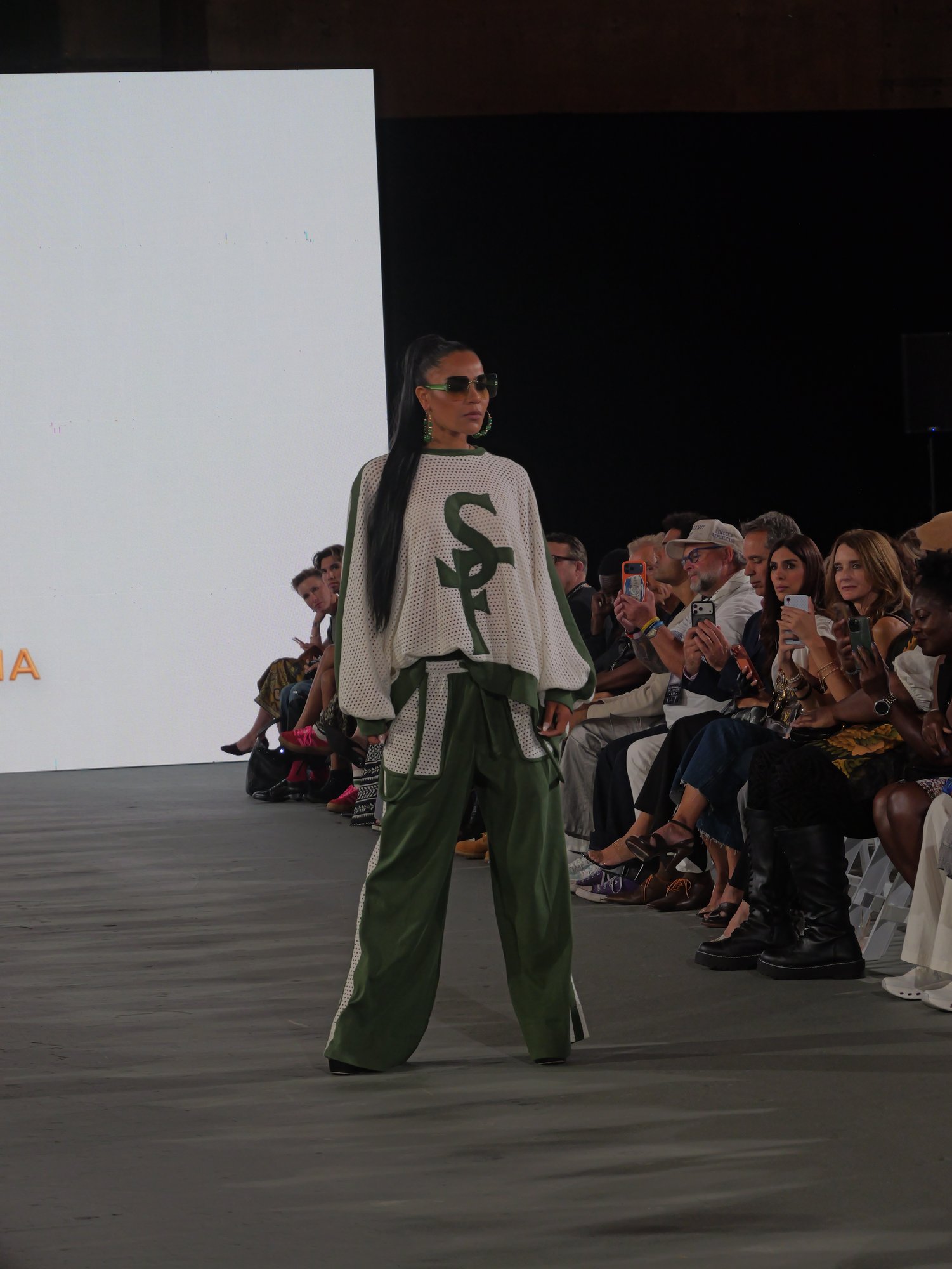
Who pays for a fashion week, who gets paid, and what Ford Models co-founder Eileen Ford's standard still asks of the industry, with the Bureau's LA Fashion Week as a worked example.
A fashion week is a run of shows where designers present collections to press, buyers and, at some events, ticket-buying guests. Behind every runway is a business: someone pays for the room, the light and the models, and the people doing the work don’t always get paid. This explainer covers that business at industry level. It uses the Bureau’s LA Fashion Week (Oct. 16–18, 2026, The Lot Studios, West Hollywood) as a worked example and the career of Ford Models co-founder Eileen Ford (1922–2014) as a yardstick. Company figures are labeled as the company’s. Our estimates show their arithmetic.
Formats
- Calendar weeks. Designers produce their own shows, often in their own venues. A 2019 Vogue Business breakdown put a New York show at $125,000 to more than $300,000, before samples.
- Platform or pay-to-show weeks. A producer rents the venue, runs production, supplies models and hair and makeup, and sells designers a package. Many also sell public tickets. The Bureau describes its weeks as “built from the ground up for a public audience” (event page).
- “Fashion Week”-labeled events. Plenty of shows use the name without belonging to any official calendar. BuzzFeed’s 2022 reporting found models at several of them paid little or nothing.
Practically endemic to the industry, especially for girls just starting out.
The New Republic, 2019, on payment in trade
Who pays
Nobody pays the press. Press get access in exchange for coverage.
What a show costs
Christian Siriano’s New York budget, as reported by Vogue Business in 2019:
An emerging label in the same article spent about $155,500 on its show, plus $150,000 on samples. Siriano on return: “it’s really hard for them to see actual return.”
The labor
- Models are usually independent contractors with no union (BuzzFeed). At “NYFW”-labeled shows in 2022, reported pay ran from nothing (a dress, or “exposure”) to a few hundred dollars. One model was paid $120 for a show and spent about $200 getting there.
- Trade. Payment in clothes is “practically endemic to the industry, especially for girls just starting out,” The New Republic reported in 2019. A $1,500 rate paid in trade “can amount to a single dress.”
- Hours. Models describe call times like “10 a.m. for a 5 p.m. show,” plus fittings the day before (BuzzFeed). The Bureau says a single runway runs 15–20 minutes and a multi-designer session one to two hours. Our estimate: seven to nine hours of a model’s day for 15–20 minutes on the runway, based on those reported call times.
- Late pay. In a 2020 Model Alliance survey of 212 working models, 55% were owed money by clients and about 30% had waited more than 90 days (Cornell ILR).
- Event staff are employees and get the local minimum wage. In West Hollywood that is $20.25 an hour for non-hotel employees in 2026, rising to $20.94 on Jan. 1, 2027 (City of West Hollywood).
- Hair and makeup crews are often unpaid or sponsor-paid at smaller shows. “It’s very standard to be unpaid for shows,” one hairdresser told BuzzFeed.
Agencies and commission
- Before Ford, agencies found work, but models “were expected to set their own rates and collect their own wages” (Encyclopedia.com).
- Ford Models paid models every Friday and recouped the fees from clients later (The Guardian; The Times). Jerry Ford’s voucher system ended waits of “a year or more to be paid” (NYT, via CNBC). Accounts of the commission vary: a 10% cut from the model (The Times), or 10% from the model plus 10% from the client (Encyclopedia.com). The agency also set fees for cancellations, fittings and bad weather.
- Later, New York agencies reorganized in the 1970s as “management companies,” moving outside the 10% cap that applies to employment agencies. A class action by models against major agencies was “settled at $22 million in 2005” (The New Republic, citing sociologist Ashley Mears).
- Now, in New York, the Fashion Workers Act, in effect since June 19, 2025:
- caps commissions at 20% and bans signing fees;
- requires a deal memo with total pay before work;
- limits contracts to three years and bars automatic renewal;
- requires separate written consent for digital replicas;
- requires clients to pay at least 50% more for hours beyond eight in a day. It is New York law. In California, modeling agencies are licensed under the state’s Talent Agencies Act.
Press and photographers
A press credential is access, not income. At the Bureau, photographers in the media pit must deliver edited, high-resolution work within seven days of the show or risk being barred from future events. Photographers earn from the pictures afterward: licensing to outlets, selling selects to designers and models once usage is cleared, and new clients.
The Ford standard
The NYT wrote that Eileen Ford “influenced standards of beauty for more than four decades.” Her standard had four parts. The first three still hold. The fourth is history.
What the Ford standard asks of a 2026 fashion week: pay people on time, and tell them the rate before they work; protect the youngest; set rules for clients, not only models; judge talent on presence and craft. Leave the body rules behind.
Worked example: the Bureau’s LA Fashion Week, October 2026
- Producer: The Bureau Fashion Week, co-founded by Krissy King and Brady King. The company says it produces weeks in New York, Los Angeles and Paris, and its FAQ also lists Miami Swim Week.
- Venue and schedule: The Lot Studios, 1041 N. Formosa Ave., with five shows across Oct. 16–17. Seven designers were listed for the 6 p.m. “The Opening”: Susan Kim, Dimez, Deborah Beaumont Designs, Krown Kink, X-X Co., Sewreffic and Saint Fortuna.
- Prices (company figures): runway packages $5,000–$35,000; General Admission tickets $72.95.
- Attendance (company figures, unverified): “12,000+ guests per event” on one Bureau page, “3,500-15K average attendees per event” on another.
- Our estimate, designer fees for the Opening: $35,000 (7 × $5,000) to $245,000 (7 × $35,000), only if every listed designer paid list price. Discounts, bundles and shared sessions aren’t public.
- Our estimate, tickets: about $7,300 gross for every 100 General Admission seats sold. Seat counts aren’t public.
What isn’t public
Real attendance, the fees designers actually paid, sponsor deals, whether and how models were paid at the Bureau, staffing levels, and the cost of the stage.
Nightlife Report covered the Bureau’s LA Fashion Week from the media pit. Read our Day 1 report.