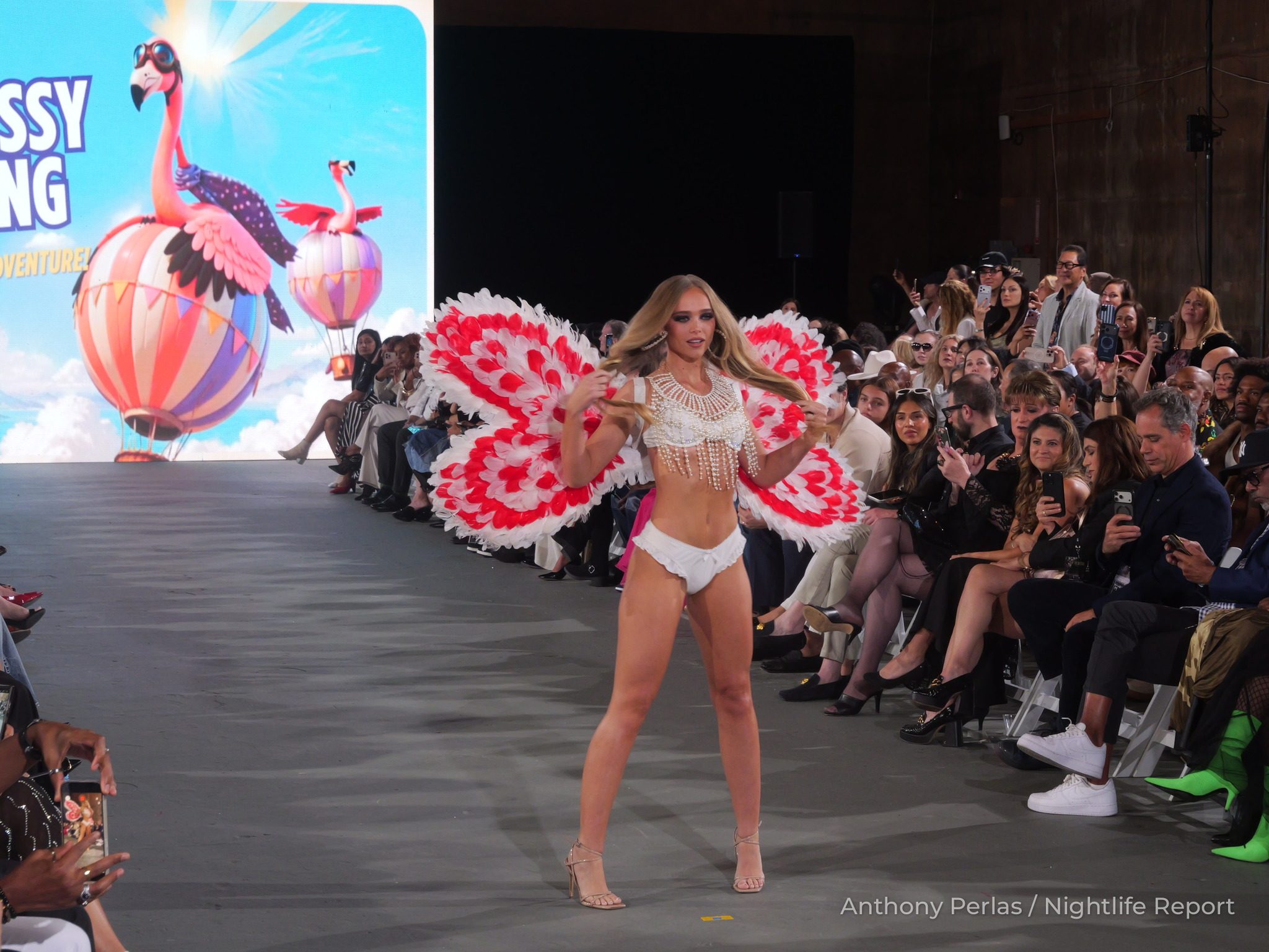
A couple with a phone, a voucher system and a very strict curfew built an empire. Then a rival from Paris kicked down the door. Now the scouts live in your feed. Here’s how the beauty business got from Ford to Formosa.
By Anthony Perlas, Correspondent, Nightlife Report
nightlifereport.app · Instagram: @perlasunum · @lillithmagic
Oct. 17, 2026
WEST HOLLYWOOD, Calif. — Every model who hit the Bureau runway Friday night walked into a business with a 80-year-old blueprint. Who drew it? A Barnard grad and her husband, working out of Manhattan in 1946. And the fights over that blueprint — who gets signed, who gets paid, who gets to be called beautiful — are still playing out under the lights in LA.
1946: the Fords open the book
Ford Models was founded in New York in 1946 by Eileen Ford and her husband, Jerry Ford. (Ford Models, Wikipedia; The New York Times also uses 1946.) Some obituaries date it to 1947, including The New York Times’ own 2014 obituary of Eileen Ford, so you’ll see both years in print.
Before the Fords, the deal was rough. “Agencies found work for their models, but the models were expected to set their own rates and collect their own wages,” says Encyclopedia.com’s biography. (Encyclopedia.com) Jerry Ford changed the plumbing: per The New York Times obituary, he set up “a voucher system, which allowed them to be paid in advance,” at a time when “models often had to wait a year or more to be paid.” (NYT obituary, via CNBC)
The Ford standard, the good and the brutal
Eileen ran the eye. Jerry ran the books. “Jerry ran the agency. I was good at selling and picking the models,” she told Tim Teeman of The Times in 2012, and when asked what she saw in a future star: “I always said it was an X factor. They just had it.” (Tim Teeman / The Times)
Insiders also remember the house rules: the AP reported she “demanded the highest level of professionalism from her models, putting them on strict diets and firing those with a taste for late-night revelry.” (AP obituary via Legacy.com) Young models lived with the family, and the Times obituary quotes her telling Forbes: “I don’t ever want to tell a mother I don’t know where her daughter is at 2 a.m.”
And the dark side is on the record too. The AP described the typical Ford woman as “tall, thin, often blond,” and said Ford told hopefuls under 5 foot 7 to give up. By the 1990s her standards were seen as “slightly outdated in a multicultural-embracing United States,” per American Photo as quoted by Encyclopedia.com. At Nightlife Report, we borrow the professionalism and the X factor. We leave the body rules in the history books.
1967: Wilhelmina breaks ranks
Plot twist: one of Ford’s own models opened shop across town. Wilhelmina Cooper founded Wilhelmina Models in New York in 1967 with her husband, Bruce Cooper. (Wilhelmina, Our Legacy; Britannica) Vogue says she founded the agency “with the goal of embracing a broader range of looks,” and credits it with launching the careers of Naomi Sims and Beverly Johnson. (Vogue)
1977: the Model Wars
Then came Paris. John Casablancas founded Elite in Paris in 1972 and opened Elite New York in 1977. (Elite, About) Time reported he arrived “despite an unwritten agreement that he would not set up shop in the U.S.” and raided Ford’s stars; the Fords filed a $7.5 million suit and Wilhelmina sued for $4 million. (Time) The Times called it the “Model Wars.” (The New York Times)
Who won? The models’ bank accounts, at least for a while. “Our rates have doubled and things couldn’t be better,” Beverly Johnson said at the time, as quoted by The Independent. “It’s the agencies that are at war.” (The Independent) Casablancas’ version: “We did it by making the models celebrities.” (same source)
The money fights never fully ended. A 2000s antitrust suit, Fears v. Wilhelmina, with Ford among the defendants, challenged agencies’ commissions; plaintiff Carolyn Fears told the Los Angeles Times, “I look at it as a 40% commission.” (Los Angeles Times, 2002) The New Republic later reported, citing sociologist Ashley Mears, that the case “settled at $22 million in 2005.” (The New Republic)
The scouts move into your phone
Eileen Ford followed women down the street. Today’s scouts follow hashtags. IMG Models launched its We Love Your Genes program on Instagram in 2014, and by 2020 an IMG executive told Fashionista that about a fourth of its recruitment over five years came through social media — before the agency sent scouts to TikTok. “You get to see a lot of personality. When you’re looking at a video it’s so different,” said Jeni Rose, SVP at IMG Models. (Fashionista)
Ford itself changed hands: Stone Tower Equity Partners took a stake in 2007, and Ford Models Brasil bought the agency in 2020, per its Wikipedia entry. (Wikipedia)
LA’s big fight: classic beauty vs. the new casting
This section frames an industry and cultural debate. It makes no claim about any individual’s views or politics.
Here’s the tension you can feel in any LA front row. One camp wants the classic runway: the polished, editorial, Ford-style ideal. The other wants the runway to look like the city outside the soundstage door: every size, age, shade and gender.
The numbers show the shift and its limits. At the Big Four fashion weeks for Fall 2022, theFashionSpot counted 48.6 percent models of color across 4,409 appearances, but only 103 plus-size appearances (2.34 percent) and 23 appearances by models over 50 (0.52 percent). (theFashionSpot) When Victoria’s Secret brought its show back in 2024 after canceling it in 2019, it cast plus-size and transgender models — and critics still debated whether the change went deep enough. (NPR; Vogue)
Independent producers sit right in the middle. The Bureau’s co-founders told L’Officiel Monaco their business began with “a shared belief that Fashion Week could become more inclusive, more immersive, and more meaningful,” asking: “Why couldn’t Fashion Week be both prestigious and accessible?” (L’Officiel Monaco)
Nightlife Report analysis: LA doesn’t have to pick a side. The Ford standard’s best parts — discipline, presence, the X factor — aren’t tied to a body type. The fight worth having is over who gets in the door. The fight not worth having is over who deserves to walk once they’re on the runway.
Day 2 is live at The Lot Studios right now: Saturday Afternoon (2:30 p.m.), Saturday Evening (5:30 p.m.) and the 8:30 p.m. Finale, where co-founder Krissy King’s own label is on the bill, per the Bureau schedule. Is the Day 1 board about to get flipped? Our Day 2 scoreboard drops after the Finale. Don’t touch that dial.
Further reading: the Ford lens
- Model Woman: Eileen Ford and the Business of Beauty by Robert Lacey (Harper, 2015). The biography of the Ford Models co-founder. Publisher page · Bookshop.org · About the author (Wikipedia)
- Model: The Ugly Business of Beautiful Women by Michael Gross (1995). A history of the modeling business, Ford, Wilhelmina and Elite included. Publisher page · Bookshop.org · About the author (Wikipedia)
Also: Eileen Ford (Wikipedia) · Wilhelmina Cooper (Wikipedia)
Nightlife Report: nightlifereport.app · blog.nightlifereport.app
Instagram: @perlasunum and @lillithmagic
Labels on this page: “Nightlife Report analysis” marks opinion and prediction. Everything else is sourced and linked, or marked unconfirmed.
— Anthony Perlas, Nightlife Report