
Nightlife Report · History · October 31, 2026
Tonight, millions of people will put on a face that isn’t theirs and walk into the dark. They are keeping an appointment that is more than two thousand years old.
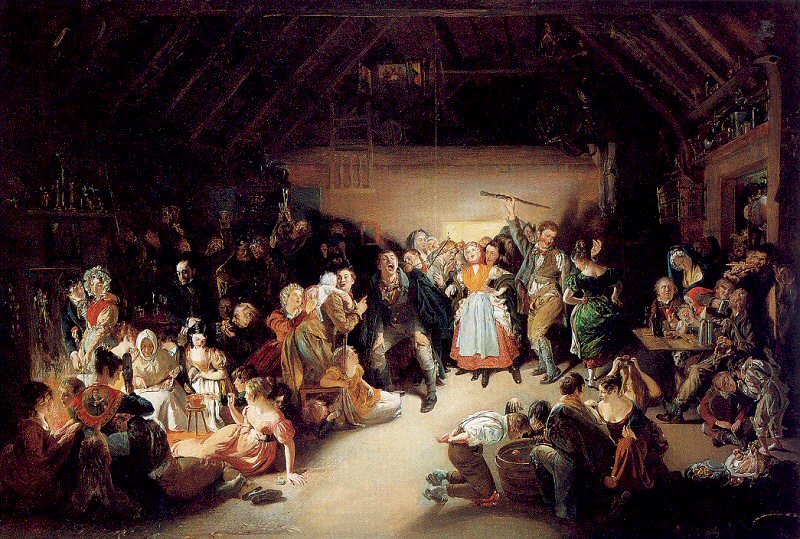
The night the year died
Picture a hill in Ireland at the end of October. The cattle have come down from summer pasture. The last grain is in. The days are shrinking toward winter, and on the hilltop a fire is burning. This was Samhain (pronounced “SOW-in”), the Gaelic festival that marked the end of the harvest and the start of the dark half of the year. Medieval Irish texts describe it as one of the four great quarter-days, a time of feasting, assemblies and bonfires, according to Encyclopaedia Britannica.
Samhain was also the night when the wall between worlds grew thin. Irish tales set their encounters with the aos sí, the people of the mounds, on this night, and families set places at the table for the dead. The idea that spirits walk at the turning of the year is the oldest seed of everything that followed.
Why October 31?
The Celtic day began at sunset, not at midnight. So a festival that belonged to November 1 began on the evening of October 31. That is why Halloween is an eve: we celebrate the night before. The Church would later choose November 1 for its own feast, and the old evening and the new holy day came to share the same calendar square.
What Rome added, and what it didn’t
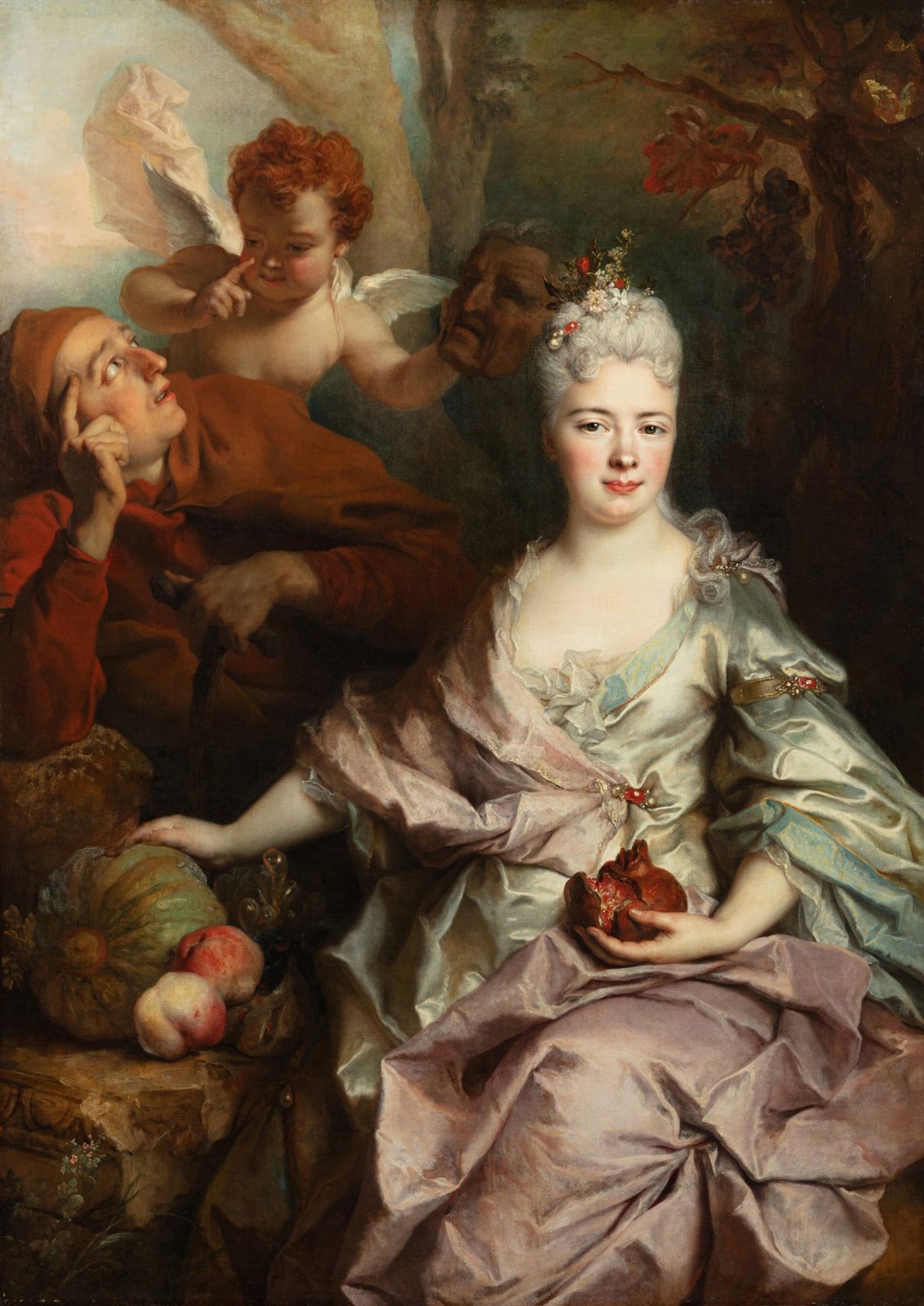
When Rome conquered much of Celtic Europe, its own customs mixed with local ones. Two Roman threads are often woven into the story. The first is Pomona, the Latin goddess of fruit and orchards, honored by the Roman poet Ovid in his tale of Vertumnus and Pomona in the Metamorphoses, Book 14. Her apples are often linked to the apple games of Halloween. The honest note is that no ancient source places a Pomona festival on November 1. The link is a later theory, popular since the 18th century, not a documented fact.
RelatedThe Runway’s Best-Kept Secret Isn’t the Designer
The second thread is firmer in spirit, though not in date. The Romans kept the Feralia on February 21, a public day of offerings at family tombs, which Ovid describes in his Fasti, Book 2. Rome also kept the Lemuria in May, when the head of the house walked the floor at midnight, throwing black beans to send the restless dead away. Rome did not invent Halloween. But it shows how deep the human habit runs: set aside a day, feed the dead, and keep them at a respectful distance.
Rome, explained for a fourth grader
What was the Feralia? Imagine a family week for remembering grandparents who have died. Rome had one every February. It was called the Parentalia, from parentes, “parents and ancestors,” and it ran from February 13 to 21. Families visited the tombs outside the city and brought simple gifts: flowers, a little wine, bread soaked in it, grains of salt, violets. Temples closed and weddings waited. The last day, February 21, was the Feralia, the public day when all of Rome brought gifts to the dead. The poet Ovid wrote it down 2,000 years ago in his Fasti, Book 2: the dead ask for little, and “a tile wreathed with garlands” is enough. Then, on February 22, the living threw a happy family dinner called the Caristia. First you remember. Then you make peace with the people still at the table.
Why did Romans hold festivals to please the gods? Think of a deal between friends. Romans believed the city was safe only when it was at peace with its gods. They called it the pax deorum, the peace of the gods. Rome kept its side of the deal with gifts, prayers and festivals, done exactly right, on exactly the right day. If a flood, plague or lost battle came, Romans asked what they had done wrong and how to repair the friendship. The historian Livy tells story after story of Rome doing just that, in his History of Rome. A Roman festival was not a party for its own sake. It was rent paid on time to keep the roof over the city. The scholar Mary Beard explains this well in Religions of Rome (Beard, North and Price, 1998).
What did immortality mean to a Roman? Most Romans did not picture a bright heaven. They counted on four other ways to live on:
- Memory. As long as your family said your name and brought you gifts, you were not gone. That is why the Parentalia mattered.
- Fame. Do something great and people will tell your story forever. The poet Horace boasted that his poems were “a monument more lasting than bronze,” and that “I shall not wholly die” (Odes 3.30). Cicero, in the Dream of Scipio, said the truly great earn a place among the stars.
- Ancestor spirits. The dead became the Di Manes, the kindly spirits of the family. Roman gravestones open with the letters D.M., “to the spirits of the dead.”
- Becoming a god. A few emperors were voted gods by the Senate after they died. Augustus became Divus Augustus, the divine Augustus, in AD 14, as the historian Suetonius records.
So for a Roman, you lived forever if you were remembered well. That is the simplest first principle on this page.
Venus, the morning star
Look east before sunrise and you may see the brightest light in the sky after the Sun and Moon. It is not a star at all. It is the planet Venus. The Greeks gave it two names, because they once thought it was two lights: Phosphorus, “light-bringer,” at dawn, and Hesperus, “evening,” at dusk. The Romans translated the morning name as Lucifer, also “light-bringer,” and the evening name as Vesper. Long before that, the people of Babylon had already learned it was one planet. They tracked it for 21 years and recorded it on the Venus Tablet of Ammisaduqa, now in the British Museum.
The oldest story of that light is a story about going down into darkness and coming back. In Sumer the goddess of the morning star was Inanna. In a poem written down nearly 4,000 years ago, Inanna’s Descent to the Underworld, she passes through seven gates. At each one she must give up a crown, a necklace, a robe, until she stands with nothing. She dies, and she rises again. The Babylonians told the same story of their goddess Ishtar. Astronomers point out it matches what the planet does: Venus vanishes from the morning sky, disappears near the Sun, and returns.
Why it fits the Nightlife Report. Let us be plain. No ancient source ties Venus to October 31. That link is ours, a brand reflection, not history. But the fit is real. Halloween is the night we step through the gate into the dark, give up our everyday face, and put on another. Venus is the light that goes down and comes back brighter. Rome claimed her too: Venus was the mother of Aeneas and the ancestor Julius Caesar named for his own family. Our nights end the way her story does. Whatever you wear tonight, the morning star will be up before you get home.
The popes and All Hallows’ Eve
The Christian name arrives in the 8th and 9th centuries. Pope Gregory III (731 to 741) dedicated an oratory in Old St. Peter’s Basilica to all the saints, and its feast was kept on November 1. About a century later, Pope Gregory IV (827 to 844) extended the November 1 feast of All Saints across the wider Church, as recorded by the Catholic Encyclopedia. In 998 the abbey of Cluny added All Souls’ Day on November 2 to pray for the ordinary dead.
In English, the saints were the “hallows.” The evening before their feast became All Hallows’ Eve, then All Hallows’ Even, then, in Scotland, “Hallowe’en.” Robert Burns fixed the word in literature with his 1785 poem “Halloween,” a catalogue of country fortune-telling games played by firelight.
Guising, souling and mumming
Long before anyone said “trick or treat,” people went door to door. In medieval and early modern England, the poor went “souling” at Hallowtide, offering prayers for a household’s dead in return for small spiced soul cakes. In Scotland and Ireland, young people went “guising”: disguised, they visited neighbors and performed a song, a verse or a joke in exchange for food or coins. Mummers, masked players who performed folk plays in winter, carried the same idea onto the stage: hide your face, become someone else, and earn your welcome. The Britannica history of Halloween traces trick-or-treating to these customs.
The lantern with a face
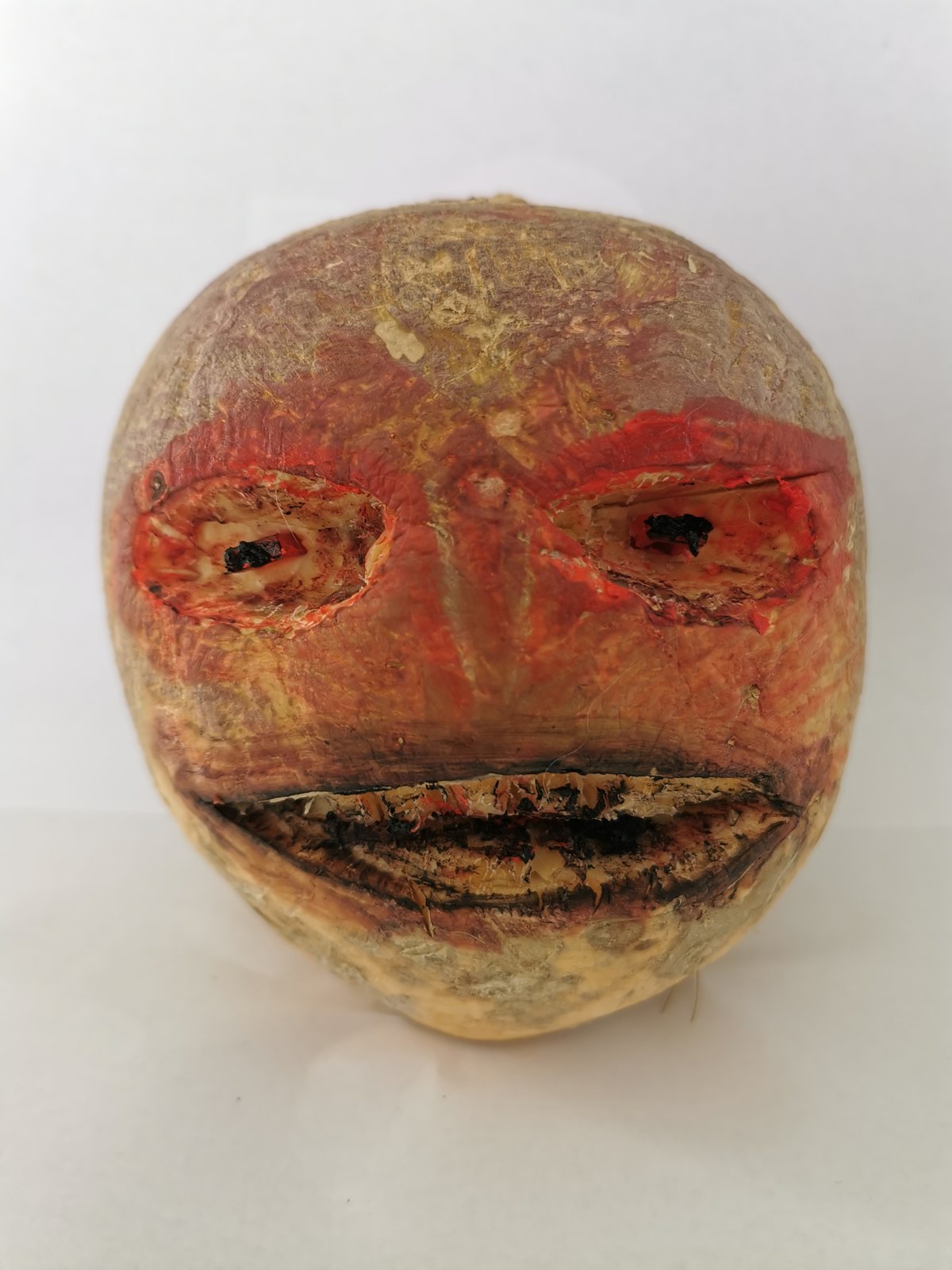
The first jack-o’-lanterns were not pumpkins. In Ireland and Scotland, people hollowed out turnips and mangel-wurzels, carved faces into them, and set a coal or candle inside. Folklore tied the lantern to “Stingy Jack,” a drunkard who tricked the Devil and was left to wander the earth forever with a single ember in a turnip. The phrase “jack-o’-lantern” first meant a night watchman, and then the eerie marsh lights also called will-o’-the-wisp, notes the Online Etymology Dictionary. In America the native pumpkin proved bigger and easier to carve, and it won.
How the witch moved in
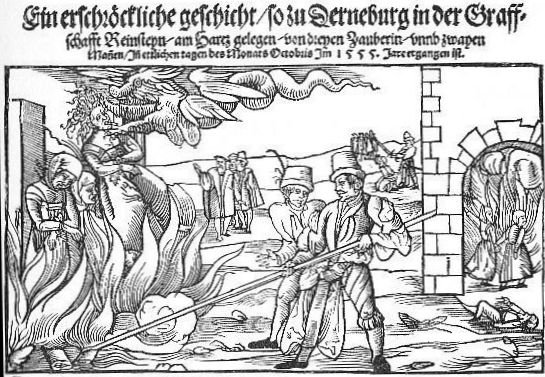
The witch on the broom did not come from Samhain. She came from fear. In 1486 the Malleus Maleficarum, a manual for hunting witches, gave European courts a playbook. Between roughly 1450 and 1750, trials across Europe and its colonies led to the execution of an estimated 40,000 to 60,000 people, most of them women, according to historian Brian Levack’s The Witch-Hunt in Early Modern Europe. In 1692, Salem, Massachusetts added its own chapter, with 19 people hanged.
The night of spirits was a natural home for the figure people feared most. Then the 19th century turned fear into theatre. Romantic poets and painters revived the “old” country festival, and Victorian and Edwardian greeting cards filled it with cats, cauldrons, moons and cackling women in pointed hats. In the 20th century, Margaret Murray’s 1921 theory of a surviving pagan witch-cult, since rejected by historians, and Gerald Gardner’s Wicca in the 1950s, gave Samhain new life as a modern pagan sabbat, as the historian Ronald Hutton documents in The Triumph of the Moon. The wizard, for his part, rode in on the same wave of storybook magic: the sorcerer of fairy tales and the stage conjurer became the natural partner of the witch on the postcards.
Halloween comes to America
Strict Puritan New England had little room for the holiday. It took hold when hundreds of thousands of Irish and Scottish families crossed the Atlantic in the 19th century, especially during the Irish famine of the 1840s, and brought guising, lanterns and apple games with them. By the 1920s, towns were organizing parades and parties, partly to curb pranks. The phrase “trick or treat” appears in print in a 1927 Alberta newspaper, and spread across North America after wartime sugar rationing ended, according to the History.com overview. Today the National Retail Federation tracks Halloween as one of the country’s biggest seasonal spending events.
First principles: why humans wear masks
Strip away the candy and the plastic fangs, and four human truths remain.
1. We face death by wearing it. The cultural anthropologist Ernest Becker argued in The Denial of Death (1973) that much of culture is a way of managing our fear of dying. Psychologists later tested this as Terror Management Theory. A night when we dress as skeletons and ghosts lets us stare at the thing we fear and laugh at it.
2. The world turns upside down, safely. The Russian scholar Mikhail Bakhtin described carnival as a licensed inversion, where the low play the high and rules are suspended for a night. The anthropologist Victor Turner called these in-between moments “liminal.” Halloween sits on the hinge of the year, so it is the perfect night to be someone else.
3. A mask changes how we behave. In a famous 1976 field study on Halloween night in Seattle, psychologist Ed Diener and colleagues watched 1,352 trick-or-treaters. Children who were anonymous and in groups were far more likely to take extra candy than children who had been asked their names, as published in the Journal of Personality and Social Psychology. A costume loosens the self. That is the danger and the thrill.
4. Costumes make a tribe. Guisers earned their welcome at the door. Today a costume earns a welcome at the party. When everyone is disguised, everyone belongs, and strangers have a reason to talk. That is why Halloween became one of the biggest nights of the year in nightlife.
The appointment we keep
A Gaelic bonfire, a Roman offering at a tomb, a pope’s feast for the saints, a child with a turnip lantern, a woman burned in a market square, a Victorian postcard, a costume party on Sunset Boulevard. It is one long story about the same night. When the light fails and the year turns, humans gather, they remember the dead, and they put on a mask to prove they are still alive.
Wear yours well tonight.
Follow the Nightlife Report: Join the Discord · Get the newsletter · The Perlas Protocol on Spotify · Apple Podcasts
Lillith Magic · Directed by Anthony Perlas
You might also like
 Field ReportsOn the Water: Surreal by Viibz, Four Reels From a Los Angeles Yacht Night
 GuidesNYC Clubs and Apps for Making Friends: A Run Club, a Book Club and a Dinner App
 NewsBurberry Turns 170 With a Country-House Disco, and Damiani Takes Mariacarla Boscono to a Palazzo Party
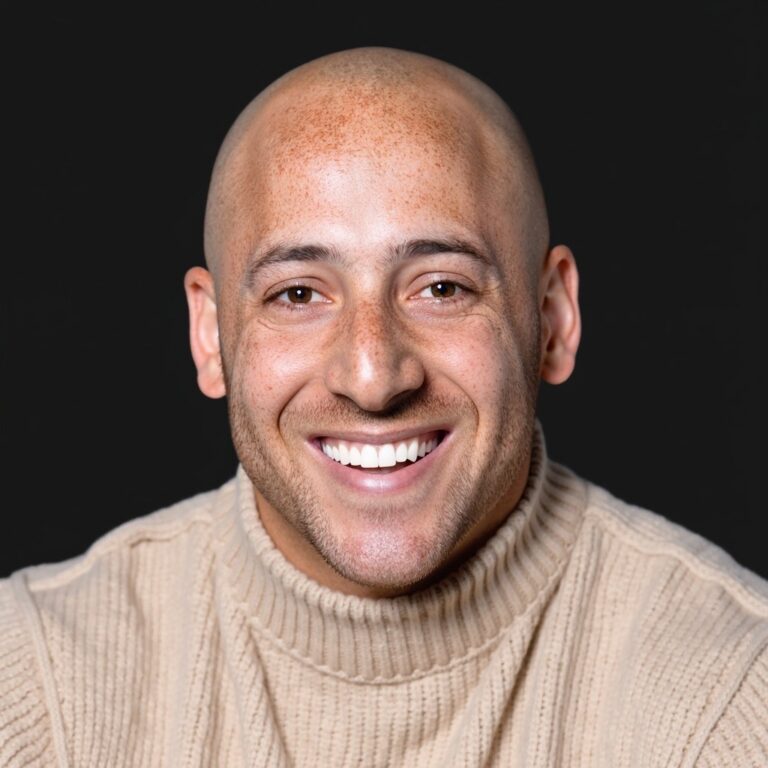 NightlifeKevin Hines to Receive AFA Impact Award, Presented by Zak Williams
 NewsWhat You Missed: Tuesday, Nov 3
 VideoWhy Thursday Is Jupiter’s Day: Dies Iovis and the Spiritual Forecast
Leave a Reply