

By Anthony Perlas · Nightlife Report · November 1, 2026 · Updated edition
The recruiter rarely says the word. He says “the game.” He calls himself your brother, your family, your Daddy. He tells the room you are a star, and the room agrees. By the time the words make sense, many people are already inside a life they never agreed to. This is the vocabulary and the psychology behind it, sourced from the people who fight trafficking and study coercion for a living, so you can hear it before it hears you.
“Most traffickers use psychological means such as, tricking, defrauding, manipulating or threatening victims into providing commercial sex or exploitative labor.”
The room
A club at one in the morning is the most generous room in the city. The lasers cut the smoke. Someone buys the table. Someone else says you have the look. Most of the people in that room are exactly what they appear to be: dancers, promoters, models, friends.
A few are not. In the language of this column, they are the vampires: middlemen who do not make art, do not dance, do not walk, and feed on the people who do. The lions and lionesses are the ones who protect talent: the friend who checks the offer, the manager who puts terms in writing, the bartender who notices. This piece is written for them.
RelatedWhy Wednesday Is Mercury’s Day: Dies Mercurii and the Seven-Day Week
The dictionary
Every term below appears in published glossaries from anti-trafficking groups and prosecutors, including Shared Hope International, a U.S. Attorney’s Office terminology list, and the New York City Administration for Children’s Services.
- The Life / The Game. The world of commercial sex under a pimp’s control. The prosecutors’ glossary traces “the life” to the older phrase “the sporting life.” Calling it a game makes the rules sound like a sport you chose.
- Daddy. The name a pimp requires the people he controls to call him. Glossaries note the pimp is trying to recreate a family, with himself at the head.
- Family / Folks / Stable. The group of people under one pimp’s control.
- Wife-in-law. What the women and girls in a stable are told to call each other. Sisterhood, used as a leash.
- Bottom. A person inside the stable appointed to recruit, supervise the others, report rule-breaking, and sometimes help punish. Often a victim herself, promoted into the machinery.
- Quota. The amount someone must bring back each night before she can come “home.” Shared Hope reports that failing the quota typically means a beating and being sent back out.
- Track. A known area for street prostitution.
- Choosing up. When control of a person passes from one pimp to another. Glossaries describe it happening through something as small as eye contact, which is why rules about not looking at other men are enforced so hard.
- Out of pocket. Breaking the pimp’s rules: looking at another pimp, arguing, trying to leave.
- Renegade. Someone in commercial sex without a pimp. The word itself shows how the system sees independence: as defiance.
- Seasoning. Breaking someone down through rape, beatings, manipulation or intimidation to gain control.
- Squaring up. Trying to get out.
Two faces, one playbook
A Virginia Journal of Criminal Law study hosted by Shared Hope lists the recruiting styles: the wealthy pimp who flashes cars and cash on social media, the Romeo or finesse pimp who uses love, the gorilla pimp who uses violence, and pimps who control through drugs or debt. The study says the methods are not exclusive. One person can use all of them on the same victim.
The finesse pimp comes first. A police officer quoted by News On 6 in Tulsa described the pattern: hair, nails, clothes, a boyfriend who “wants to take care of them,” while he controls all the money. When the women want out, the officer said, “the finesse is gone” and the men turn gorilla.
The same study records the line Romeo pimps use once the hook is set: “If you love me, you’ll prostitute.”
The modeling offer
The Polaris Project, which runs the National Human Trafficking Hotline, publishes composite cases. One is a teenager who posts poses online and is messaged by a man claiming to be a modeling agent. He sends a plane ticket, takes her out on the town, and tells her she has to be “nice” to some people in the business to get contracts. Another Polaris case begins at a party: a man follows a woman on social media, becomes the perfect listener, then asks her to be “nice” to his friends to earn jewelry.
Learn that word. In this playbook, “be nice” is a price tag.
The U.S. Department of Homeland Security’s Blue Campaign warns to be wary of offers in fields that are hard to break into, such as modeling, when the pay seems too high, nobody asks about your experience, or you are asked to pay a large fee up front.
The debt
A creditor pimp does not need chains. DHS’s Human Trafficking 101 sheet lists the signs: creating a debt for the worker or adding to a never-ending balance. The flight, the apartment, the photo shoot, the dress for the table. Every gift returns as a bill. The quota grows. When someone is “chosen” by another pimp, the glossaries say, the fee is added to her quota.
The family unit: a counterfeit home
Read the dictionary again and notice how much of it is family language. Daddy. Wife-in-law. Family. Folks. The glossaries say the pimp is trying to recreate a household with himself at the head. That is not decoration. It is the mechanism.
A new family needs the old one gone. Polaris lists “isolation from friends and family” among the most common control tactics, and notes that “many survivors have been trafficked by romantic partners, including spouses, and by family members, including parents” (Polaris). The recruiter’s version is softer at first: your mother doesn’t understand your dream, your friends are jealous, we are your real people now. Every call home gets a little more expensive.
The psychiatrist Robert Jay Lifton, who studied coercive persuasion in the 1950s, called the first lever milieu control: control who you talk to and what you hear, and you control what you think (Lifton, Thought Reform and the Psychology of Totalism, 1961). A counterfeit family is milieu control with a warm face.
The test: a real friend, partner or employer wants you to keep your family. Anyone who needs you to lose them is building a cage and calling it a home.
The hype machine: love-bombing
Before the rules come the compliments. The table, the bottles, the photos, the group chat where everyone hearts everything you post. You are the face. You are the next one. The Romeo pimp, Shared Hope’s research notes, “uses love,” and the finesse comes first: hair, nails, clothes, a boyfriend who “wants to take care of them.”
Researchers of high-control groups call this love-bombing: a flood of attention and belonging that arrives faster than trust can be earned. Steven Hassan’s BITE model sorts the controls into Behavior, Information, Thought and Emotional control, and names deception as nearly universal. The hype is the down payment. It is not free. It is credit, and the debt section above tells you how it gets collected.
The test: real praise is specific and patient. Hype is generic, instant and comes with a schedule.
Affirm or be labeled
Every closed group runs on affirmations. The family is loyal. Daddy takes care of us. We don’t talk to outsiders. Repeat them and you are in. Question one and something changes.
First you are “out of pocket.” Then you are the problem, the one with the attitude, the troublemaker who is ruining it for everyone. The group stops talking to you, then starts talking about you. The bottom reports you. Your standing, your money and your place at the table drain away until agreeing again feels like the only way to get warm.
This is ostracism used as a tool, and it is measurable. In Kipling Williams’ Cyberball experiments, being left out of a simple online ball-toss game by strangers for a few minutes lowered four basic needs: belonging, self-esteem, control and meaningful existence (Williams, Cheung & Choi, Journal of Personality and Social Psychology, 2000). Brain imaging found that exclusion activates regions involved in the distress of physical pain (Eisenberger, Lieberman & Williams, Science, 2003). Long-term exclusion, Williams found, ends in resignation: alienation, helplessness and depression (Williams, 2009). Lifton had a name for the group’s side of it: dispensing of existence, the idea that people outside the doctrine are worth less.
The test: in a healthy team, disagreement gets a conversation. In a trap, it gets a label.
The emotional ladder
Here is a simple map we use at Nightlife Report. It is our own working framework, not a clinical scale, and it is built from the research above. Picture a ladder of emotional states, from the bottom rung up:
- Numb. Apathy. Nothing matters, nothing will change.
- Grief. Loss, crying, the sense that something was taken.
- Fear. Watching every word. Afraid to leave, afraid to stay.
- Anger. Heat, pushback, the first refusal.
- Restless. Boredom. You can see the routine for what it is.
- Curious. Interest. You start asking questions and looking things up.
- Alive. Enthusiasm. Plans, skills, your own name on your own work.
Watch what a controller does with this ladder. Hype lifts you to the top rung for a night. Then the quota, the label and the silent treatment push you down to the bottom three, where people comply. Fear, grief and numbness are useful to a vampire because people on those rungs do not ask questions. Anger is the first rung where people say no, which is why a controller punishes it so fast.
Climbing is not a mood. It is a set of small acts: one honest call, one fact checked, one boundary held. Each one is a rung. Ostracism research says the same thing in plainer words: reconnection restores what exclusion drains (Williams, 2009).
What a professional looks like
The opposite of the game is not suspicion of everyone. It is professionalism, and it is easy to recognize.
- Contracts in writing, before you travel or work. Pay, hours, usage of your images, who pays for what. If a cost will be deducted from your pay, it is written down first.
- Verify the agency. In California, talent agencies must be licensed by the Labor Commissioner. Look the name up yourself on the state Talent Agency License Search. DHS’s Blue Campaign warns against offers in hard-to-enter fields such as modeling that pay too much, ask no questions about experience, or want a fee up front.
- Bring someone. A friend, parent or chaperone is welcome at a real shoot or casting. Minors should always have one. A pro never objects.
- Public, professional locations. Studios and offices, scheduled in advance. Not a hotel room or a house moved to at the last minute.
- Your documents, your phone, your pay stay with you. No legitimate employer holds your ID or passport.
- No family talk from the boss. A promoter, booker or photographer is a business contact. “We’re family,” “call me Daddy,” “you’re my sister now” from someone who pays you is a red flag, not a perk.
- A pro photographer sends a mood board and a call sheet, says what will be shot, asks before touching to adjust a pose, and delivers the images on the agreed terms. A pro promoter pays a stated rate, never asks you to “be nice” to guests for the real money, and is fine with you leaving when your shift ends.
A real opportunity survives questions. A vampire hates daylight.
Red flags at the club and the casting
- A “manager,” “promoter” or “agent” who wants to hold your ID, passport, phone or pay.
- Hostess, bottle-girl or VIP work where the job keeps changing after you arrive, or you are told to be “nice” to guests for the real money.
- A casting that moves from an office to a hotel room, a private house, or another city on short notice.
- Pay far above the going rate, no experience needed, and a fee to start.
- A new romance who isolates you from friends, controls your money, and talks about “our future” while asking for sacrifices.
- Rules about who you may look at or speak to. Nicknames like “Daddy.” Other women you are told to call family.
- Secrecy: being told not to tell your family, or to lie about your age.
A real opportunity survives questions. Ask for the agency’s license, a written contract, and a chance to bring a friend. Look up the business yourself. A vampire hates daylight.
“Fear, isolation, guilt, shame, misplaced loyalty and expert manipulation are among the many factors that may keep a person from seeking help or identifying as a victim.”
How people get out
In the Polaris cases, the exits are small and human. One woman packed a go-bag and called a friend while he was out of the house. The teenager reached a friend, who told her family. Squaring up starts with one call, and the lions and lionesses in your life are the people who answer it.
If you are the friend, DHS advises listening first and leaving detailed questions to trained professionals. Blame closes doors.
Know the game so you never play it by accident
The point of a code is that outsiders cannot read it. Now you can. Talent belongs to the person who has it. Anyone who has to rename you, rename himself, and rename the work before you will do it is not your manager. He is the middleman, and the middleman is feeding.
Help, any hour
- National Human Trafficking Hotline: call 1-888-373-7888 or text 233733. Free, confidential, 24/7, in more than 200 languages.
- Immediate danger: call 911.
- DHS / HSI tip line: 1-866-347-2423.
- Missing or exploited minor: National Center for Missing & Exploited Children, 1-800-THE-LOST.
Research: Lifton, R. J. (1961), Thought Reform and the Psychology of Totalism; Hassan, S. (2015), Combating Cult Mind Control, and the Freedom of Mind BITE Model; Williams, K. D., Cheung, C. K. T., & Choi, W. (2000), Journal of Personality and Social Psychology 79(5); Eisenberger, Lieberman & Williams (2003), Science 302; Williams (2009), Advances in Experimental Social Psychology 41; California Labor Commissioner. Sources: Shared Hope International; Polaris Project; U.S. Department of Homeland Security Blue Campaign; U.S. Attorney’s Office, Eastern District of Wisconsin; NYC Administration for Children’s Services; Virginia Journal of Criminal Law; News On 6. Header photo: d26b73 via Wikimedia Commons, CC BY 2.0.
Read Part Two: Exposing the Vampires and Werewolves of Los Angeles: How to Stay Human →
You might also like
 Field ReportsOn the Water: Surreal by Viibz, Four Reels From a Los Angeles Yacht Night
 GuidesLuxury for Less: 10 Real Deals Worth a Look This Week (Nov 4, 2026)
 VideoWhy Thursday Is Jupiter’s Day: Dies Iovis and the Spiritual Forecast
 GuidesA 20-Minute New Moon Ritual That Needs One Candle and a Notebook
 NewsNanushka Shuts Its Stores as Style Capital Buys N21. What Fashion’s Week in Deals Tells Shoppers
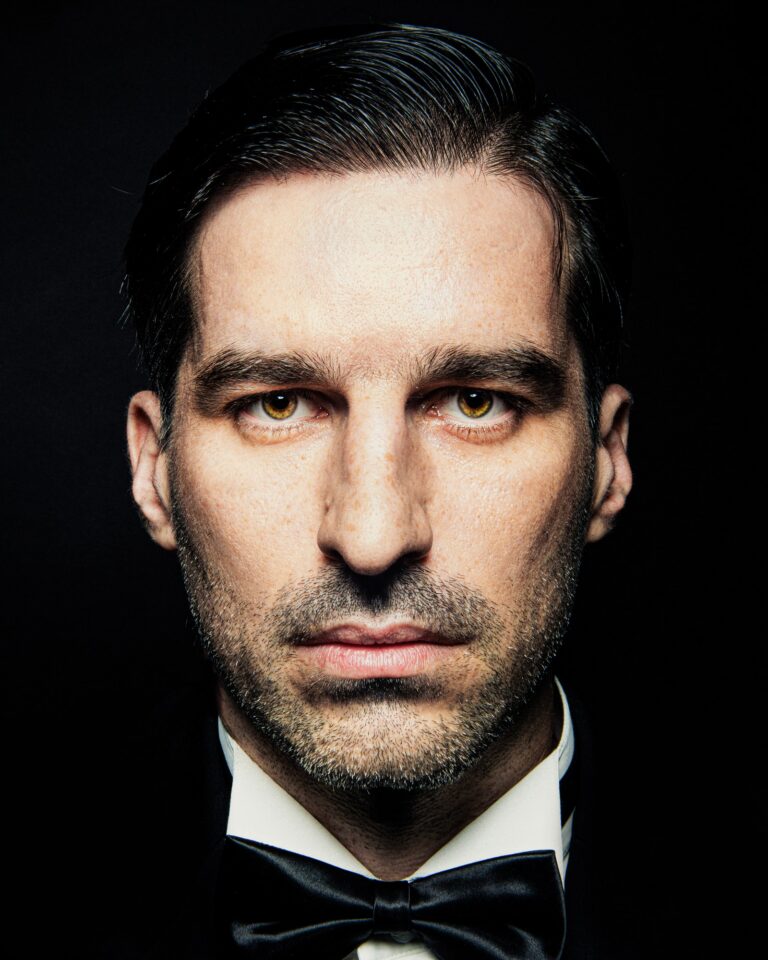 InterviewsOlivier “Hero” Dressen directed for Jaguar and Coke Studio. His short film has 18 awards.
Leave a Reply