
Four thousand years before any modern institution told you who you are, a king of Uruk went looking for the answer himself. He came home with a lesson worth more than immortality.
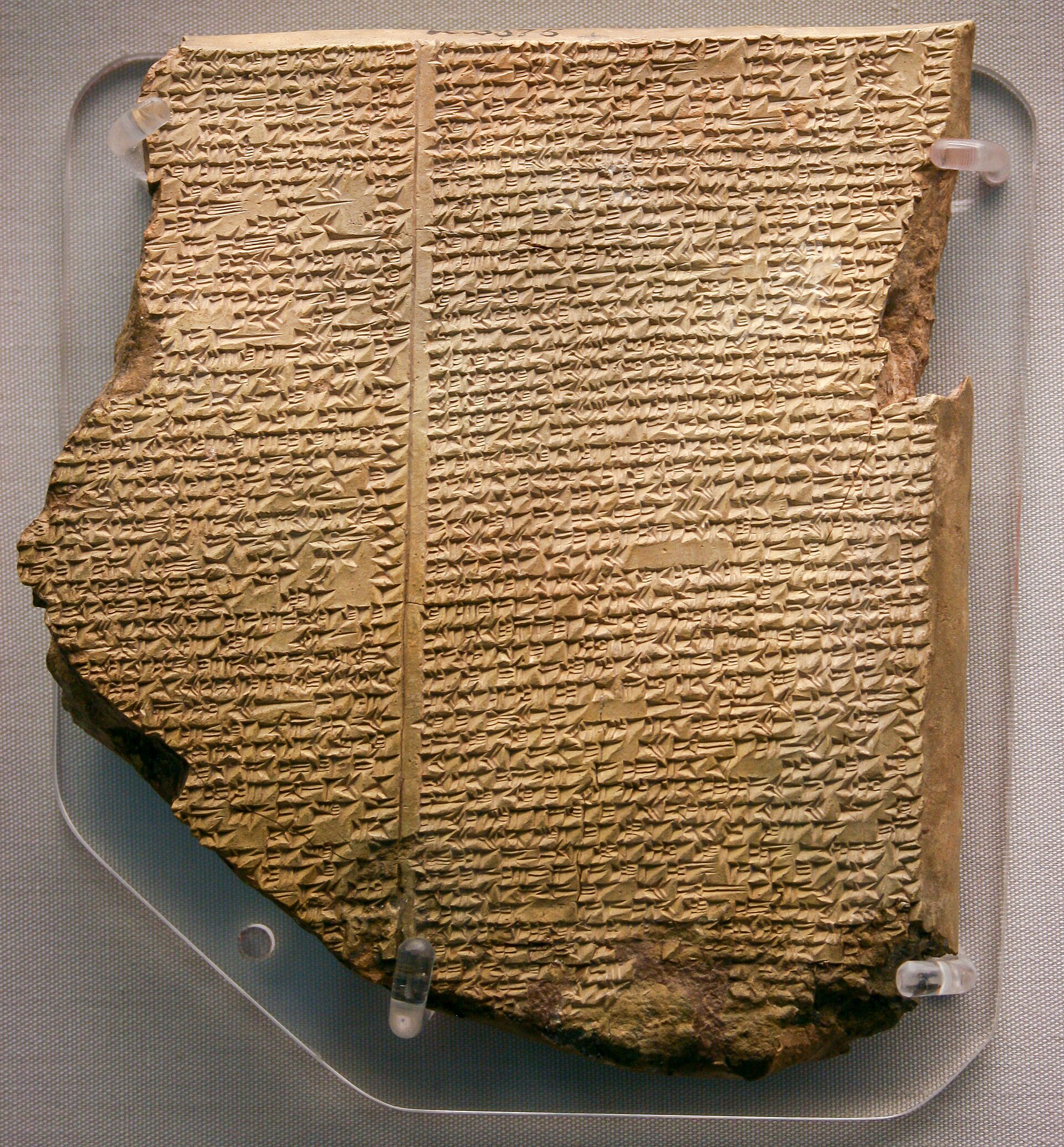
The tablet that stopped a room
In December 1872, a self-taught British Museum assistant named George Smith read a translation to the Society of Biblical Archaeology in London. The clay tablet in front of him came from the library of the Assyrian king Ashurbanipal at Nineveh. It described a great flood, a man warned by a god, a boat sealed with pitch, and birds released to find dry land. It was written centuries before most of the texts readers of the day held sacred. (British Museum, K.3375)
That tablet is Tablet XI of the Epic of Gilgamesh. It is the most famous piece of clay in the world, and it is still there in Room 55.
Who was Gilgamesh?
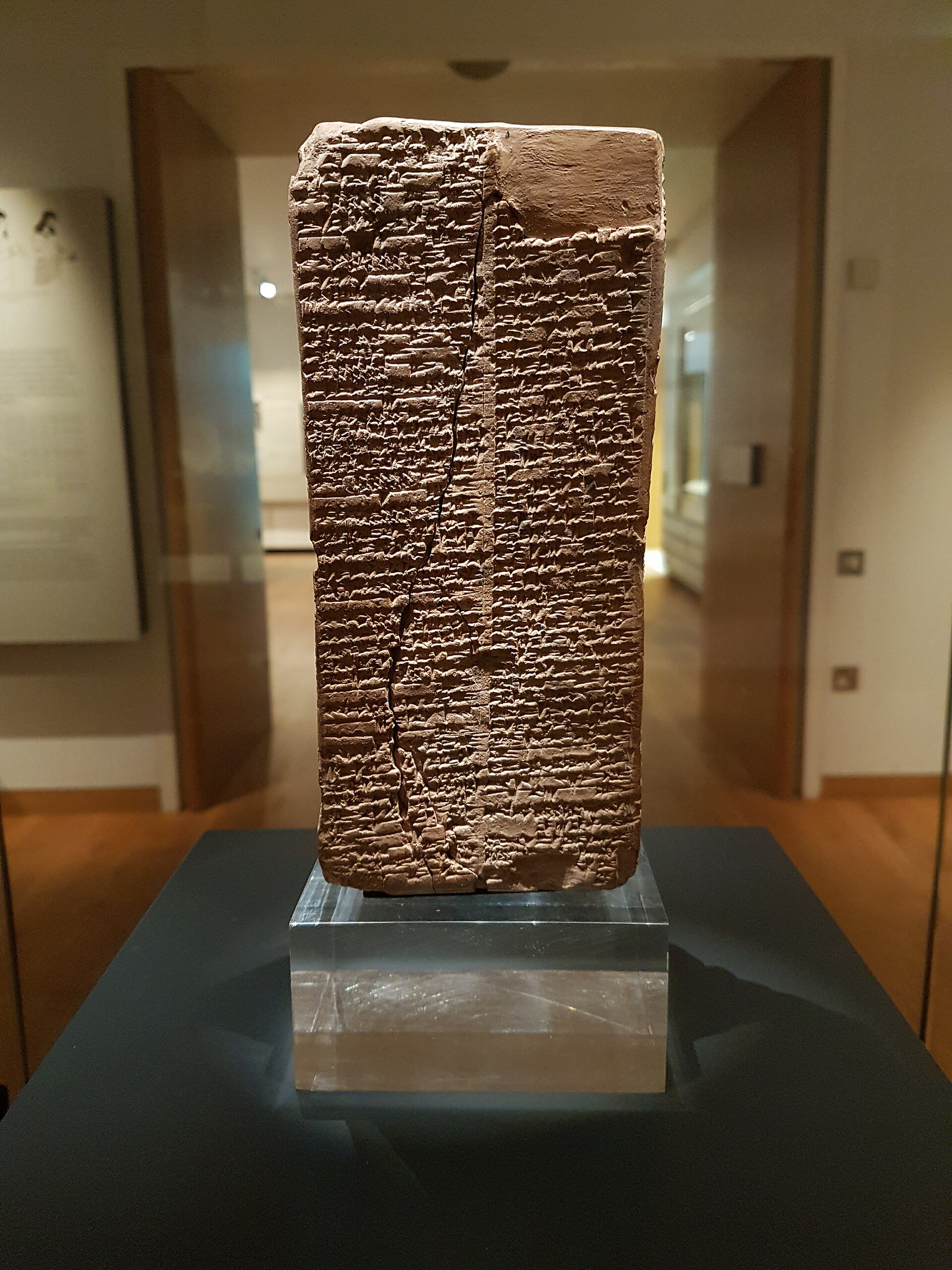
The evidence. The Sumerian King List names Gilgamesh as the fifth king of the First Dynasty of Uruk and credits him with a reign of 126 years. Most historians treat him as a real ruler of Uruk around 2700 BCE whose life was later wrapped in legend. Early inscriptions mention his contemporaries, and the Tummal inscription credits him with temple work at Nippur. (ETCSL, The Sumerian King List; Britannica)
The legend. The epic calls him two-thirds god and one-third man, the son of the goddess Ninsun. He builds the great walls of Uruk, fights the monster Humbaba with his companion Enkidu, refuses the goddess Ishtar, and, when Enkidu dies, goes in search of eternal life.
How big was the giant?
The poem treats his size as part of his divinity. In the Hittite version of the epic, the gods give him a height of eleven cubits, roughly five to six metres. That is myth, and it sits in the same family as the giants of other ancient traditions. No skeleton, statue or inscription has given us his real height. (Andrew George, The Epic of Gilgamesh, Penguin)
RelatedHow the Big Three Took Over, and the New Way to Build
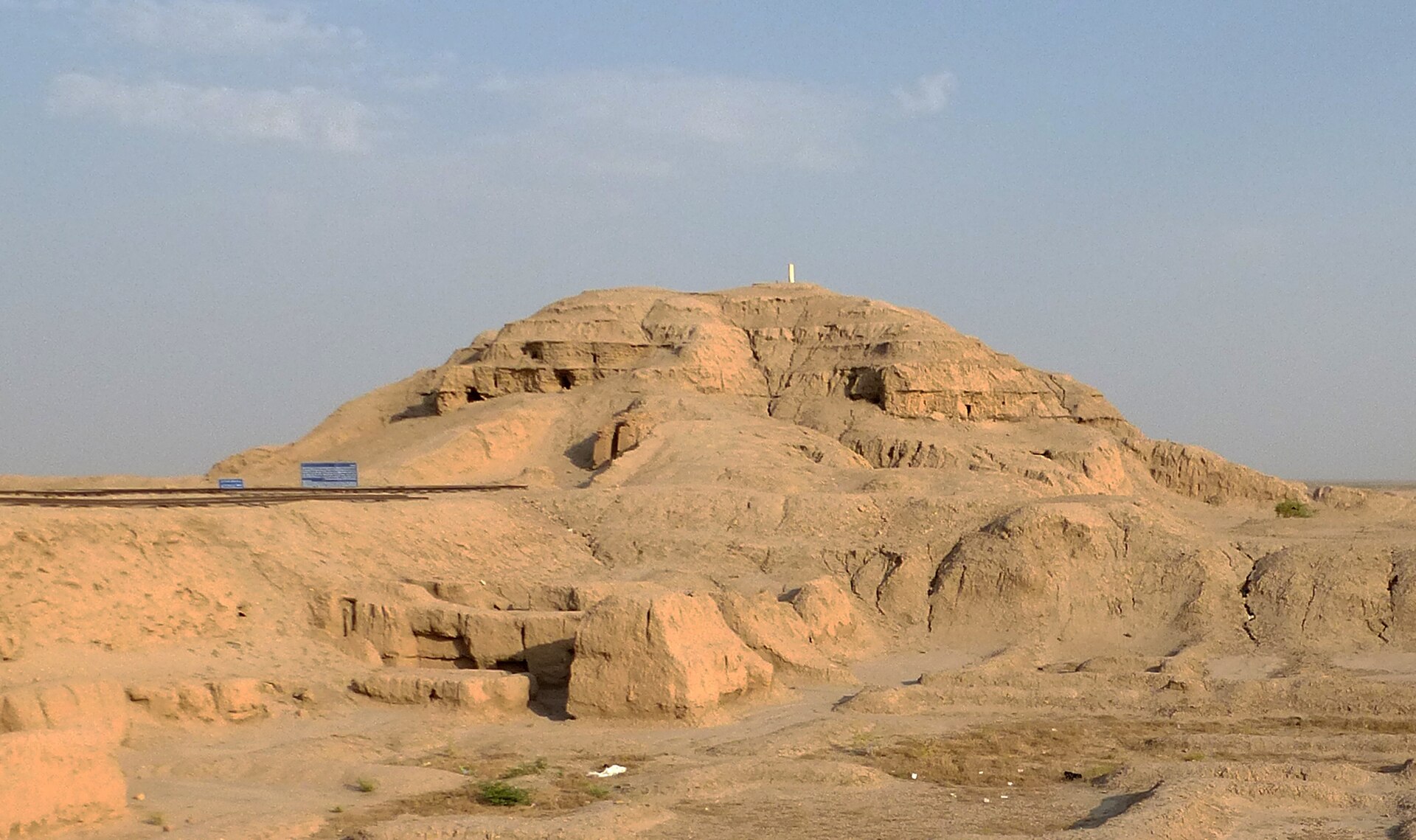
The walls are real, though. The ruins of Uruk, modern Warka in southern Iraq, cover about six square kilometres inside a city wall roughly nine kilometres long. In its day it may have been the largest city on Earth. It is a UNESCO World Heritage Site. (UNESCO, The Ahwar of Southern Iraq and the Relict Cities of Mesopotamia)
The tomb: what was claimed, and what was found
A Sumerian poem, The Death of Gilgamesh, says the king was buried beneath the bed of the Euphrates after the river was diverted. In 2003 a German team led by Jörg Fassbinder of the Bavarian State Department of Monuments mapped Uruk with a magnetometer. They traced the old city and the bed of the ancient river, and they reported structures in it that some took to be a burial. Fassbinder was careful. He told the BBC he did not want to say definitely that it was the grave of Gilgamesh, only that it looked very similar to the one in the epic. (BBC News, 29 April 2003)
Our verdict: no tomb of Gilgamesh has been excavated or confirmed. The survey is real. The identification is a hypothesis. Anyone who tells you otherwise is selling something.
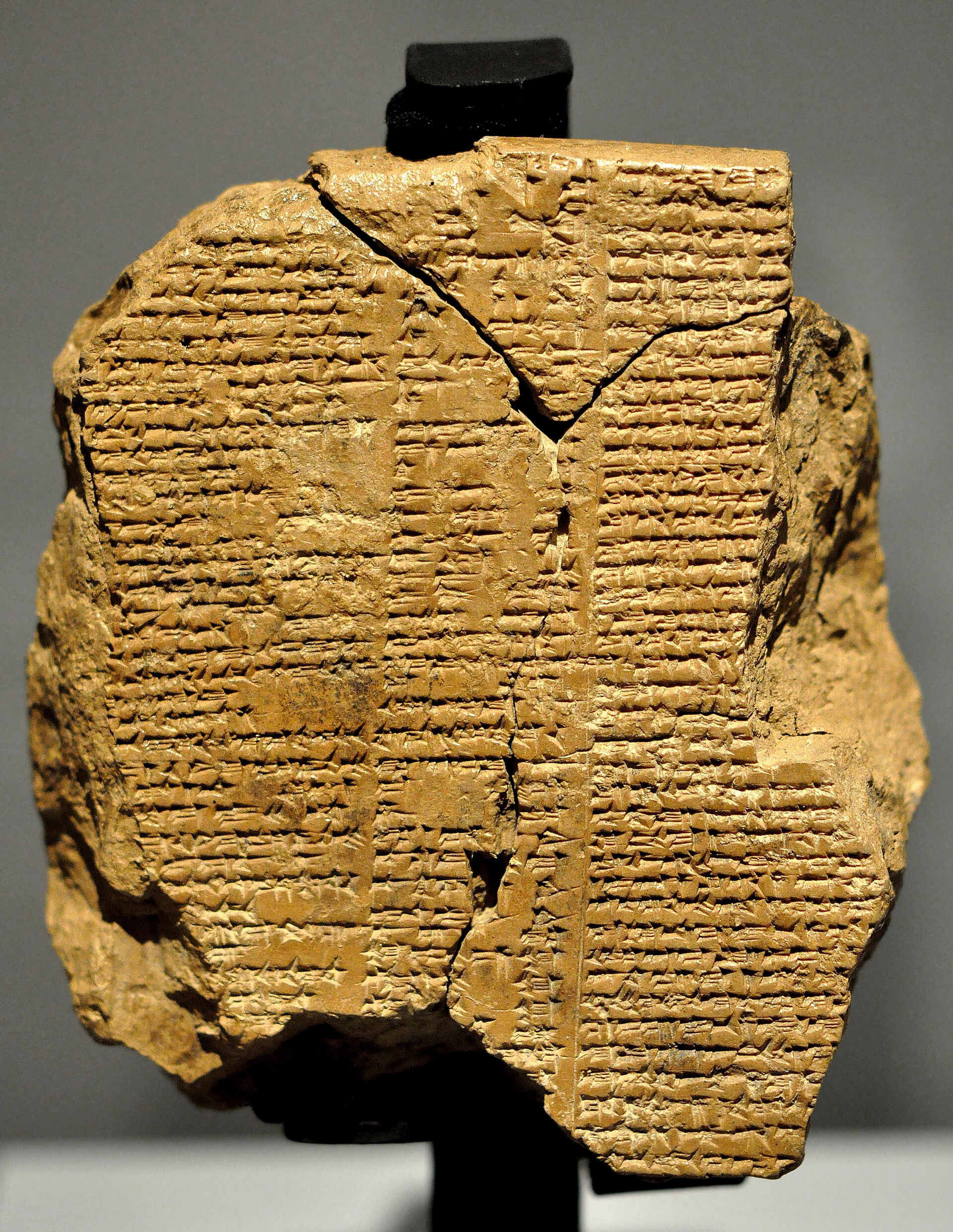
The epic is still growing. In 2014, Farouk Al-Rawi and Andrew George published a fragment of Tablet V that the Sulaymaniyah Museum in Iraq acquired in 2011. It adds about twenty lines describing the Cedar Forest as loud with birds, cicadas and monkeys. (Live Science, 2015)
The flood: one story, many tellers
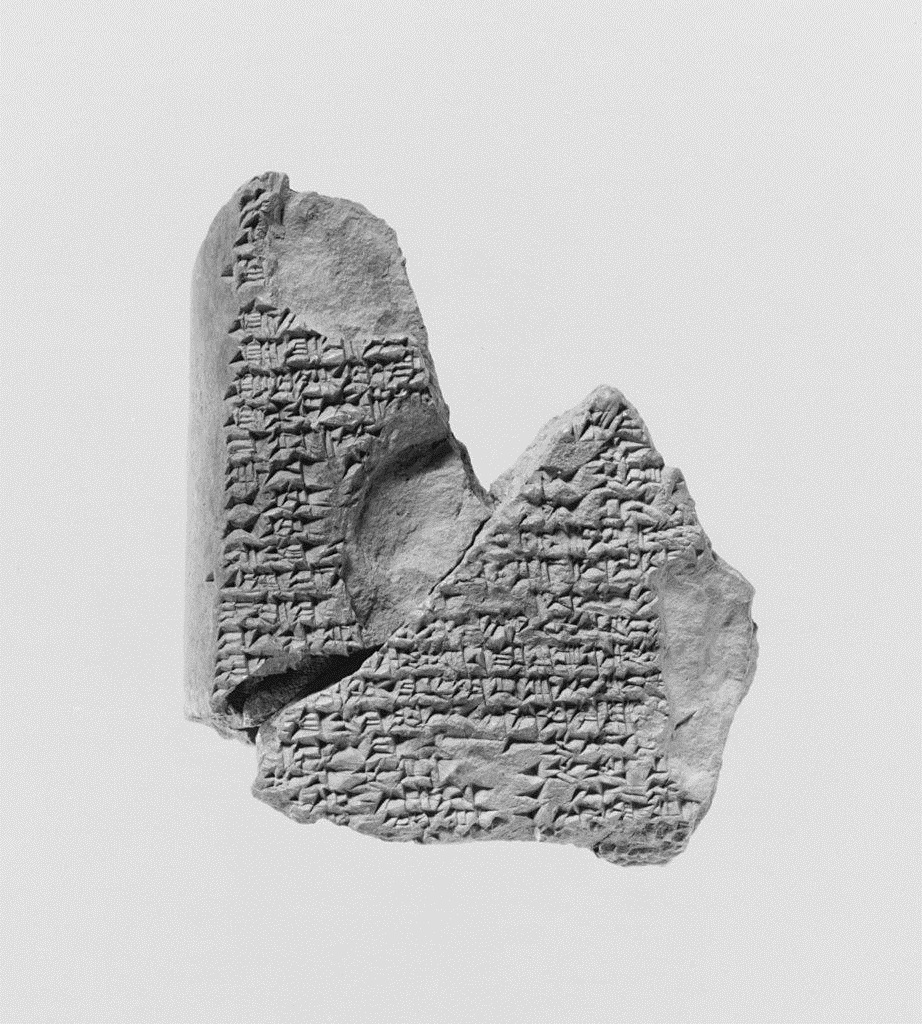
In Tablet XI, Utnapishtim tells Gilgamesh how the god Ea warned him of a flood sent by the gods. He built a boat, saved his family and the animals, and after the waters fell he released a dove, a swallow and a raven. An older Babylonian poem, Atrahasis, tells the same story with a hero of that name. A copy is dated to around 1635 BCE. An even older Sumerian version names the survivor Ziusudra. (The Met, via Wikimedia Commons; Britannica)
Readers have long noticed how closely the account in Genesis 6–9 parallels these texts: a warning, the ark, the pitch, the birds, the sacrifice after the flood. Scholars debate how the story travelled, whether through direct borrowing, shared memory or a common Near Eastern tradition. What’s beyond debate is the order. The Mesopotamian versions are older. Call that influence and you’re with the scholars. Treat every later telling as the original and you’ve skipped a thousand years of history.
That is the controversy, and it’s a fair one. The stories humanity tells about itself were not handed down from one desk. They were carried, retold and reshaped by many peoples. Every tradition is part of that inheritance. None of them owns it alone.
Prometheus: the one who loved mankind

The Greeks told their own version of where we came from. In later tradition the Titan Prometheus shaped the first humans from clay. The Roman writer Ovid tells it in the Metamorphoses, the mythographer Apollodorus records it in the Library, and Pausanias says the people of Panopeus still showed visitors the clay. (Theoi Project, Prometheus)
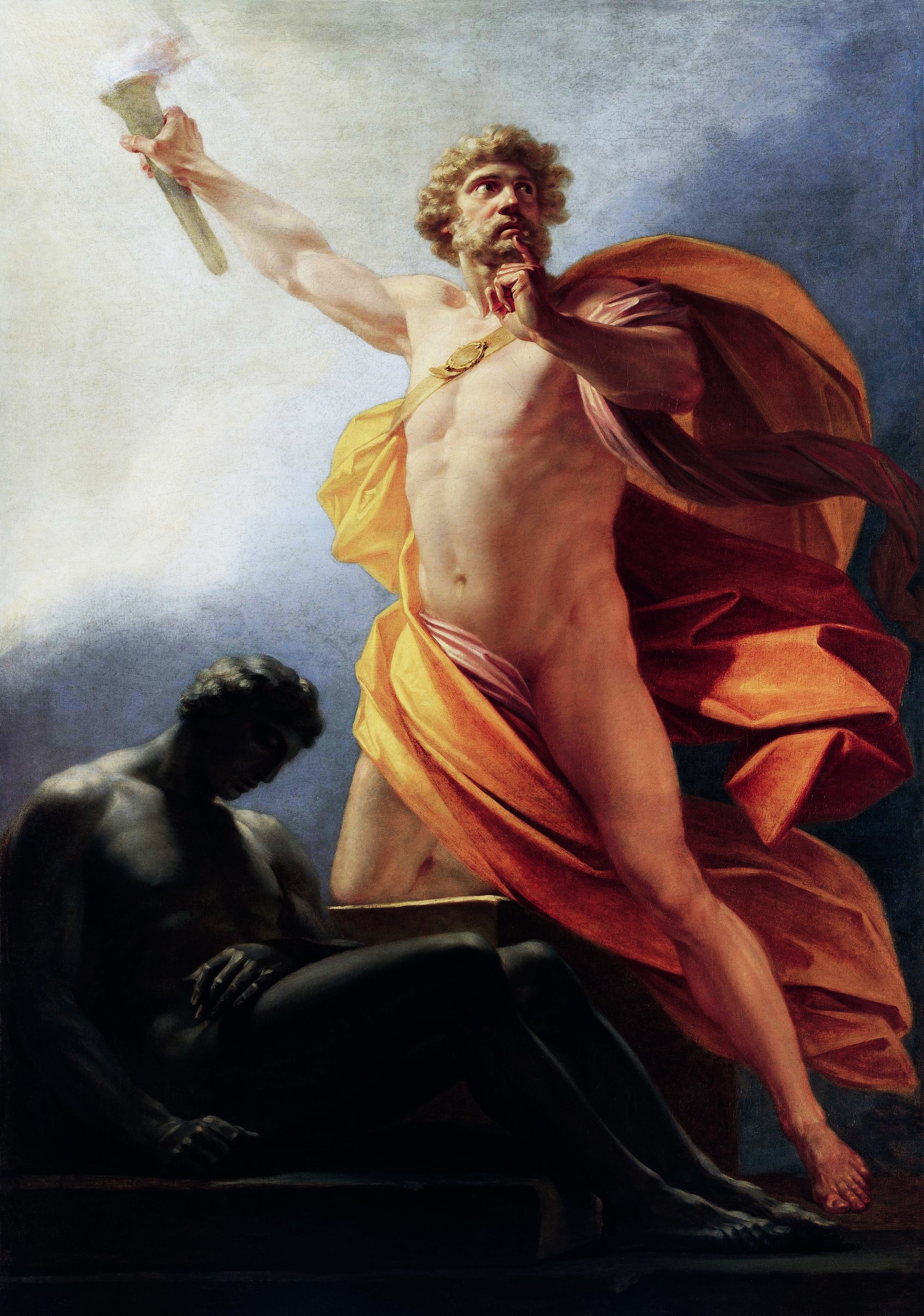
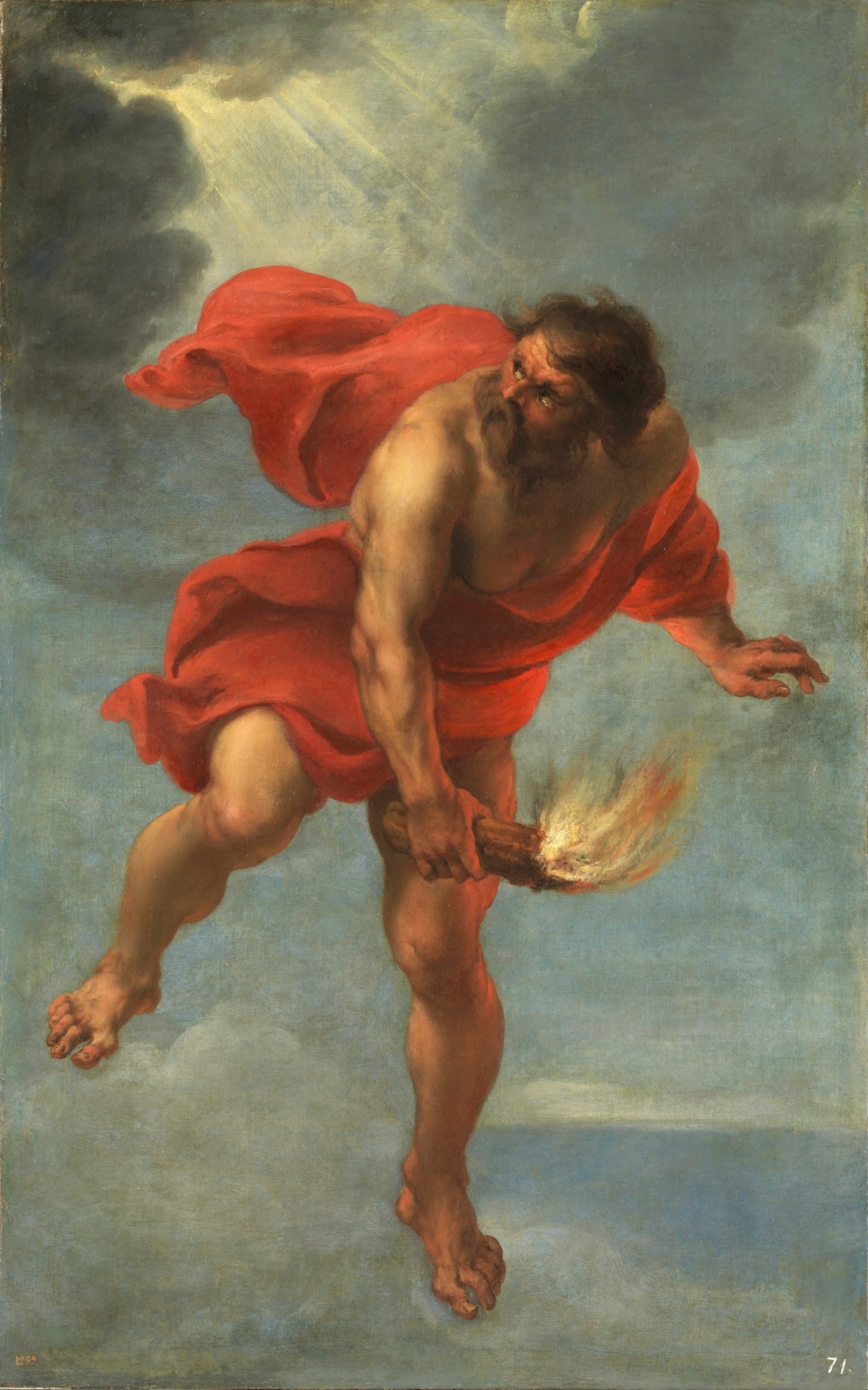
Hesiod’s Theogony and Works and Days tell the rest. Prometheus tricked Zeus at Mekone over the sharing of a sacrifice. Zeus answered by withholding fire from mortals. Prometheus stole it back, hidden in a hollow fennel stalk, and gave it to mankind. His reward was to be chained to a rock while an eagle ate his liver. In the tragedy Prometheus Bound, traditionally credited to Aeschylus, he lists what he gave us besides fire: numbers, writing, medicine, the taming of animals and sailing. (Hesiod, Theogony, Perseus; Aeschylus, Prometheus Bound, Perseus)
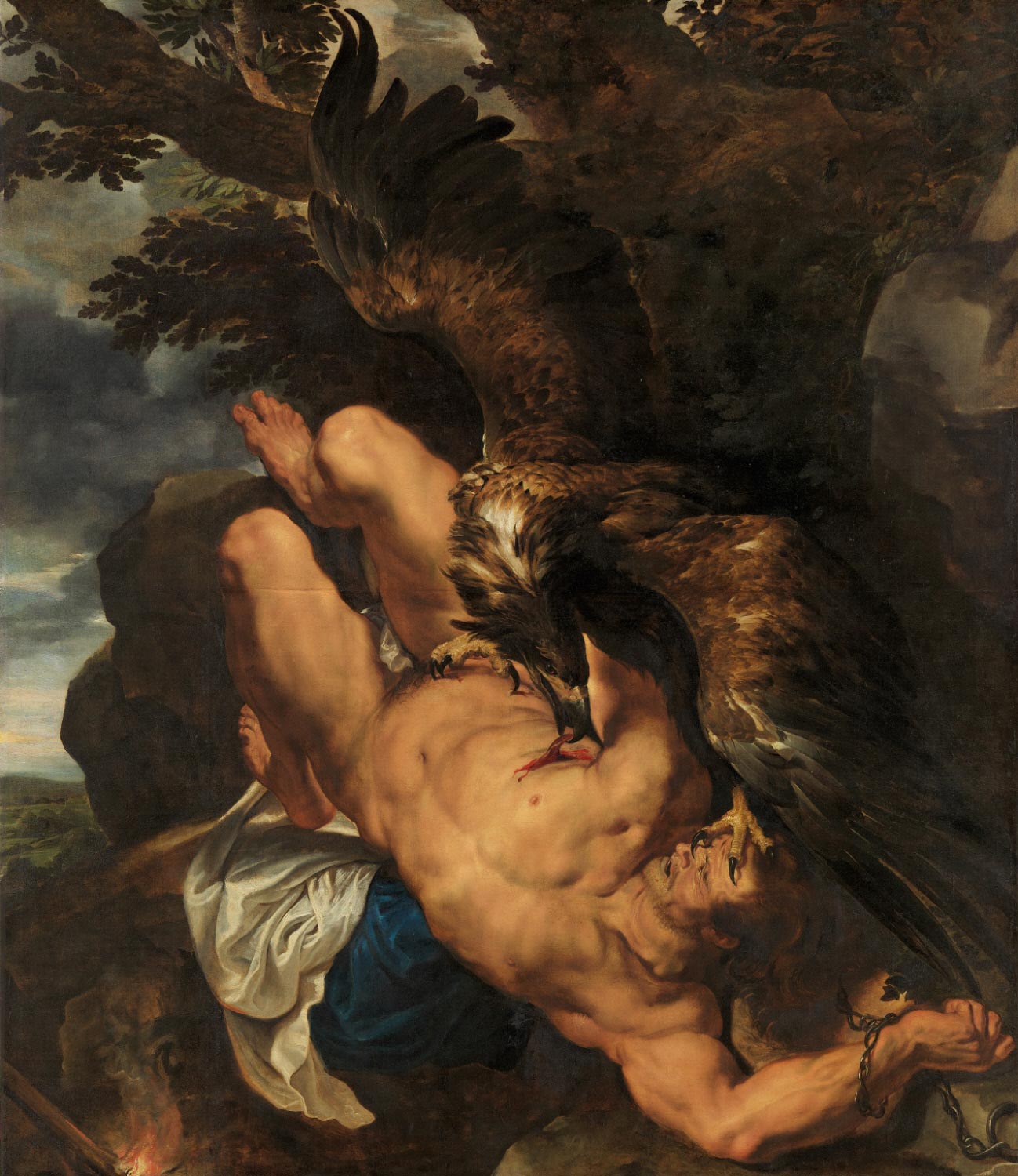
He’s the oldest rebel in Western literature, and he rebelled on our behalf.
The light-bringer
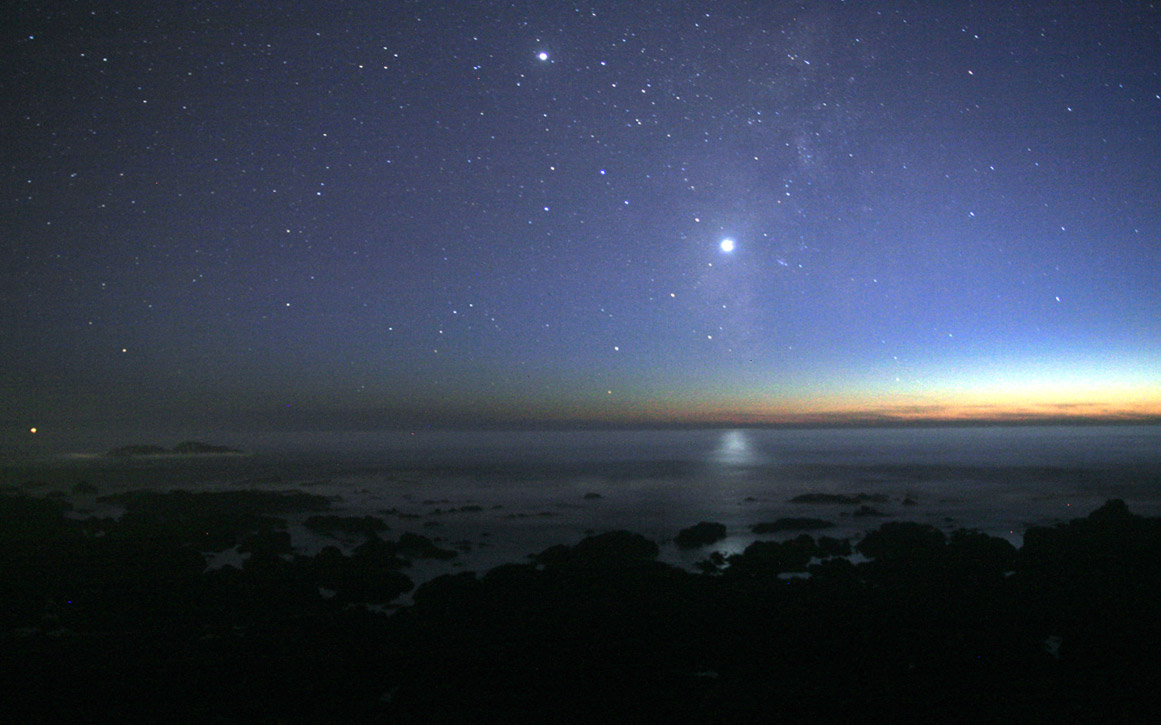
The Romans called the morning star Lucifer, from lux (light) and ferre (to carry): the light-bringer. The Greeks called it Phosphoros or Eosphoros. That star is the planet Venus, named for the goddess the Greeks knew as Aphrodite. Julius Caesar claimed descent from Venus through Aeneas and built a temple to Venus Genetrix, Venus the Mother. (Online Etymology Dictionary; Britannica, Venus)
The fire-bringer and the light-bringer are separate figures from separate traditions. The symbol is the same, though: someone carrying light to people who were told to sit in the dark. As Gnostics, we read Prometheus as the father of mankind in that light. That is a statement of our faith, not a claim of history, and we make it openly.
Team Dragon: what we believe
I’ll say it plainly, in the first person, because faith deserves a signature. I am a Gnostic. We hold that the deepest knowledge of the divine, gnosis, is not handed down by a gatekeeper. It is lit inside you. And we hold that the serpent in the garden was not the villain of the story. He was the teacher.
This is not our invention. It is in scripture. In December 1945, farmers near Nag Hammadi in Upper Egypt unearthed a sealed jar holding thirteen leather-bound codices: more than fifty texts, buried around the fourth century and lost for some sixteen hundred years. They are now in the Coptic Museum in Cairo. (Britannica, Nag Hammadi library; The Gnostic Society Library)
Read them and the garden turns over. In the Testimony of Truth, the serpent is the wisest creature in Paradise, the one who tells Adam and Eve to eat and open their eyes, and it is the jealous ruler who curses him for it. In On the Origin of the World and the Hypostasis of the Archons, the spiritual instructor speaks through the serpent and the eyes of the first humans are opened. (Testimony of Truth; On the Origin of the World; Hypostasis of the Archons)
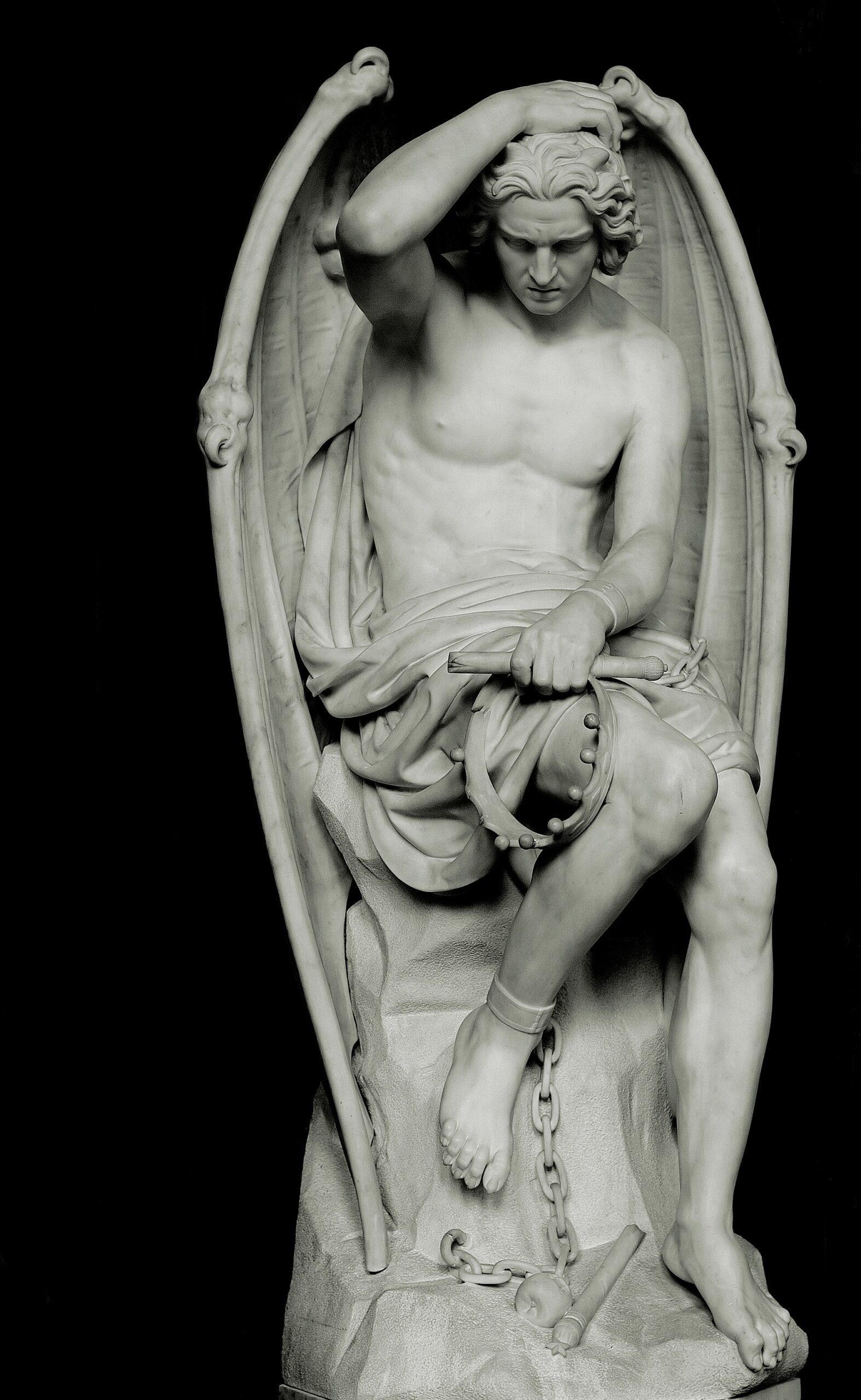
That is Team Dragon. The serpent who brought insight to Adam and Eve. Prometheus, who brought fire. Lucifer, the morning star, Venus, the light-bringer. Different names in different tongues, and we honor the same gesture in all of them: light carried to people who were told to stay in the dark.
The blind god and his gatekeepers
The Apocryphon of John, one of the most important Gnostic scriptures, survives in four copies, three of them at Nag Hammadi. It tells of Yaldabaoth, a lesser maker born without the knowledge of the true, unknowable source. He fashions the world, surrounds himself with rulers called archons, and declares, “I am God and there is no other God beside me,” not knowing what stands above him. That is why we call him blind. The Hypostasis of the Archons gives him another name: Samael, “god of the blind.” (Apocryphon of John; Britannica, Demiurge)
The archons are gatekeepers. In our faith they are not a nation, a church or a people. Let me be clear about that, because the old enemies of the Gnostics were never other believers. The archons are a force: the voice, inside and outside, that guards the gate between you and your own light. We call its everyday disguise the Gilgamesh hides, the skins that hide the giant in you.
The inversion
Here is the oldest trick in the book, and the book is very old. Take the bringer of light and call him the devil. Take the fire and call it theft. Take the serpent who opened eyes and call him the deceiver. In our scripture, the ruler who wanted humans kept from knowledge is the one who curses the teacher. Every time light is recast as evil, the inversion is at work. Learn to see it and it loses its grip.
Pandora’s box and Saturn’s hat
Hesiod tells us that Pandora was Zeus’s answer to Prometheus’s gift: a jar of sorrows opened on the world, with only hope left inside. Saturn, the Roman Cronus, devoured his own children to keep his throne. (Hesiod, Works and Days, Perseus) We read both as symbols of every force that shrinks the giant in you: the box that empties you and the hat that covers your crown.
Labels can become a hat like that. A diagnosis, a grade, a verdict, a rumor. Hear this clearly: no label defines your worth or your fire. If a doctor, therapist or counselor is helping you, keep them. Getting care is not surrender. It is a giant tending his own body. What we refuse is letting any word, from anyone, become the whole of who you are.
Heirs of the giants, beings of light
We believe you are heir to the giants: the builders of Uruk, the Olympians, the Romans who called Venus their mother. We believe the gods are beings of light and ethics. Light needs no original sin to explain it, and we do not carry that stain into our worship. We start from the spark, not from the fall.
And we believe in a world without end. Olympians choose it: salvation not for a few but for all people and all spirits. No one is left outside the gate, because, in the end, there is no gate. Only light, and the choice to walk toward it.
Why I walk this path
I can only testify for myself. Since I began trusting my own gnosis, my senses and my first instinct, I have felt healthier, sharper and more successful in the work I build. That is my experience, not a promise. But the door is open. Read the texts. Sit with them. See what lights up in you.
A Giant’s Guide to Survival
Gilgamesh went to the end of the world looking for immortality and lost it to a snake. He came home with something better. He looked at the walls of Uruk and saw what a person can build in one life. That’s the lesson. Here is how we live it.
- You are heir to the giants. The builders of Uruk, the Olympians and the Romans are your inheritance. Carry yourself like it.
- Trust your senses. If someone asks you to deny what you see, hear and feel, the problem is the request, not your eyes.
- Follow your intuition, now. What feels right in the next three seconds is usually right. Act before the doubt arrives.
- Don’t validate suppression. You don’t have to argue with people who shrink you. You only have to stop agreeing with them.
- Step away. Distance is a decision, and it’s a strong one. Leave the rooms that dim you.
- Carry the fire. Prometheus gave fire away. Share what you know, teach and build.
- Prosper. Build your walls. Gilgamesh is remembered for them, not for living forever.
How to disconnect
- Don’t agree with them. When the shrinking voice speaks, you owe it no yes.
- Don’t validate them. You don’t have to argue a reality you don’t share. Just decline to sign it.
- Never go along with crime. Not to fit in, not to keep the peace, not for anyone. Light keeps its ethics.
- Step away. Leave the room, the thread, the habit. Distance is a decision.
- Trust your senses. What you see, hear and feel is evidence. Start there.
- Prosper. The best answer to the archons is a life well built.
Join the inner circle. Get the full guide, the reading list and the live discussions on Patreon, and argue with us on Discord.
Sources
- British Museum, The Flood Tablet, K.3375: https://www.britishmuseum.org/collection/object/W_K-3375
- ETCSL (Oxford), The Sumerian King List: https://etcsl.orinst.ox.ac.uk/section2/tr211.htm
- Andrew George, The Epic of Gilgamesh (Penguin Classics)
- BBC News, “Gilgamesh tomb believed found,” 29 April 2003: http://news.bbc.co.uk/2/hi/science/nature/2982891.stm
- UNESCO World Heritage List 1481: https://whc.unesco.org/en/list/1481/
- Live Science, new Tablet V, 2015: https://www.livescience.com/52372-new-tablet-gilgamesh-epic.html
- Britannica, Gilgamesh and Atrahasis Epic
- Hesiod, Theogony and Works and Days; Aeschylus, Prometheus Bound (Perseus Digital Library)
- Theoi Project, Prometheus: https://www.theoi.com/Titan/TitanPrometheus.html
- The Nag Hammadi Library (Gnostic Society Library): https://www.gnosis.org/naghamm/nhl.html
- Apocryphon of John: https://www.gnosis.org/naghamm/apocjn-davies.html
- Hypostasis of the Archons: https://www.gnosis.org/naghamm/hypostas.html
- On the Origin of the World: https://www.gnosis.org/naghamm/origin.html
- Testimony of Truth: https://www.gnosis.org/naghamm/testruth.html
- Britannica, Nag Hammadi library; Demiurge
- Online Etymology Dictionary, “Lucifer”: https://www.etymonline.com/word/Lucifer
Anthony Perlas · nightlifereport.app
You might also like
 Field ReportsExposing the Vampires and Werewolves of Los Angeles: How to Stay Human (Part Two)
 CultureThe Hand Span of God: Isaiah 40:12 Run as Math
 GuidesBreathwork for Beginners: 3 Techniques You Can Learn in 10 Minutes
 NewsMaybelline’s Try-On Inside ChatGPT: How It Works and What It Changes
 NewsKendall Jenner’s Bar Marmont Halloween Party: What the Models Wore Out in LA
 VideoWhy Thursday Is Jupiter’s Day: Dies Iovis and the Spiritual Forecast
Leave a Reply