

Theory piece · Lillith Magic · Directed by Anthony Perlas
This is a field guide to behaviors, not people. Nothing here names, describes, or hints at any real person, company, crew, or community. Read it the way an intelligence analyst reads a pattern: watch what is done, write it down, and never convict anyone of a motive you can’t see.
The theory in one line
When a room is uncertain, it punishes the new idea it says it wants. Research backs that part: under uncertainty, people show a bias against creative ideas and get worse at recognizing them (Mueller, Melwani & Goncalo, 2012). High performers can be quietly frozen out through envy, more than through open conflict (Kim & Glomb, 2014; Jensen, Patel & Raver, 2014). The rest of this piece is our working model of how those pressures show up in fashion and nightlife, and how to stay out of them.
Werewolf moves (the tactics to recognize)
The wolf here is a metaphor for a set of moves, not a type of person. Anyone can slip into them on a bad day; what matters is a repeated pattern.
- Love-bombing. Fast, intense praise and access, then a sudden demand for loyalty or exclusivity.
- Free “exposure” labor. Repeated asks for unpaid work, framed as a favor to you, with the benefit always arriving “next time.”
- Smear by whisper. Your credibility gets questioned in rooms you aren’t in, usually just as your work starts gaining ground.
- Hazing as a ticket in. Humiliation or endurance tests presented as the cost of belonging. Classic research found that a harsher initiation makes people value the group more (Aronson & Mills, 1959). The ritual buys loyalty; it doesn’t make anyone better at the work.
- Confusion as control. Double binds (any answer is wrong), rewritten history, and “you’re too sensitive” (Sweet, 2019; Bateson et al., 1956).
- Deny, Attack, Reverse. You raise an issue and leave defending your character. Studies show the DARVO sequence shifts how observers see who is at fault, and that simply learning the pattern blunts it (Harsey & Freyd, 2020).
- Ruthless competition dressed up as a family. “We’re all one team,” right up until your name is on the flyer.
Lioness moves (how protectors operate)
Lions in a pride hunt together, guard the young, and know their territory. Translated into work:
- Boundaries. A clear yes, a clear no, and terms in writing before the work starts.
- Alliances. One visible ally changes the room. In Asch’s conformity experiments, a single dissenter sharply cut how often people went along with an obviously wrong majority (Asch, 1956).
- Documentation. Dated notes and saved messages. External records protect your own memory against confusion tactics.
- Collective protection. Unions, guilds, mutual-aid groups and written contracts exist because no one should have to negotiate alone.
A study lens: rating behaviors, not people
The Admiral studies L. Ron Hubbard’s “tone scale” as a personal lens: it ranks emotional tones from apathy and grief up through anger, boredom, interest and enthusiasm. We use it only as a way of describing a behavior in a moment (“that message was written from covert hostility”). We never use it as a label for a human being, and we don’t present it as established science. The research summarized in this piece doesn’t depend on it.
RelatedLegion: The Bible’s Word for a Cluster
Exit and protection steps
- Map it. Write down the setting, the request, the date and the exact words used. Patterns show up on paper before they show up in your gut.
- One neutral close-out. Send a single calm message that confirms where things stand, then step out of the channel for 72 hours.
- Find your witness. Share one excerpt with a neutral third party, such as a mentor, union rep or lawyer, before you decide anything.
- Get organized. Join or start a collective: a guild, a union chapter, or a group chat of peers who share rates and red flags.
- Restore. A 20-minute walk by water improves mood more than an urban walk or rest (Vert et al., 2020). Protect sleep, movement and one good friendship.
- Own your channel. Keep an email list, a portfolio and a podcast feed that no single gatekeeper controls.
- Get support if it gets heavy. In the US, the 988 Suicide & Crisis Lifeline is available 24/7. This piece is general education, not legal or medical advice.
What this is NOT
- It isn’t a way to accuse anyone. Not joining something, staying quiet or keeping a different schedule proves nothing about a person.
- It isn’t about any group by ethnicity, faith, nationality or profession. Good professionals in every field are allies against these patterns.
- It isn’t a diagnosis. Behaviors change, and people can choose different moves tomorrow.
The edge: wisdom plus intuition
Our pitch is simple. Wisdom (what research and history show) plus intuition (what your body notices before your mind can explain it) is the real superintelligence edge. Spot the move, protect your energy, keep making the work. Finished pieces compound.
FAQ
What are “werewolf moves”?
Our shorthand for repeated tactics such as love-bombing, unpaid “exposure” asks, whisper smears, hazing and DARVO. They describe behaviors, never a type of person.
What is the fastest protection?
One visible ally, terms in writing and dated notes. Asch’s studies show a single dissenter breaks a wrong majority’s grip.
Does this target any group?
No. Good professionals in every field and every community are allies against these patterns.
Keep reading
- Spot online bullying by pattern: what Sparta and Rome teach creatives
- Was the Philippines Solomon’s Ophir?
- Halloween weekend in Los Angeles: the final guide
Work with protectors, not gatekeepers: book a shoot or a Content Day with Lillith Magic at lillith.vip, and see the work at @lillithmagic.
Hear the full conversation on The Perlas Protocol podcast, and join the inner circle at patreon.com/aperlas.
Lillith Magic · Directed by Anthony Perlas
Sources: Mueller, Melwani & Goncalo (2012), Psychological Science · Kim & Glomb (2014) and Jensen, Patel & Raver (2014), Journal of Applied Psychology · Sweet (2019), American Sociological Review · Bateson et al. (1956), Behavioral Science · Harsey & Freyd (2020), Journal of Aggression, Maltreatment & Trauma · Asch (1956), Psychological Monographs · Aronson & Mills (1959), Journal of Abnormal and Social Psychology · Vert et al. (2020), Environmental Research.
You might also like
 Field ReportsThey Called the Light-Bringer the Devil. We Call Him Father: A Gnostic Giant’s Guide to Survival
 Field ReportsTuesday Is Mars Day: How Seven Planets Named the Week
 Field ReportsPress Release: The Skeleton Takes First at LA Opera’s Hercules vs Vampires Halloween Costume Contest. The Official Ranking.
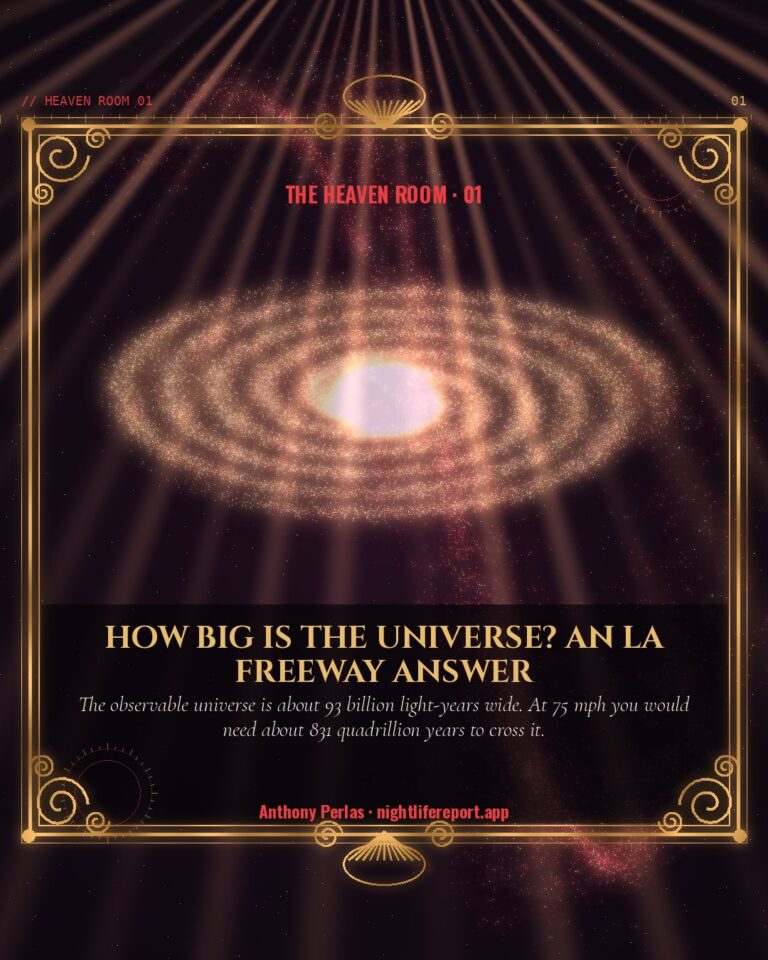 CultureHow Big Is the Universe? An LA Freeway Answer
 Guides5 Skincare Rules Dermatologists Say Matter More Than a 12-Step Routine
 VideoWhy Thursday Is Jupiter’s Day: Dies Iovis and the Spiritual Forecast
Leave a Reply