
Opinion · By Anthony Perlas
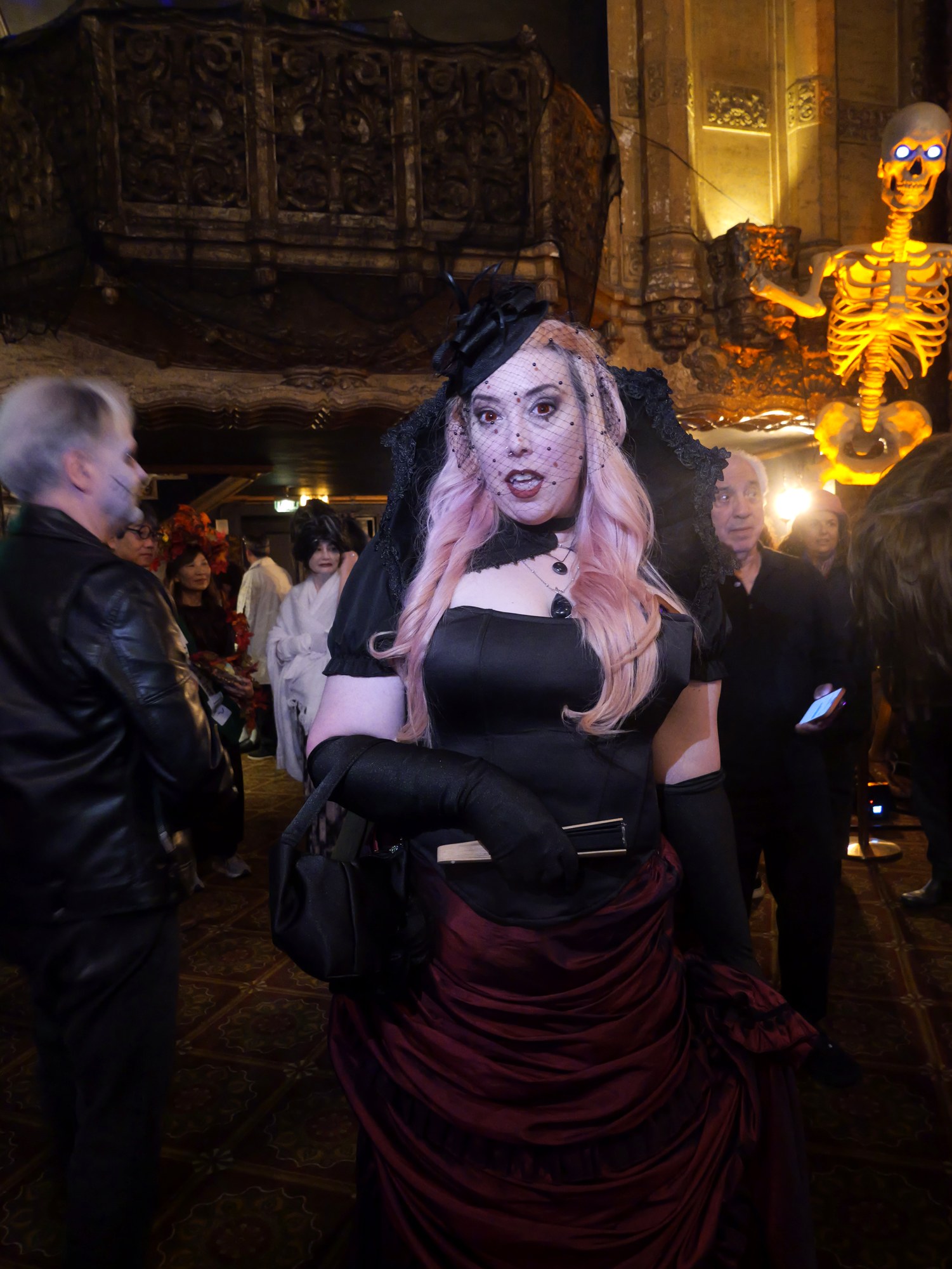
On Halloween night the line at the United Theater on Broadway was made of capes, crowns and a man built like a skeleton in armor. Inside, LA Opera sang live over a 1961 film called Hercules vs the Vampires. The effects on the screen were almost funny. The voices were not. Then the audience walked the grand staircase in a costume contest, and for an hour the lobby was a runway.
Nobody was drunk on the stairs. Nobody was groping anybody. Couples came dressed for each other. I stood there with a camera and thought: this is what the future of nightlife should look like.
The argument
High fashion and opera should be the next frontier of culture. Not a museum piece. Not a charity case. A frontier, where beauty and skill are trained, judged in the open and paid.
We have drifted the other way. Too much of nightlife sells the cheapest version of a person: the body, the bottle, the blur. A model becomes a prop at a table. A singer becomes background noise for a bar tab. That is not freedom. It is a smaller life sold back to us at a markup.
What the numbers say
The talent is real, and it is underpaid where it counts. The U.S. Bureau of Labor Statistics puts the median model at about forty-three dollars an hour, but the lowest tenth earn under about eighteen, and there were only about 6,700 model jobs in the country in 2024 (BLS). BLS also notes that many models work part time, on short notice, with stretches of no work at all.
RelatedPeople Who Don’t Pay Are a Liability
Singers and musicians post a similar median, about forty-two dollars an hour, with the lowest tenth under about nineteen (BLS). An hourly rate means little when the hours do not come.
The law has started to notice. New York’s Fashion Workers Act, signed in December 2024 and in force since June 19, 2025, makes model management companies fiduciaries for the models they represent, requires written deal memos before work and itemized deductions, and demands separate written consent for any digital replica of a model (NY Labor Law §1034; NY Department of Labor). Open rules, written down. That is the direction.
Culture used to pay for greatness
Opera was born in the courts of princes, and it went public in Venice in 1637, when the Teatro San Cassiano opened as the first opera house that sold tickets to the public (Britannica). Patrons and paying crowds made singers famous across Europe. Influence and beauty were rewarded, not apologized for.
Today too many of our cultural houses live on the edge of the donor list. A company that only survives cannot afford to raise giants. The ones who run our venues and companies should be measured by one question: did the talent leave richer, better trained and more famous than it arrived?
Saturn and Jupiter
The Romans gave us a useful picture. Saturn ruled the old age, and his feast, the Saturnalia, turned the order upside down with drinking and license. Jupiter overthrew him and ruled by law, oath and order.
Take it as a metaphor, not a theology. Saturn is the culture of dullness, drunkenness, debauchery and secrets. Jupiter is the culture of effort, open rules, kept promises and greatness that anyone can track. The first keeps people small and grateful for scraps. The second asks them to rise.
Vampires, werewolves and lions
Here is the game, so you can see it instead of being played by it.
The vampire is the low-empathy middleman. He does not make the art; he stands between the artist and the money and feeds. He books the model for exposure. He takes the singer’s night and gives back a drink ticket.
The werewolf is anyone pulled into appetite: the body, the bottle, the brawl. Good people turn werewolf when the room rewards nothing else.
The lion is the leader with a big heart and a long view. He builds a stage, pays on time, credits the work and trains the next person. Talent wants to stand near a lion because the lion’s success depends on theirs.
No race, no faith, no party owns any of these roles. They are behaviors. That is the point.
The quiet cancel
Divide and conquer is the oldest trick in the room. Set the singers against the models, the new against the old, one crowd against another, and the middleman keeps the gate. I am not taking sides in those fights. I am pointing at the gate.
Exclusion rarely announces itself. It is a look across a table, an insinuation, an invitation that stops coming. Its message is always the same: be a little less proud of how beautiful you are or how hard you worked.
The answer is not revenge. It is daylight. Publish the rules. Put the pay in writing. Credit the work by name. Train anyone who shows up ready to work, because anyone can be trained. Keep your oath to your own effort, and find people who keep theirs.
The frontier
Picture it: runways inside opera houses, models trained in movement and voice, singers dressed by designers, audiences who come in costume and leave having seen excellence up close. Women paid and recognized for skill and effort, not for how long they will sit at a table.
We saw a piece of it on Broadway on Halloween. It can be every week.
If you have been made to feel small for wanting to be great, come back here. Nightlife Report is where we cover the work, name the talent and keep the standard high. Recover your baseline. Recover your pride. Then go walk the staircase.
This is an opinion column. Pay figures are U.S. medians from the Bureau of Labor Statistics, May 2024. Photos by Anthony Perlas at the United Theater, Oct. 31, 2026.
You might also like
 ExplainersPhotographers and Models Working for Drinks
 NewsRichard Avedon’s Hollywood Just Opened Free at Gagosian. Here’s How to See It
 NewsWhat You Missed: Thursday, Nov 5
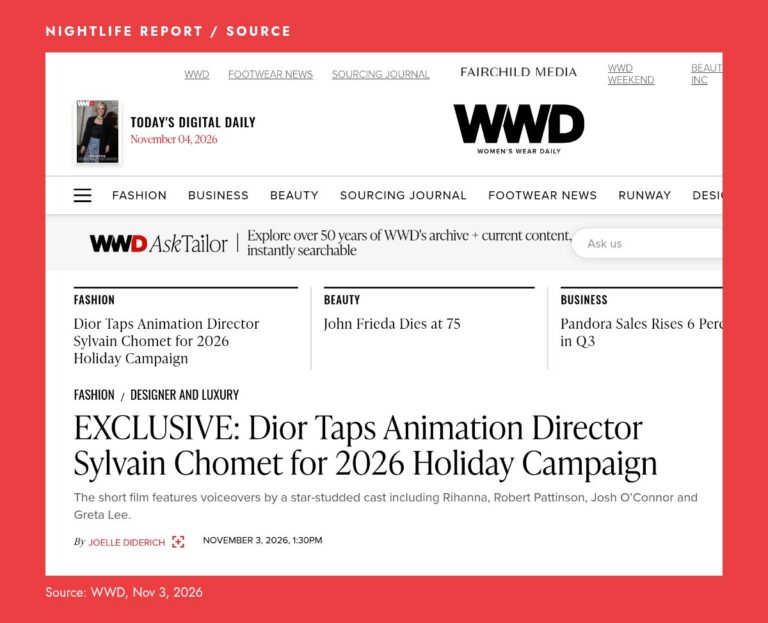 NewsDior’s Holiday Film Is Hand-Drawn and Full of Old Hollywood. The Story Behind It
 CultureIs There Room for You? The Full Heaven Room Investigation
 VideoWhy Thursday Is Jupiter’s Day: Dies Iovis and the Spiritual Forecast
Leave a Reply