

Our reporting. Every figure below comes from a company filing, an earnings release or a government table, linked at the end. Where the evidence stops, we say so and label it an open question.
The short answer
The biggest companies sell consumers the front door (a phone, a search box, a card, a seat) and sell enterprises the building (cloud, chips, ads, data). The recurring fee is the real product. If you work nights, hire out your camera or book rooms for a living, this is the bill you are paying, and the leverage you have.
The top seven
At the October 30 close, the seven most valuable companies were Apple (about five trillion), Nvidia (just under five trillion), Microsoft (nearly four trillion), Alphabet (about three and a half trillion), Amazon (about two and a half trillion), TSMC (about two trillion) and SpaceX (nearly two trillion). Tesla ranked eighth at about one and a half trillion. Source: TradingKey and StockTitan.
Apple: sells you the phone, then rents you the life inside it
In fiscal 2025 Apple booked about four hundred sixteen billion in revenue. The iPhone was about two hundred ten billion. Services, the storage, apps, music and payments layered on top of the device, reached about one hundred nine billion, grew about thirteen percent and carry far higher margins than hardware. Source: Apple FY25 results filed with the SEC.
Nvidia: you buy the gaming card, data centers buy the empire
Of about two hundred sixteen billion in fiscal 2026 revenue, about one hundred ninety-four billion came from data centers, roughly nine in every ten sales. Gamers are now a small slice. Source: Nvidia Q4 FY26 CFO commentary, SEC.
Microsoft: your office runs on a subscription
Microsoft reported nearly two hundred eighty-two billion in fiscal 2025 revenue, up fifteen percent, driven by its cloud and the Office and Copilot seats employers buy per worker. Consumers mostly meet it through Windows, Xbox and a 365 subscription.
RelatedWhat You Missed: Thursday, Nov 5
Alphabet: the search is free because you are the shelf
Advertising brought in about two hundred ninety-five billion of Alphabet’s roughly four hundred three billion in 2025 revenue; Google Cloud added about fifty-nine billion. Search, Maps and YouTube cost you nothing at the register because advertisers pay for your attention. Source: Alphabet FY2025 10-K.
Amazon: the store is the bait, the cloud is the catch
Amazon’s 2025 sales were about seven hundred seventeen billion. AWS, its cloud, was about one hundred twenty-nine billion, eighteen percent of sales but historically most of the operating profit. The store funds the habit; the cloud funds the company. Source: Amazon Q4 2025 release.
TSMC and SpaceX
TSMC sells almost nothing to consumers directly; it manufactures the chips inside Apple, Nvidia and others. SpaceX sells launches and Starlink internet subscriptions to households, airlines and governments. Open question: detailed SpaceX and TSMC segment revenue was not verified for this report.
Tesla and Optimus: the robot is the pitch, the order page does not exist yet
Early Optimus production began at Fremont in October 2026 (Business Insider, TechCrunch). There is no official price; the widely quoted twenty thousand figure is a press estimate, not a Tesla price. There are no public orders, and outside deliveries are expected around late 2027. Tesla planned about twenty billion in 2026 spending toward autonomy and robots while quarterly profit fell forty-three percent. Our reporting: the car buyer is helping fund a robot business whose first buyers will likely be factories, not families.
The Moon pivot
On February 8, 2026, SpaceX shifted its stated priority to a “self-growing city” on the Moon, with a Mars city start pushed to five to seven years out, according to Reuters and CNN. A Moon launch window opens about every ten days versus every twenty-six months for Mars. Open question: we found no public statement about a lunar catapult launch base.
American Express: you pay to carry the card, stores pay to take it
In 2025 Amex took about thirty-seven billion in merchant fees, about seventeen billion in net interest and about ten billion in card fees, which grew eighteen percent. Rewards cost Amex about eighteen billion, paid largely from fees that merchants pass into prices. Source: Amex Q4 2025 Exhibit 99.2, SEC.
Airlines are card businesses that happen to fly
Delta received eight point two billion from American Express in 2025, about one point four times its adjusted operating income. American Airlines reported six point two billion in partner cash, about four times its adjusted operating income. Sources: Delta 10-K and Reuters. Our reporting: on paper, the airline earns more selling miles to a bank than flying you.
Universities: tuition goes up, the endowment grows
Private nonprofit four-year tuition runs about forty-five thousand a year; public in-state about twelve thousand. U.S. endowments across six hundred fifty-seven schools total about nine hundred forty-four billion, and the richest schools now face an endowment tax of up to eight percent. Sources: College Board Trends 2025, NACUBO FY25.
One income, family of five: the math no longer closes
Median full-time pay in Q3 2026 was about sixty-four thousand a year (BLS). Twice the federal poverty line for a family of five is about seventy-five thousand (HHS 2025). Census median household income for 2024 was about eighty-four thousand. One median paycheck now lands below twice the poverty line for five. Local costs vary; the EPI Family Budget Calculator gives county figures.
The tax load
Tax Freedom Day 2026 fell on April 16: Americans as a whole work one hundred six days, twenty-nine percent of income, to cover federal, state and local taxes (Tax Foundation). Our reporting: the squeeze comes from rising housing, care and health costs stacked on a fairly flat tax share. Open question: claims of a coordinated campaign to justify taxes are not proven, and we found no evidence of one.
Jobs in the automation shift
The WEF Future of Jobs Report 2025 projects one hundred seventy million jobs created and ninety-two million displaced worldwide by 2030. The new jobs need different skills. Most exposed: routine writing, data entry, basic design, scheduling. Most protected: live presence, trust, taste, hands-on craft and rooms full of people.
Creatives: “exposure” is not a payment method
Sixty-five percent of UK creative freelancers took unpaid work in a year, and over eighty percent of them called it normal (Creative Industries Federation). New York City’s Freelance Isn’t Free Act requires written contracts and payment within thirty days, with double damages for violations.
What workers and nightlife pros should do
- Sell the room, not the file. Live events, hosting and on-site photography cannot be copied.
- Own the audience. An email list, memberships and direct booking beat rented reach.
- Price the outcome. Packages for weddings, families, holidays and corporate shoots, with a referral ask.
- Use the tools, keep the rights. Never sign away your image or voice.
- Put it in writing. Deposit, scope, usage rights, thirty-day payment.
Band together
Union members earned a median of about fourteen hundred a week in 2025, versus about eleven hundred seventy for non-union workers (BLS). Guilds, co-ops and shared rate cards give freelancers the same leverage: shared contracts, legal help and health plans. SAG-AFTRA and the WGA won consent and pay terms on digital replicas in 2023.
The Roman playbook, for the people
Rome posted the Twelve Tables in public so every citizen could read the law. Roman trade associations pooled resources and protected members. Our reporting: ask for short, plain contracts, join a guild, judge projects by whether people benefit, and beware bread and circuses, the free entertainment that keeps attention off the bill.
What to support, what to watch
Support: local venues, makers and independent photographers; companies with clear prices and easy cancellation; products you own outright; creators paid directly through memberships.
Watch out for: exposure-only offers; contracts that take perpetual rights to your face, voice or work; net-ninety payment terms; annual card fees that cost more than the rewards you use; pre-orders with no price and no date.
Open questions
- SpaceX and TSMC segment revenue.
- The final Optimus price and consumer timeline.
- A lunar launch catapult plan: not found in public statements.
- Whether anyone is hiding specific plans: no evidence found. We report only what is filed.
Sources
- TradingKey: largest companies by market cap, Oct 2026
- Apple FY25 results (SEC)
- Nvidia Q4 FY26 CFO commentary (SEC)
- Microsoft FY25 Q4 release
- Alphabet FY2025 (SEC)
- Amazon Q4 2025 results
- Amex Q4 2025 Exhibit 99.2 (SEC)
- Delta 2025 10-K (SEC)
- Reuters: credit-card cash reshapes airline loyalty
- Reuters: SpaceX prioritizes a city on the Moon
- TechCrunch: Tesla starts Optimus production
- College Board: Trends in College Pricing 2025
- FY25 NACUBO-Commonfund Study
- BLS Usual Weekly Earnings
- Census: Income in the United States 2024
- BLS Union Members 2025
- WEF Future of Jobs Report 2025
- NYC Freelance Isn’t Free Act report
- Creative Industries Federation: Creative Freelancers
Anthony Perlas · nightlifereport.app. Tell us what we missed.
You might also like
 ExplainersHubble’s New Look at Messier 30, and NASA’s Faster Path Back to the Moon
 GuidesWho’s Who in New York: The Makers Behind the 53rd Village Halloween Parade
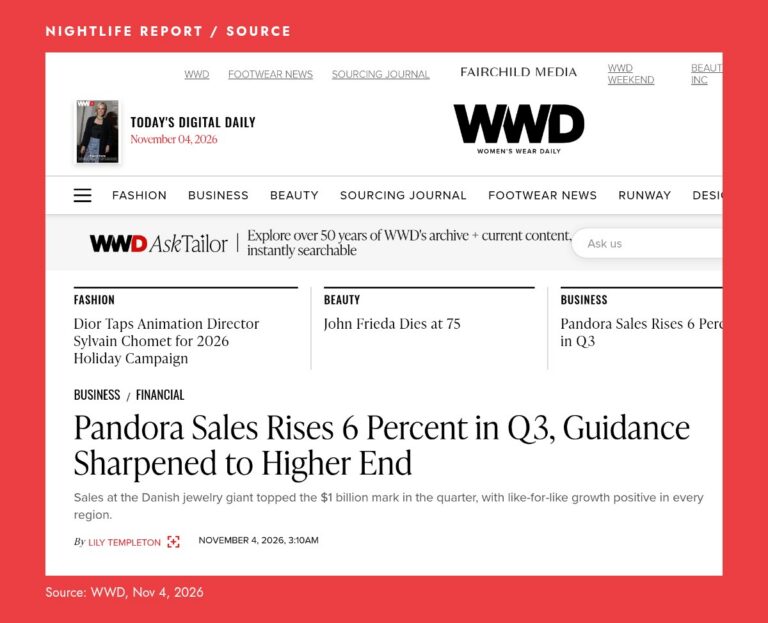 NewsPandora Just Had Its Best Quarter in a While. Here’s What It Means for Your Holiday Jewelry Budget
 FashionArt Basel Miami 2026 After Dark: Where Fashion Meets the Club
 CultureLegion: The Bible’s Word for a Cluster
 VideoWhy Thursday Is Jupiter’s Day: Dies Iovis and the Spiritual Forecast
Leave a Reply