
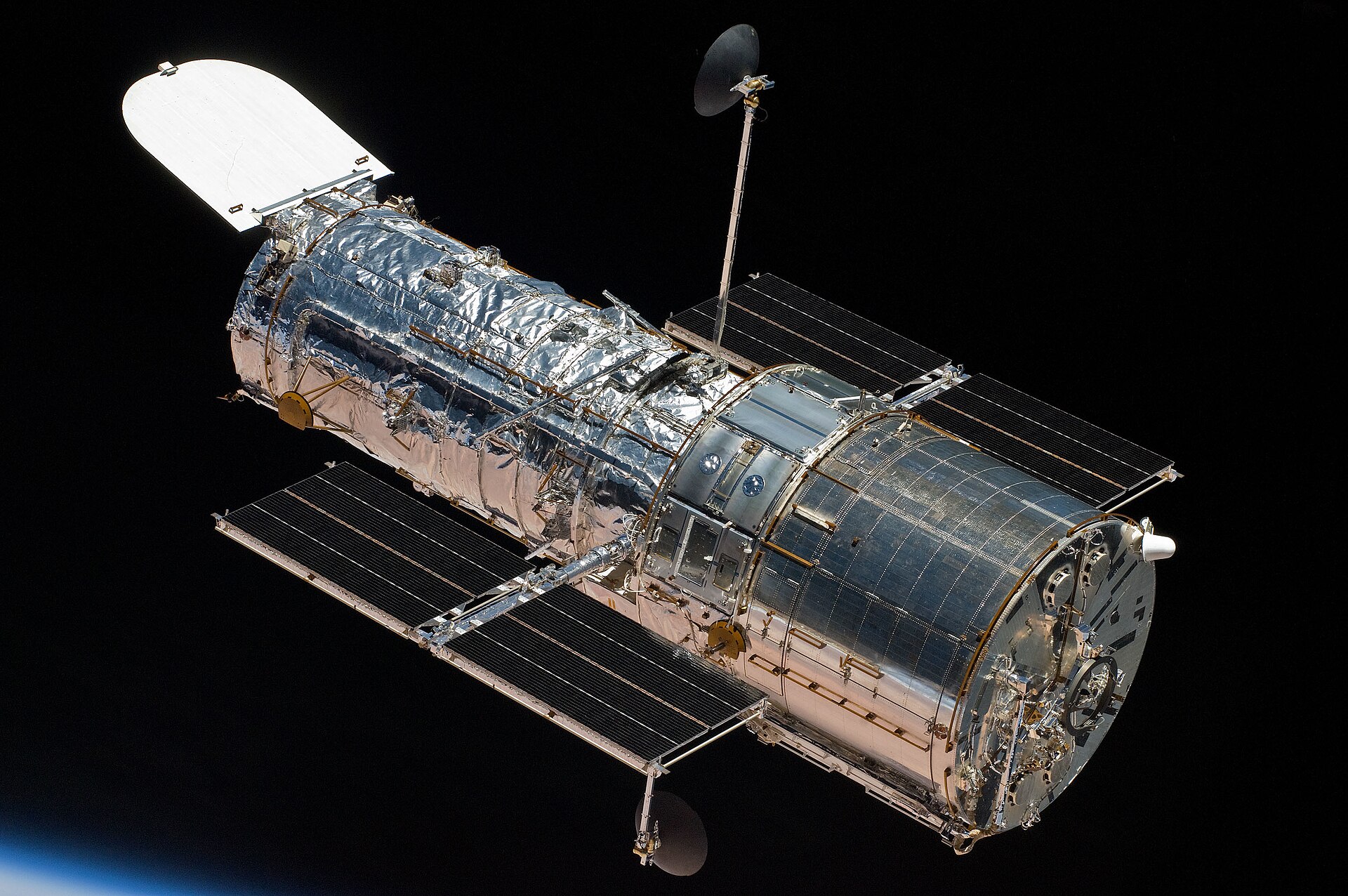
Photo: NASA Hubble Space Telescope / Wikimedia Commons, Public domain
Space Desk
A veteran satellite exits in flames, Hubble finds a tail fit for a comet, and NASA asks for a rescue plan.
Darlings, the sky is having a dramatic week, and it has the decency to stay above our heads. A beloved observatory is ending its career with a blazing exit, Hubble has spotted a tail 63 light-years away that would embarrass any cat, and NASA has asked industry, politely and in writing, whether someone might rescue the old telescope before it falls. Here is what happened, what it means, and what to look for.
Swift Takes Its Final Bow
NASA’s Neil Gehrels Swift Observatory was expected to re-enter Earth’s atmosphere on Wednesday, Nov. 4, almost 22 years after launch, NASA said. As of Monday, the U.S. Space Force predicted re-entry at about 3:30 a.m. Eastern (12:30 a.m. PT), with an uncertainty of 11 hours. Most of the roughly 3,200-pound spacecraft should burn up, though some components may survive; because of Swift’s low inclination, any fragments are confined between 20.6 degrees south and 20.6 degrees north latitude. NASA puts the risk of harm to anyone on Earth at roughly 1 in 2,100.
Swift was designed for a two-year mission and served for more than two decades, chasing gamma-ray bursts, the most powerful explosions in the universe, and pointing quickly at short-lived outbursts so other telescopes could follow. The Guardian reported that the satellite can no longer steer or observe, so its descent is uncontrolled, after a planned rescue did not succeed.
The practical part: Southern California sits well north of the 20.6-degree band, so nothing from Swift is headed for Sunset Boulevard. For the final word on timing, check the NASA Swift blog rather than social posts.
Hubble Finds a Very Long Tail
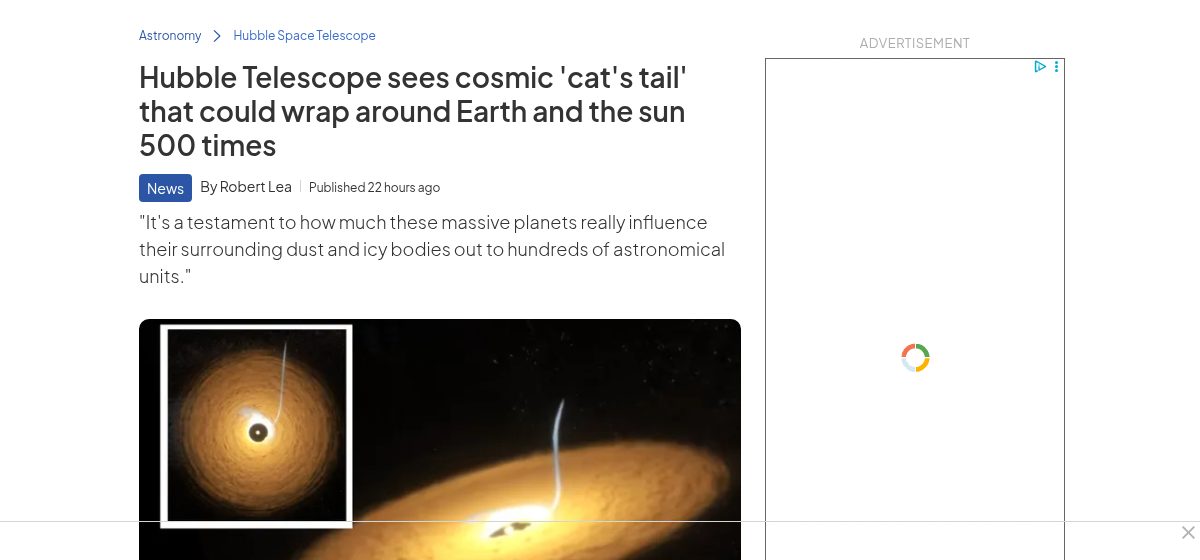
Using 14 years of Hubble observations, astronomers studied a feature nicknamed the Cat’s Tail, which streams from the debris disk around the star Beta Pictoris, 63 light-years away. Space.com reports that it is long enough to curl around the sun-Earth system about 500 times and likely formed when two Pluto-sized bodies collided. “The Cat’s Tail is thought to be the aftermath of a collision between large bodies — think something like Pluto,” said team leader Arin Avsar of the University of Arizona. The team also found a warp in the tail that appears to come from the gas giant Beta Pictoris b, about 10 times the mass of Jupiter.
The Case of the Missing Oxygen
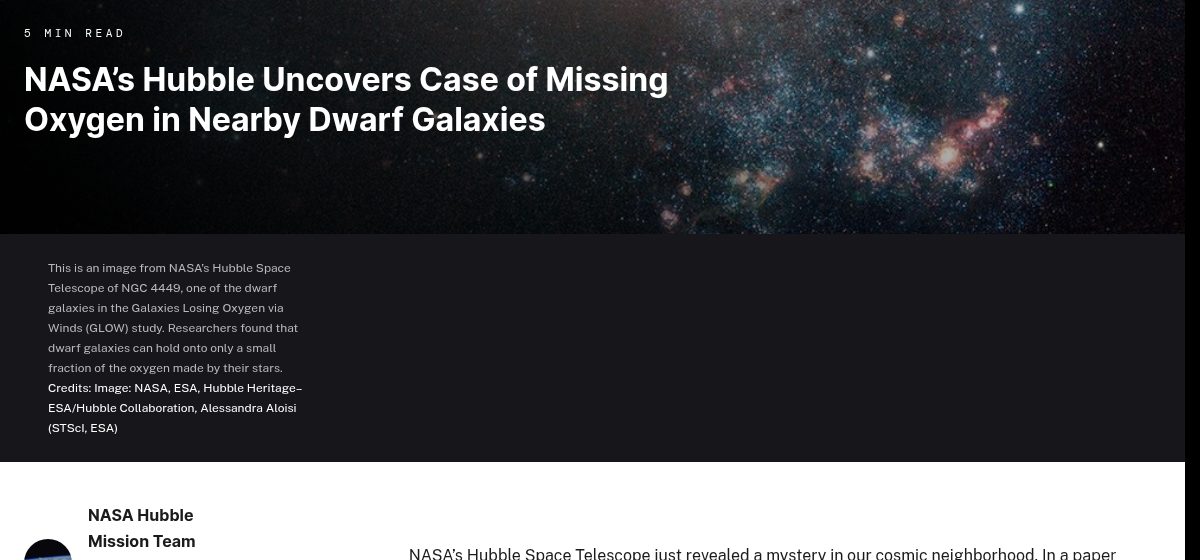
A second Hubble result, published Monday in The Astrophysical Journal, examined 37 nearby dwarf galaxies and found that much of the oxygen their stars should have made is missing. Galactic winds driven by supernovae appear to sweep oxygen out of small galaxies more effectively than current models predict. The study, called Galaxies Losing Oxygen via Winds (GLOW), combined archival Hubble imaging with data from the retired Spitzer telescope and two radio arrays.
Can Anyone Save Hubble?
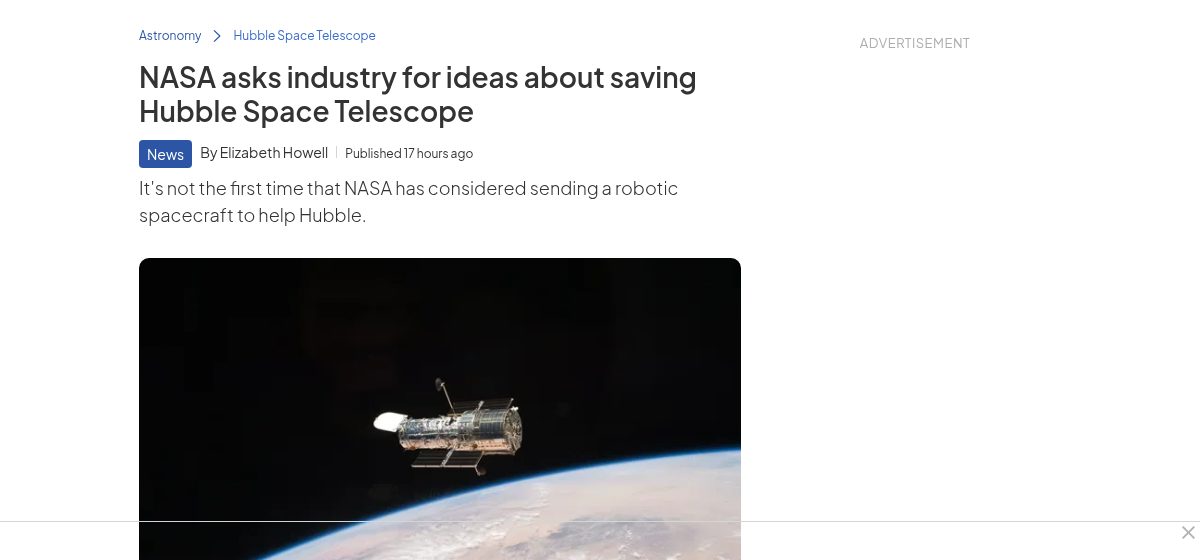
NASA issued a request for information on Oct. 29 seeking ideas for “in-space servicing” of Hubble, from boosting its sinking orbit to enhancing its capabilities, Space.com reported. Hubble will re-enter on its own around 2033 or 2034, so any servicing would have to happen by 2032. NASA Administrator Jared Isaacman said the agency should “be looking at every reasonable opportunity to keep it delivering for as long as possible.” Astronomers still request about seven times as much Hubble observing time as is available each year.
The superintelligence read: the next great telescope, NASA’s Nancy Grace Roman, will send about 1.4 terabytes of data to Earth every day, Technology Org reports, with first images expected by early 2027. No human team can read that much sky by hand; machine learning and citizen scientists will share the work. Swift taught astronomy to react within minutes. Roman will teach it to sort a universe’s worth of pictures before breakfast.
What to Do With This Week
- Follow Swift’s final updates on the NASA Swift blog.
- Read the GLOW paper summary on NASA Science; it is a rare astrophysics story told in plain English.
- Bookmark NASA’s Roman mission page for the first images in early 2027.
Sources
- NASA Science: NASA’s Swift Observatory to Re-Enter Atmosphere (Nov. 2, 2026)
- The Guardian: NASA telescope launched in 2004 to plunge back to Earth (Nov. 3, 2026)
- Space.com: Hubble sees cosmic “cat’s tail” (Nov. 3, 2026)
- NASA Science: Hubble uncovers case of missing oxygen in nearby dwarf galaxies (Nov. 2, 2026)
- Space.com: NASA asks industry for ideas about saving Hubble (Nov. 3, 2026)
- Technology Org: NASA’s Roman Telescope nears its first real images (Nov. 3, 2026)
Nightlife Report is funded by readers. Back the reporting at patreon.com/aperlas.
nightlifereport.app | Tips: editor@nightlifereport.app | 1049 Havenhurst Dr, Unit 67, West Hollywood, CA 90046
You might also like
 CultureThe Hand Span of God: Isaiah 40:12 Run as Math
 CultureWhy Pharaohs Built Pyramids: Memory Costs Resources
 NewsPulse: Holiday Party Season Opens on Both Coasts, Through an Eileen Otte Ford Lens
 ExplainersAgents Go Shopping Before Black Friday: Shopify’s Quarter, Dots’ Second Brain and a Checklist for Your Wallet
 CultureThe Sun’s “Sink”: The Rubber-Sheet Picture and Where It Breaks
 VideoWhy Thursday Is Jupiter’s Day: Dies Iovis and the Spiritual Forecast
Leave a Reply