
An essay for the Nightlife Report
Lillith Magic · Directed by Anthony Perlas
I. The Lit Window
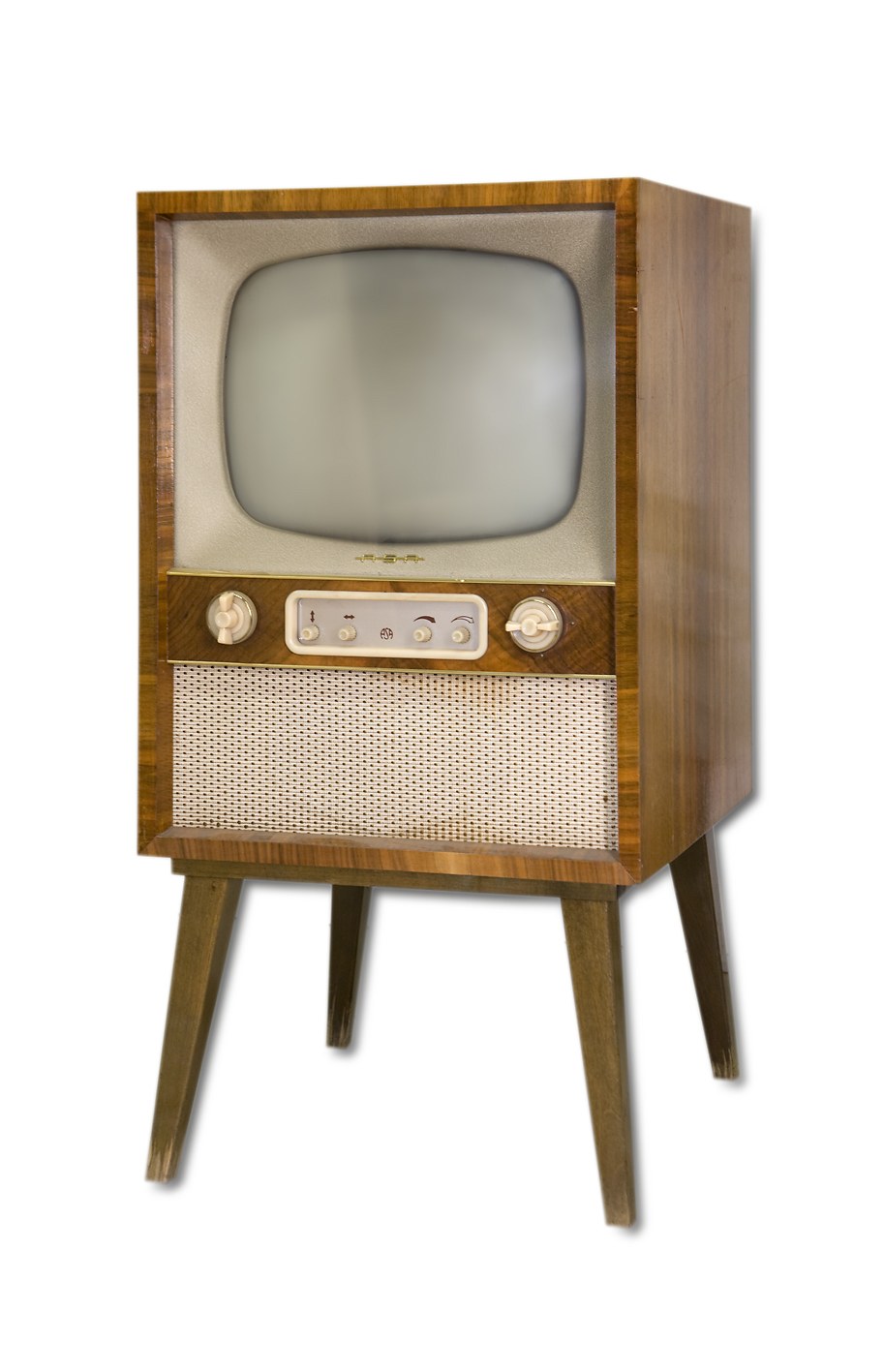
Every age has a window its children press their faces against. Once it was the toy store at Christmas, then the cinema marquee, then the television left on in the next room. Now the window is a phone, and it never closes. It glows under the blanket at midnight. It glows on the bus before school. And behind its glass, a parade goes by that no child asked for and no parent fully sees.

This is the fourth chapter of the Saturn Trap. Saturn, the old god who devoured his children so they could never replace him, is our name for a system, not for any person, people, or faith. In Part III we followed the money that builds nothing and found it renting out the young. Here we follow it to the youngest customers of all. We will not name any singer, dancer, or star. The performers are not the system. Many of them were its children first. Our subject is the machine that decides what a thirteen-year-old sees before breakfast, and the money that tells the machine what to show.
The terms of this chapter are blunt. A girl is taught, long before she can name it, that her value is how she looks to someone else. A boy is taught, at the same moment, that girls are something to look at. Neither lesson came from love. Both came from a business model.
II. What the Psychologists Found
In 2007 the American Psychological Association published the report of its Task Force on the Sexualization of Girls. It is not a pamphlet of panic. It is a careful review of the research across television, music videos, lyrics, magazines, advertising, video games, and the internet. The task force drew a clear line between healthy sexuality, which is part of growing up, and sexualization, which is something done to a person.

By the APA’s definition, sexualization occurs when any of four things happens: a person’s value is made to come only from sexual appeal or behavior, to the exclusion of other qualities; a person is held to a standard that equates physical attractiveness with being sexy; a person is made into a thing for others’ sexual use rather than seen as someone with her own capacity for action; or sexuality is inappropriately imposed on a person. Only one of these conditions is needed. The report found such content everywhere it looked, and it found that girls were its most frequent targets.
Then it asked what the content does. The answer, gathered across many studies, was consistent. The task force linked sexualization to harms in cognitive functioning, to body dissatisfaction and appearance anxiety, to eating disorders, low self-esteem, and depression. It noted effects on how girls see their own sexuality and on how others treat them. It is worth sitting with the plainness of that finding. The harm is not a moral abstraction. It shows up in test scores, in mirrors, and in the doctor’s office.
L. Monique Ward, reviewing two decades of empirical work in 2016, reached the same shore by a longer route. Across experiments, surveys, and long-term studies published between 1995 and 2015, regular exposure to sexualizing media was consistently associated with greater acceptance of narrow, objectifying ideas about women, with more body dissatisfaction, and with greater self-objectification. The research was not unanimous on every point. But its direction was not in doubt.
III. The Mirror Turned Inward
Ten years before the APA report, Barbara Fredrickson and Tomi-Ann Roberts gave the harm its theory. Objectification theory, published in 1997, argues that girls and women grow up in a culture that constantly looks at, comments on, and evaluates their bodies. Over time, many learn to take that outside view as their own. They watch themselves the way a camera would. Fredrickson and Roberts called this self-objectification, and they predicted its costs: habitual body monitoring, shame, anxiety, fewer moments of absorbed and joyful focus, and dulled awareness of the body’s own signals.

The prediction was then tested. In a well-known 1998 experiment, Fredrickson and colleagues asked young women to try on either a swimsuit or a sweater, alone, in front of a mirror, and then to complete a math test. The women in swimsuits reported more body shame and performed worse on the math. Nobody watched them. The mirror was enough. That is the quiet violence of self-objectification: it follows a girl into rooms where no one else is present, and it takes a share of her mind for itself.
Bonnie Moradi and Yu-Ping Huang reviewed a decade of research on the theory in 2008. They found broad support for its core links: self-objectification goes with body surveillance, body shame, and appearance anxiety, which in turn go with disordered eating and depressive symptoms. Shelly Grabe, Monique Ward, and Janet Hyde, in a 2008 meta-analysis across dozens of studies, found that media exposure was reliably related to women’s body image concerns, across experimental and correlational designs alike.
Put plainly: a culture can teach a girl to become her own audience, and the audience is never satisfied.
IV. The Feed Learns Her Name
Television could only guess at its viewer. The feed knows. It learns which images make a girl linger, which make her compare, and which make her come back. It does not need to intend harm. It only needs to measure attention, and then to serve more of whatever holds it.

Jasmine Fardouly, Phillippa Diedrichs, Lenny Vartanian, and Emma Halliwell tested what a short session on social media does to young women. In their 2015 study, women who spent ten minutes browsing their own Facebook account reported being in a more negative mood than those who browsed a neutral website, and those most inclined to compare their appearance with others reported more appearance-related concerns afterward. Marika Tiggemann and Amy Slater, studying adolescent girls in 2013, found that time on the internet and on Facebook was associated with greater body image concern and with stronger internalization of the thin ideal.
Then the industry’s own researchers spoke, though not in public. In September 2021, The Wall Street Journal published reporting by Georgia Wells, Jeff Horwitz, and Deepa Seetharaman on internal research at Facebook, the company now called Meta, about its Instagram app. According to the Journal’s reporting, the company’s own studies had found that Instagram made body image issues worse for a substantial share of teenage girls, roughly one in three among those who already felt bad about their bodies, and that some teens connected the app to anxiety and depression. The documents had been shared internally for years. That October, Frances Haugen, a former Facebook product manager who provided the documents, testified before a United States Senate subcommittee.
The company disputed the framing, said its research was being taken out of context, and pointed to areas where teens reported the app made them feel better. That dispute belongs in the record. But the central fact does not change: the people who built the window had looked through it, and had seen girls on the other side.
V. The Money Behind the Glass
Why does the window show what it shows? Not because some council decided to corrupt the young. The truth is less dramatic and more damning. Attention is sold. Advertisers buy it, platforms harvest it, and content that provokes comparison, longing, and arousal tends to hold attention well. The money does not need to love what it amplifies. It only needs what it amplifies to perform.

Music videos and pop imagery are a part of this economy, and a visible one, but they are not its engine. The engine is a system in which a young performer’s image is a revenue line, in which a fifteen-second clip is cut for maximum replay, and in which a child is counted as an impression the instant she sees it. When a culture’s most profitable stories are about bodies on display, those stories will be told again and again, to whoever is watching. Increasingly, the ones watching are thirteen.
Here is where Saturn’s appetite becomes literal. The system consumes its own future. It takes the attention of children, which should be spent on friendship, play, study, and the slow work of becoming someone, and converts it into revenue now. It is the oldest trade in the old myth: the present devouring its heirs to keep the throne.
VI. A Generation’s Weather
No single study proves that phones broke a generation, and honest writers should say so. Amy Orben and Andrew Przybylski, analyzing very large datasets in 2019, found that the average association between adolescents’ digital technology use and their well-being was negative but small. Jean Twenge and colleagues, in 2018, reported that increases in depressive symptoms and suicide-related outcomes among American adolescents after 2010 coincided with the rise of new media screen time, especially for girls. Scholars still argue about cause and size, and the argument is healthy.
But the weather has changed, and the girls feel it. The Centers for Disease Control and Prevention’s Youth Risk Behavior Survey reported that in 2021 nearly three in five American high school girls, 57 percent, felt persistently sad or hopeless during the past year, the highest level reported in a decade and roughly double the rate among boys. In 2023 the United States Surgeon General issued an advisory on social media and youth mental health. It said there is not yet enough evidence to conclude that social media is sufficiently safe for children and adolescents, and it called on platforms, policymakers, and families to act while research continues.
A careful reader does not need certainty to see a pattern. Rising sadness, a tool designed to capture attention, research that ties appearance-focused media to body shame, and a company’s own studies showing harm to some of its youngest users: these are not proof of a single cause. They are, together, a reason to stop pretending the window is harmless.
VII. What Boys Are Taught
This is not only a story about girls. The same images that teach a girl to watch herself teach a boy to watch her. The film theorist Laura Mulvey named the “male gaze” in 1975, describing how cinema arranged women as objects to be looked at and men as the ones looking. The APA task force noted that sexualizing media shapes how boys and men come to see girls, and how they treat them.
A boy raised on the feed learns that a girl’s worth is visual, that attention is a currency, and that his role is to consume. That lesson does not make him a villain. It makes him a customer, and then it makes him lonely. A young man who has learned to rate rather than to know will find intimacy difficult, because intimacy cannot be scrolled. In Part III we said the system wins twice when it turns men into wallets and women into products. Here it wins earlier, before either one is old enough to notice the terms.
VIII. The Clean Window
What, then, is the answer? Not shame. Shame is the trap’s own tool, and girls have been given enough of it. Not censorship of artists either, which turns a structural problem into a hunt for a scapegoat. The answer is to change the window.
For parents, it begins with delay and presence: later phones, devices out of bedrooms at night, and conversations that name what the feed is doing. The APA task force recommended media literacy so that girls can see sexualization for what it is, and it urged schools and families to offer girls activities that build competence in the body rather than display of it: sport, music, art, science, craft. A girl who knows what her body can do is harder to convince that it is only something to look at.

For the industry, it means design that does not exploit the young: age verification that works, recommendation systems that do not push appearance comparison to teenagers, and research published, not buried. The Surgeon General’s advisory asked for exactly that. For artists and labels, it means remembering that a thirteen-year-old is in the audience, and that a career built on her shame is not a legacy.
For creators and publishers like us, it means a choice about what we amplify. We can cover nightlife, fashion, and beauty as crafts of skill and joy, credited and paid, without selling the young the lie that their worth is their reflection. That is the editorial promise of this report.
The old god ate his children. We can refuse the meal. Turn the window into a door. Let the girls walk through it whole.
Lillith Magic · Directed by Anthony Perlas
References
- American Psychological Association, Task Force on the Sexualization of Girls. (2007). Report of the APA Task Force on the Sexualization of Girls. Washington, DC: APA. apa.org/pi/women/programs/girls/report
- Fredrickson, B. L., & Roberts, T.-A. (1997). Objectification theory: Toward understanding women’s lived experiences and mental health risks. Psychology of Women Quarterly, 21(2), 173–206.
- Fredrickson, B. L., Roberts, T.-A., Noll, S. M., Quinn, D. M., & Twenge, J. M. (1998). That swimsuit becomes you: Sex differences in self-objectification, restrained eating, and math performance. Journal of Personality and Social Psychology, 75(1), 269–284.
- Moradi, B., & Huang, Y.-P. (2008). Objectification theory and psychology of women: A decade of advances and future directions. Psychology of Women Quarterly, 32(4), 377–398.
- Grabe, S., Ward, L. M., & Hyde, J. S. (2008). The role of the media in body image concerns among women: A meta-analysis of experimental and correlational studies. Psychological Bulletin, 134(3), 460–476.
- Ward, L. M. (2016). Media and sexualization: State of empirical research, 1995–2015. The Journal of Sex Research, 53(4–5), 560–577.
- Fardouly, J., Diedrichs, P. C., Vartanian, L. R., & Halliwell, E. (2015). Social comparisons on social media: The impact of Facebook on young women’s body image concerns and mood. Body Image, 13, 38–45.
- Tiggemann, M., & Slater, A. (2013). NetGirls: The Internet, Facebook, and body image concern in adolescent girls. International Journal of Eating Disorders, 46(6), 630–633.
- Wells, G., Horwitz, J., & Seetharaman, D. (2021, September 14). Facebook knows Instagram is toxic for teen girls, company documents show. The Wall Street Journal. (Paraphrased; not quoted.)
- Orben, A., & Przybylski, A. K. (2019). The association between adolescent well-being and digital technology use. Nature Human Behaviour, 3, 173–182.
- Twenge, J. M., Joiner, T. E., Rogers, M. L., & Martin, G. N. (2018). Increases in depressive symptoms, suicide-related outcomes, and suicide rates among U.S. adolescents after 2010 and links to increased new media screen time. Clinical Psychological Science, 6(1), 3–17.
- Centers for Disease Control and Prevention. (2023). Youth Risk Behavior Survey: Data Summary & Trends Report, 2011–2021. cdc.gov/yrbs
- Office of the U.S. Surgeon General. (2023). Social Media and Youth Mental Health: The U.S. Surgeon General’s Advisory. hhs.gov
- Mulvey, L. (1975). Visual pleasure and narrative cinema. Screen, 16(3), 6–18.
You might also like
 Field ReportsYour Outfit Isn’t the Problem. Your Last Ten Seconds Are: A New York Stylist on Owning the Room
 GuidesNYC Clubs and Apps for Making Friends: A Run Club, a Book Club and a Dinner App
 GuidesWhere to Find Affordable Therapy in LA and NYC, and What to Ask on the First Call
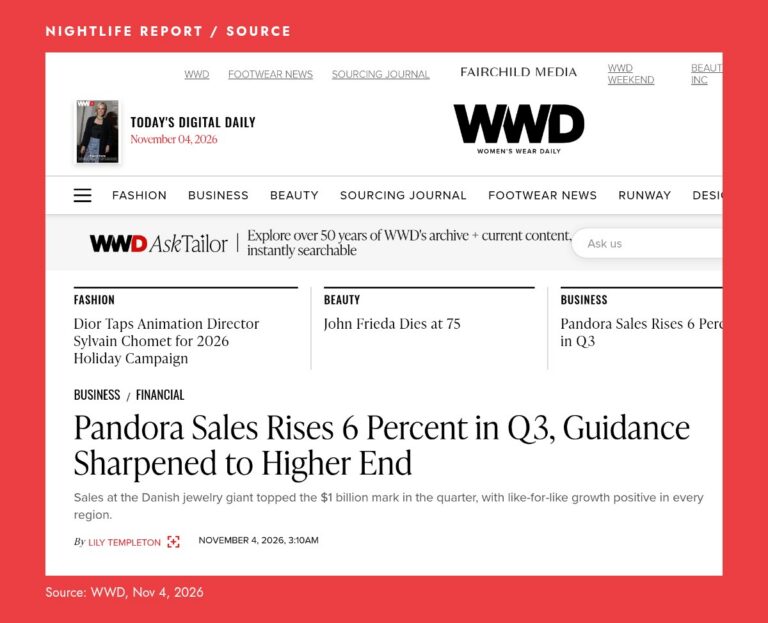 NewsPandora Just Had Its Best Quarter in a While. Here’s What It Means for Your Holiday Jewelry Budget
 CultureTombs: Who Gets Remembered, and Who Gets Brought Back
 VideoWhy Thursday Is Jupiter’s Day: Dies Iovis and the Spiritual Forecast
Leave a Reply