
An essay for the Nightlife Report
Lillith Magic · Directed by Anthony Perlas
I. The Harbor

Walk any harbor where the great white boats sleep and ask one question: what did this money make? Not what did it buy. What did it make? A song that outlived its singer? A chair a craftsman would sign? A film that taught a stranger how to cry? Mostly, silence. Much of that money came out of the ground or out of interest. It moves from ledger to ledger and leaves no art behind. It extracts; it does not create. And a culture built on extraction must keep finding new things to extract. Lately it has found the young. It promises them freedom. It hands them a lease.
This is the third chapter of what we have called the Saturn Trap. Saturn is the old god who devoured his children so they could never replace him. We use the name as a metaphor for a system, not for any person, people, or faith. The terms are simple. Men learn that their worth is what they can pay. Women learn that they are never enough unless someone pays for them. Each is told the other is the enemy. And the real party to the contract, the money that builds nothing, sits on the water and watches.
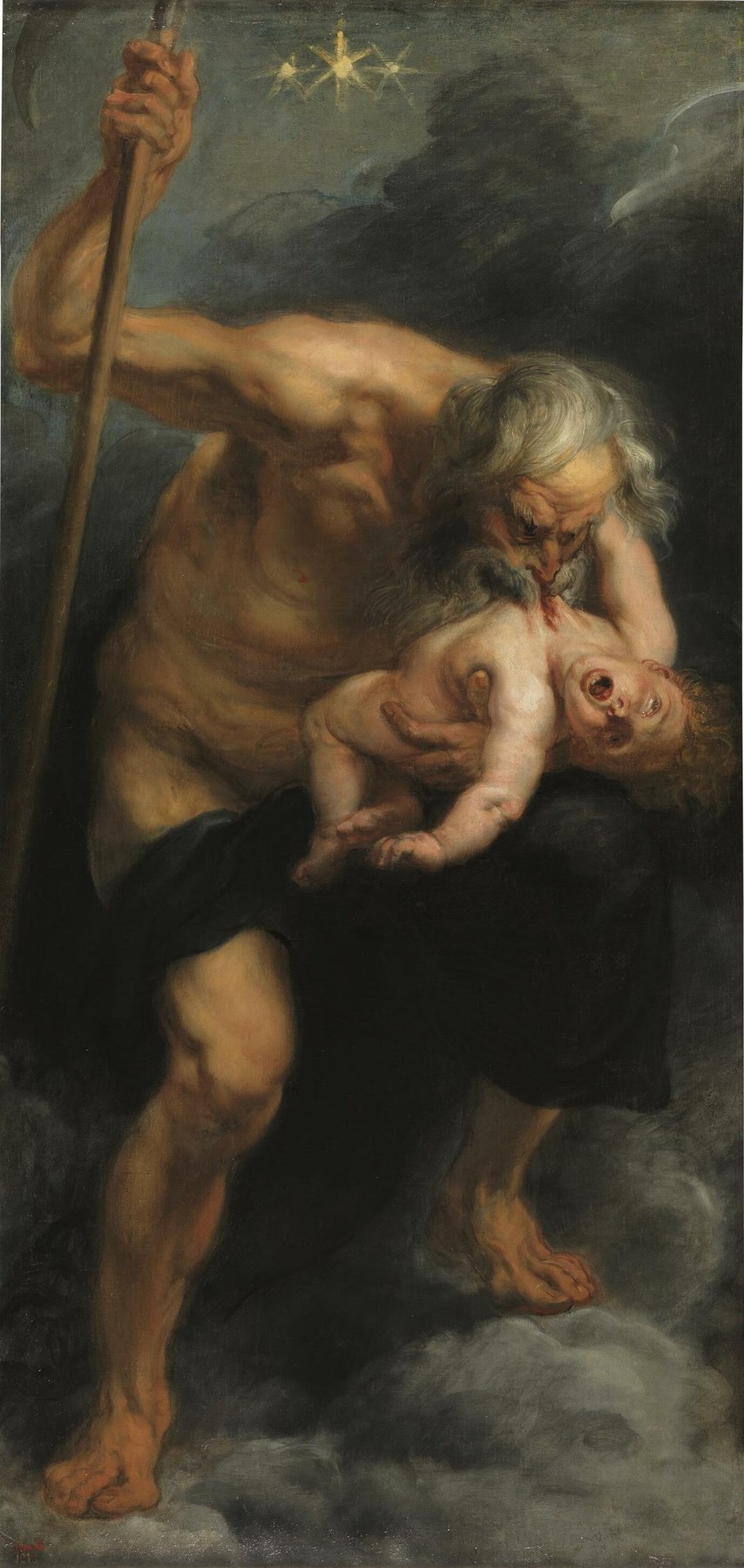
There is an “us” and a “them” in this essay. Precision matters, so here is the line. “Us” is every man and every woman who has been made to feel like a transaction. “Them” is not women, not men, not any race, religion, or named individual. “Them” is a system and its money: an economy of status that rents out bodies and attention and calls the rent liberation.
II. What Was Won, and What Was Rented Back
Eileen Ford understood something the harbor has forgotten. When she and her husband Jerry founded Ford Models in New York in 1946, modeling was a loose trade in which young women were often left to fend for themselves with photographers and clients. Ford’s agency helped change that. Accounts of her career, including her 2014 obituary in The New York Times and the Guardian, describe her as the person who turned modeling into a professional business. She pushed for standard rates, billed clients properly, and saw that the women were actually paid. She was also famously protective. Young models sometimes lived in the Fords’ own townhouse, under house rules and a curfew, while they built careers. Whatever one thinks of her strictness, the direction of the project was clear. A woman’s face and labor were her own property. They were to be paid for on her terms, managed by professionals, and protected from men who wanted access without accountability.
RelatedThe Runway’s Best-Kept Secret Isn’t the Designer
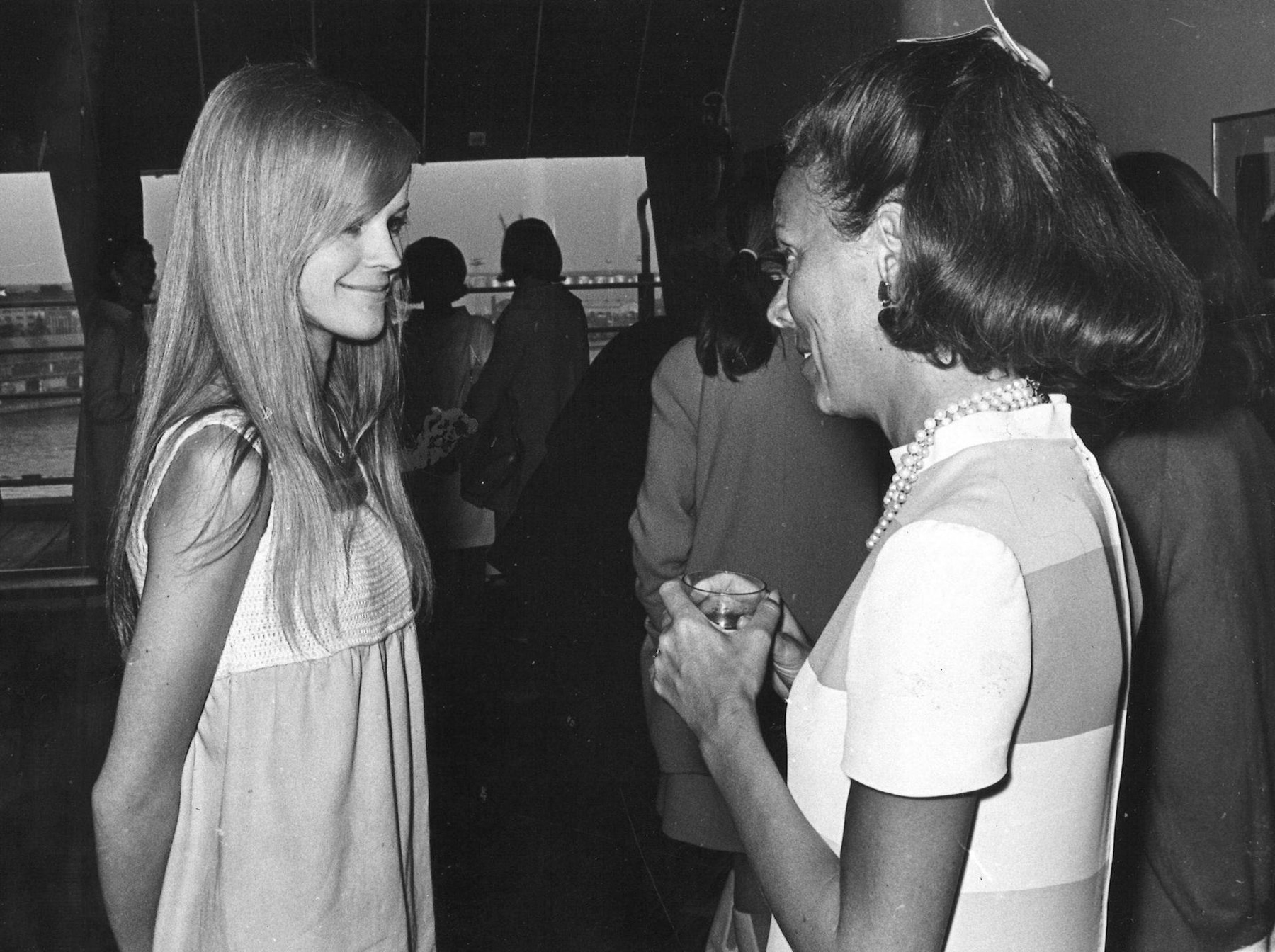
That was emancipation. Imperfect, but real: a contract instead of a favor, a wage instead of a gift, a career instead of a patron. Now look at what replaced it. In parts of nightlife and online culture, the agency has dissolved back into the patron. The rate card has dissolved back into the “gift.” The professional booking has dissolved back into the private invitation onto the boat. The language says “independence,” but the structure is older than the agency Ford built. It is the kept woman, rebranded with a ring light.
So ask it plainly, and without contempt for anyone who has lived it: who is she with at the end of the night? If her rent, her travel, her clothes, and her sense of worth all come from the same few hands, then she has not escaped the men who wanted to control her. She has been returned to them, and told that the return was her own choice.
III. The Founding Promise
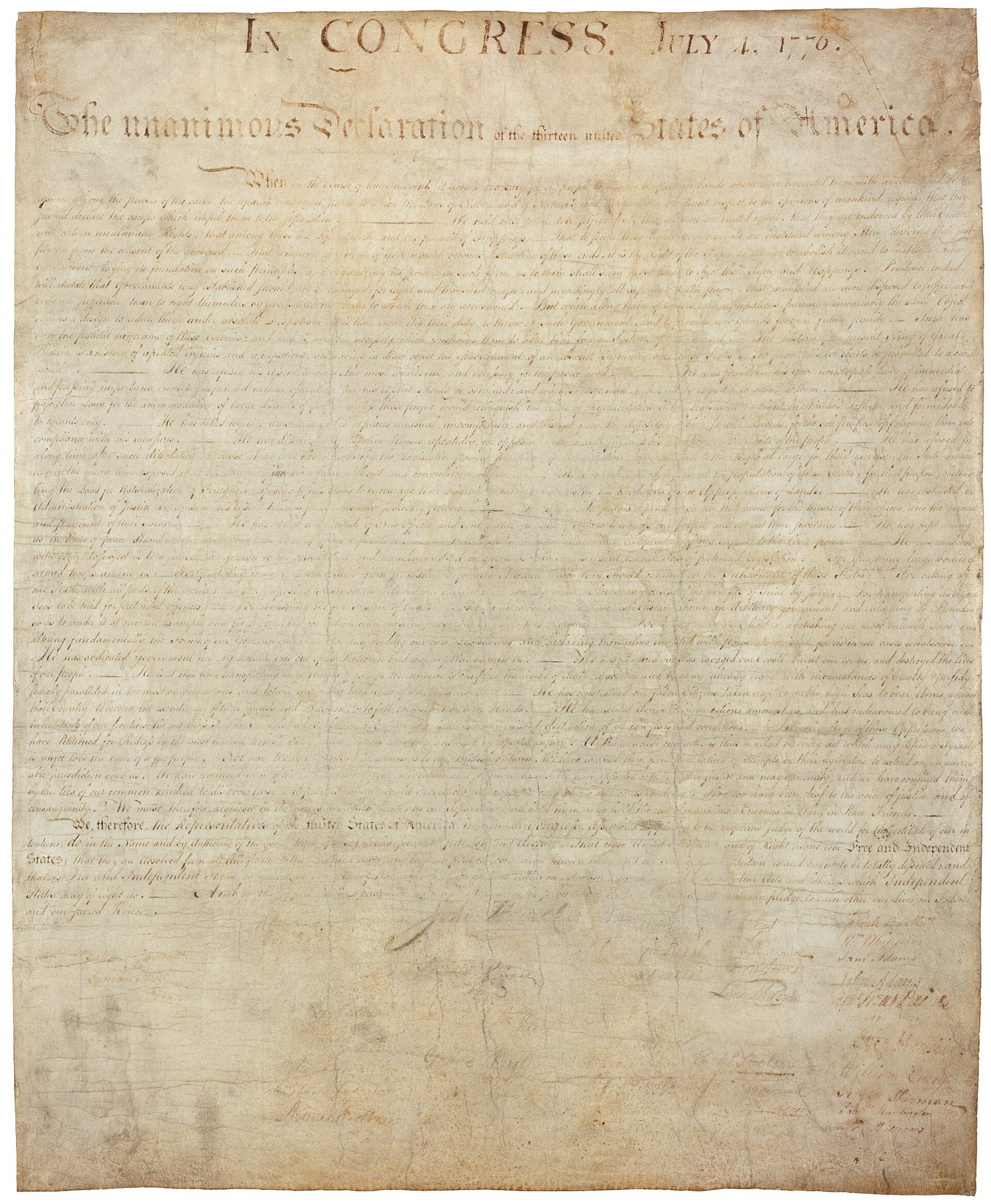
America began with an argument about ownership. The Declaration of Independence holds “these truths to be self-evident, that all men are created equal, that they are endowed by their Creator with certain unalienable Rights, that among these are Life, Liberty and the pursuit of Happiness.” Unalienable means it cannot be sold, not even by the person who holds it. That is the radical heart of the founding. Some things about a human being are not for sale. Ever.
The Constitution’s Preamble promises to “secure the Blessings of Liberty to ourselves and our Posterity.” The Bill of Rights protects “the right of the people to be secure in their persons” (Fourth Amendment). After a war that cost hundreds of thousands of lives, the Thirteenth Amendment declared: “Neither slavery nor involuntary servitude, except as a punishment for crime whereof the party shall have been duly convicted, shall exist within the United States, or any place subject to their jurisdiction.”
We are not saying that a modern lifestyle arrangement is legally slavery. It is not, and the comparison would insult those who were enslaved. Our claim is moral, not legal. The founding promise is self-ownership: the person is secure in herself and himself, and liberty is a blessing meant to pass to our children. A culture that teaches young people to rent out their persons for proximity to wealth, and teaches young men to buy affection instead of earning trust, works against that promise. It puts a price on what the founders called unalienable. That is the betrayal. Not of one law. Of the spirit of 1776.
IV. The Vocabulary of the Trap
Every system of control needs a language. This one has a dialect you will recognize. Listen closely: the words do the work before any money changes hands.
“Spoil me.” It sounds like play. It turns affection into an invoice. Love becomes something proven by spending. The man learns that he is valued only for his card, and the woman learns that being cared for means being paid for. Both lose the ability to tell care from purchase.
“You’re nothing without me.” This phrase, sometimes spoken and sometimes only implied, is the hinge of coercive control. It shrinks a person’s world until the provider becomes the only source of worth. Lundy Bancroft, who spent years counseling abusive men, describes in Why Does He Do That? how controlling partners slowly build a sense of entitlement and ownership. The sociologist Evan Stark, in Coercive Control, argues that the core harm of abuse is often not a single blow but the step-by-step removal of a person’s liberty: her money, her friends, her time, her sense of herself. Stark explicitly frames this as a liberty crime. That framing should matter to any American.
Love-bombing. Flood a person with attention, gifts, travel, and praise, then withdraw it without warning. Donald Dutton and Susan Painter described how intermittent cycles of reward and abuse, combined with a power imbalance, can produce “traumatic bonding”: a strong emotional attachment that makes leaving harder, not easier. The highs are made to be remembered. The lows are made to be blamed on the one who suffers them.
Scarcity. “Only tonight.” “Only this table.” “Only girls who look like this.” Scarcity makes people panic. Panicked people do not ask who is paying, or why. It keeps women competing with each other instead of comparing notes, and keeps men competing to pay instead of asking what they are buying.
The Hubbard emotional tone scale, from Scientology, is not science, and we do not cite it as evidence. But it is a useful image for this vocabulary. The scale ranks emotions from apathy and grief at the bottom, through fear, covert hostility, and anger, up to enthusiasm and serenity. Read the phrases again with that image in mind. “Spoil me” sits in a kind of grasping need. “You’re nothing without me” is covert hostility wearing the mask of devotion. Love-bombing climbs to false enthusiasm and then drops its target into grief. The culture runs on the lowest bands of human feeling and sells them back as glamour.
V. The Damage, Measured
This is not a mood. It is measured. A body of research shows what this culture does to people.
Barbara Fredrickson and Tomi-Ann Roberts proposed objectification theory in 1997. They argued that a culture that constantly evaluates women’s bodies teaches women to watch themselves from the outside. This “self-objectification” is linked to shame, anxiety, reduced awareness of inner states, and, in later research, to depression and disordered eating. A woman told that her body is her only currency is also being taught to see herself as a product. That cost appears on no invoice.
Tim Kasser and Richard Ryan found in 1993 that people who put financial success at the center of their aspirations reported lower well-being and more distress than those who prioritized relationships, growth, and community. Kasser’s later book, The High Price of Materialism, gathers the evidence: materialistic values are consistently linked to lower life satisfaction, more anxiety, and poorer relationships. This applies to the man who thinks paying is love as much as to the woman who thinks being paid is worth.
Research on so-called sugar relationships finds a mix of motives and experiences. Sociologist Maren Scull’s interview studies describe a range of arrangements, from openly transactional to quasi-romantic, and show participants constantly negotiating the line between gift and payment, intimacy and exchange. That negotiation is the point. When the price is always in the room, nobody in the room can rest.
Put the studies side by side and the shape of the harm appears. Women report feeling watched and never enough. Men report feeling used and replaceable. Both sides distrust intimacy, because they were taught it is a trade. Relationships break under the weight. And the money that set the terms is still on the water, untouched.
VI. The Sacred Question
The tantric traditions of India have been cheapened in the West into a bedroom technique. Their deeper teaching is about sovereignty. The body is understood as a temple, a site where consciousness meets matter. A temple is not rented by the hour. It is kept, honored, and entered only with reverence and consent.

From that tradition comes a sincere question, for women and men alike: who is paying you, and what part of you are they paying for? And a second: what in you is sacred, and who decided its price? The point is not shame. Shame is the trap’s own tool. The point is self-possession. If something in you is holy, then nobody owns it, no single man, no group of men, no platform, no harbor full of boats. And it is not for rent either. It is given freely, inside trust, or not at all.
This applies just as much to men. A man’s attention, his labor, and his loyalty are also sacred. When he is taught to measure himself by what he can spend on someone, he has also put his temple up for rent. He becomes a funding source, not a partner. The system wins twice.
VII. Standing Together
What is the alternative? Nothing new. Something very old that we have nearly forgotten.
A righteous partnership begins with two people who own themselves. Neither is buying and neither is for sale. They build something that did not exist before: a home, a business, a family, a body of work. Money serves the creation rather than replacing it. Affection is shown through time, attention, and keeping one’s word, not through spending. Conflict is handled with honesty, not withdrawal and reward. Each partner’s friends, family, and ambitions grow larger inside the relationship, not smaller. That is the opposite of coercive control: love that adds liberty instead of removing it.

For women, it means refusing the false choice between being protected and being free. Eileen Ford’s agency showed that a woman could be both: paid professionally, protected by structure, owing nothing to anyone’s private favor. For men, it means refusing to be a wallet. Become a builder, a creator, someone whose worth is in what he makes and how he keeps faith. Ask not “What can I afford to give her?” but “What can we create together that neither of us could alone?”
The system wants men and women on opposite sides of the table, one paying and one performing. Our answer is to move to the same side. Let women and men compare notes. Let them name the vocabulary when they hear it. Let them ask who owns the boat, and then build something together that the boat’s money never could: art, families, businesses, and a culture worth handing to our children.
The founders called liberty a blessing for our posterity. Blessings are not rented. They are kept, protected, and passed on. That is the work in front of us. It belongs to all of us. Start tonight.
Lillith Magic · Directed by Anthony Perlas
References
- Bancroft, L. (2002). Why Does He Do That? Inside the Minds of Angry and Controlling Men. New York: G. P. Putnam’s Sons.
- Dutton, D. G., & Painter, S. L. (1981). Traumatic bonding: The development of emotional attachments in battered women and other relationships of intermittent abuse. Victimology: An International Journal, 6(1–4), 139–155.
- Dutton, D. G., & Painter, S. (1993). Emotional attachments in abusive relationships: A test of traumatic bonding theory. Violence and Victims, 8(2), 105–120.
- Fredrickson, B. L., & Roberts, T.-A. (1997). Objectification theory: Toward understanding women’s lived experiences and mental health risks. Psychology of Women Quarterly, 21(2), 173–206.
- Kasser, T. (2002). The High Price of Materialism. Cambridge, MA: MIT Press.
- Kasser, T., & Ryan, R. M. (1993). A dark side of the American dream: Correlates of financial success as a central life aspiration. Journal of Personality and Social Psychology, 65(2), 410–422.
- Scull, M. T. (2020). “It’s its own thing”: A typology of interpersonal sugar relationship scripts. Sociological Perspectives, 63(1), 135–158.
- Stark, E. (2007). Coercive Control: How Men Entrap Women in Personal Life. New York: Oxford University Press.
- Hubbard, L. R. (1951). Science of Survival. (Source of the “tone scale”; cited as a metaphorical lens only, not as scientific evidence.)
- Declaration of Independence (1776). National Archives, archives.gov/founding-docs/declaration-transcript.
- Constitution of the United States, Preamble; Amendment IV (1791); Amendment XIII (1865). National Archives, archives.gov/founding-docs.
- Wilson, E. (2014, July 11). Eileen Ford, grande dame of the modeling industry, dies at 92. The New York Times. (Background on Ford Models; paraphrased, not quoted.)
- Horwell, V. (2014, July 11). Eileen Ford obituary. The Guardian.
You might also like
 Field ReportsHalloween in the Six Fashion Capitals
 NewsThe Pulse: Fifty Years of Five Boroughs, LA’s Library-Card Costume and Eileen Otte Ford’s Business of Showing Up
 FashionWho’s Who in New York: Tonight’s CFDA Nominees, and the Five Emerging Designers to Know
 FashionRunway Meets Dance Floor: The Fashion Afterparties of November 7 Weekend
 NewsThe Rare Flame: A Manifesto on the Conduct That Keeps Us Small
 VideoWhy Thursday Is Jupiter’s Day: Dies Iovis and the Spiritual Forecast
Leave a Reply