
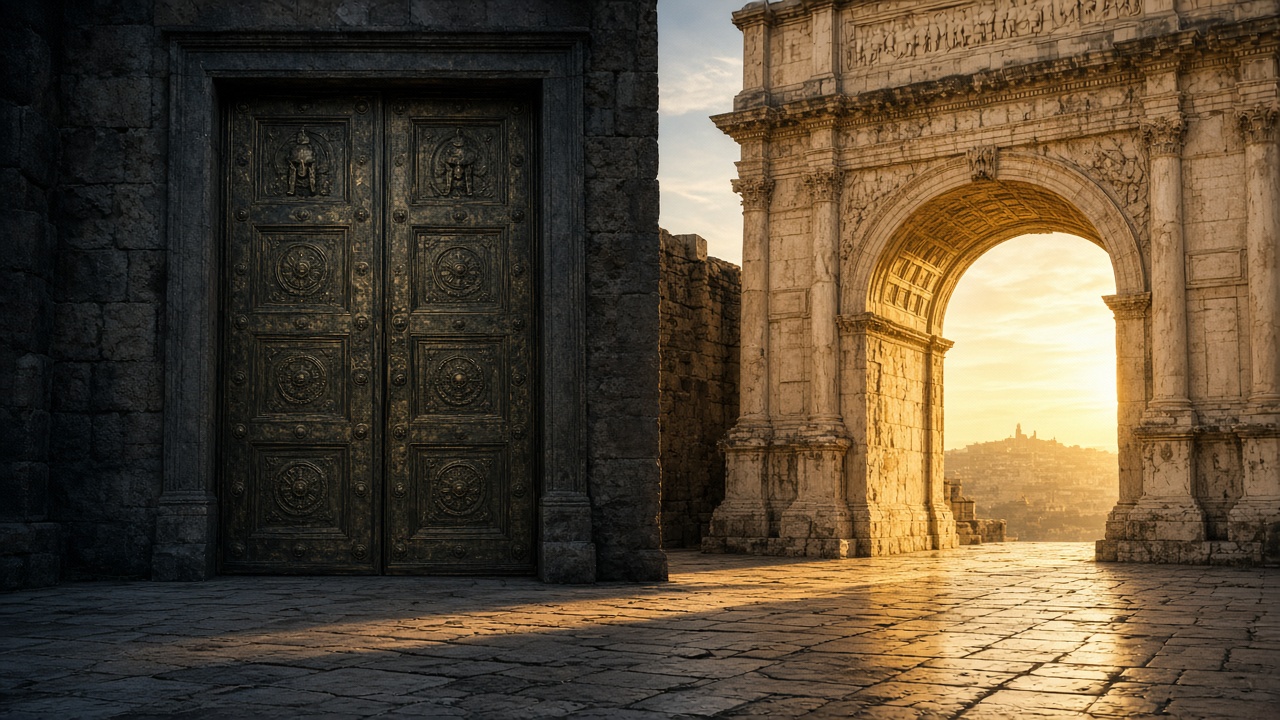
Research brief · Lillith Magic · Directed by Anthony Perlas
How do you spot online bullying without guessing? You read the pattern, not one comment. Researchers define bullying by repetition, a power imbalance and intent to harm or exclude (Olweus, 1993; CDC, Gladden et al., 2014). One rude reply is noise. The same tactic, from linked accounts, again and again, is a signal. This brief pairs that science with a 2,500-year-old lesson from Sparta, Athens and Rome about which communities last.
How do you tell bullying from criticism?
Look for at least three signals together: repetition over time, a power gap (reach, status, numbers) and aggression, exclusion, ridicule or dogpiling. Criticism of your work, even harsh, usually fails the repetition and coordination tests.
Why keyword filters get it wrong
Single words are a poor guide. In Davidson et al. (2017), lexicon-based flagging had very low precision for real hate speech, and the study showed why offensive language and hate speech have to be separated. Coordinated campaigns show up better as clusters: accounts that post the same thing at the same time and share traces (Pacheco et al., 2021). Watch the behavior network, never anyone’s identity.
Prebunk the tactic, then use silent tools
Short videos that name a manipulation technique before people meet it make audiences better at spotting it (Roozenbeek et al., 2022, Science Advances). For your own feed, Instagram’s Restrict, Limits and Hidden Words contain a pile-on quietly, without feeding it attention. Research on counterspeech suggests it mostly shapes the bystanders, not the attacker, so speak to your audience, not the troll.
Sparta closed its doors; Rome opened them
- Sparta kept citizenship tightly closed. Aristotle (Politics 2.1270a) blamed its shrinking citizen body, oliganthropia, for its fall; historians such as Hodkinson (2000) back the manpower story.
- Athens pooled knowledge from many citizens (Ober, 2008), but factional stasis (Thucydides 3.82) could tear it apart.
- Rome widened citizenship and managed allies, and Polybius credited its mixed constitution for resilience (Beard, SPQR).
The takeaway for a fashion or nightlife community: selective openness outlasts closed exclusivity. Groups that run themselves in small, elected, competence-based circles last longest, from the Rule of St. Benedict (chapter 64) to Elinor Ostrom’s commons research (1990).
RelatedIs There Room for You? The Full Heaven Room Investigation
Our own numbers
On Instagram we drew 235,547 views and reached 82,237 accounts, and 92.8% were not followers. Carousels drove 80.6% of interactions. But 5,631 profile visits turned into only 46 link taps (0.8%). Reach is rented; your list is owned. That’s why every post now points somewhere you control.
FAQ
Is one mean comment bullying?
Usually not. Bullying is repeated, involves a power gap and aims to hurt or exclude.
Should I reply to a pile-on?
Research suggests replies mostly influence bystanders. Restrict, Limits and Hidden Words contain it quietly; document everything.
Can a group be “the bullies”?
No. We rate behaviors, never any ethnic, national or religious group. Coordinated behavior shows up in the network, not in who people are.
Keep reading
- How the network operates: werewolf moves and lioness moves
- Was the Philippines Solomon’s Ophir?
- The Creator Week
Book a shoot or a Content Day with Lillith Magic at lillith.vip, and see the work at @lillithmagic. Hear the full conversation on The Perlas Protocol podcast, and join the inner circle at patreon.com/aperlas.
Lillith Magic · Directed by Anthony Perlas
Sources: Olweus (1993) · Gladden et al. (2014), CDC · Davidson et al. (2017), ICWSM · Pacheco et al. (2021), ICWSM · Roozenbeek et al. (2022), Science Advances · Aristotle, Politics · Hodkinson (2000) · Ober (2008) · Thucydides 3.82 · Polybius, Book 6 · Beard (2015), SPQR · Rule of St. Benedict, ch. 64 · Ostrom (1990), Governing the Commons. Feature photo: David Roberts, Ruins of the Roman Forum, public domain, via Wikimedia Commons.
You might also like
 CultureHow Big Is the Universe? An LA Freeway Answer
 ExplainersPhotographers and Models Working for Drinks
 ExplainersAgents Go Shopping Before Black Friday: Shopify’s Quarter, Dots’ Second Brain and a Checklist for Your Wallet
 ExplainersSuperintelligence Week: Gemini 4 Carbon Tops the Board, Terra Halves the Price, Pika Opens Its Video Model
 NightlifeBelief Won’t Save You. Building Will.
 VideoWhy Thursday Is Jupiter’s Day: Dies Iovis and the Spiritual Forecast
Leave a Reply