Founders Pass · Support independent LA nightlife reporting · Subscribe on Patreon →
Every Bureau gallery, sorted by show day. Get access to all of it on Patreon, starting at $7/month.Join from $7/mo

Category: Fashion Week

  • Gallery: Dimez at The Bureau Fashion Week LA, Day 1 The Opening

    Gallery: Dimez at The Bureau Fashion Week LA, Day 1 The Opening

    Gallery · Day 1 · The Opening

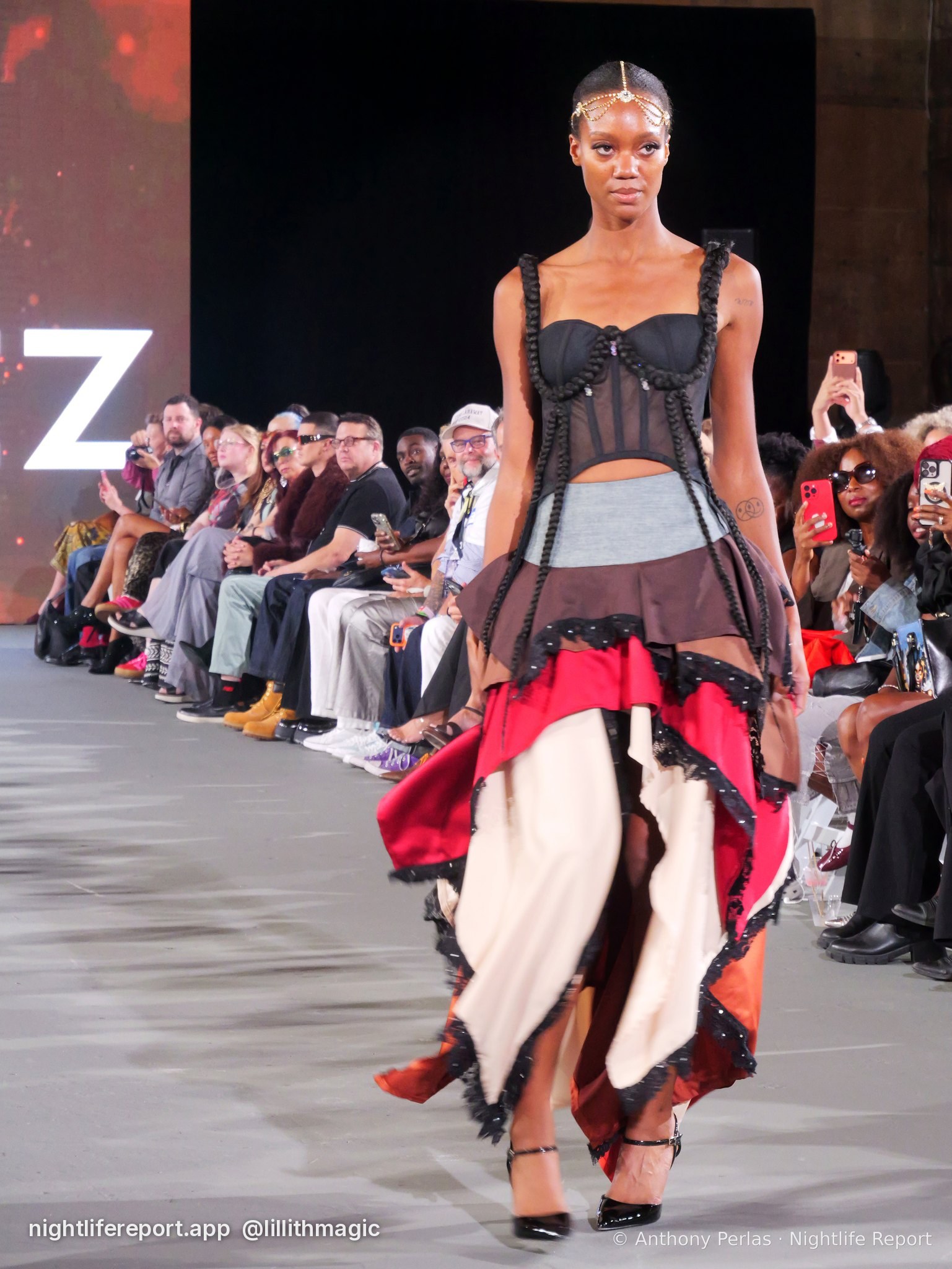
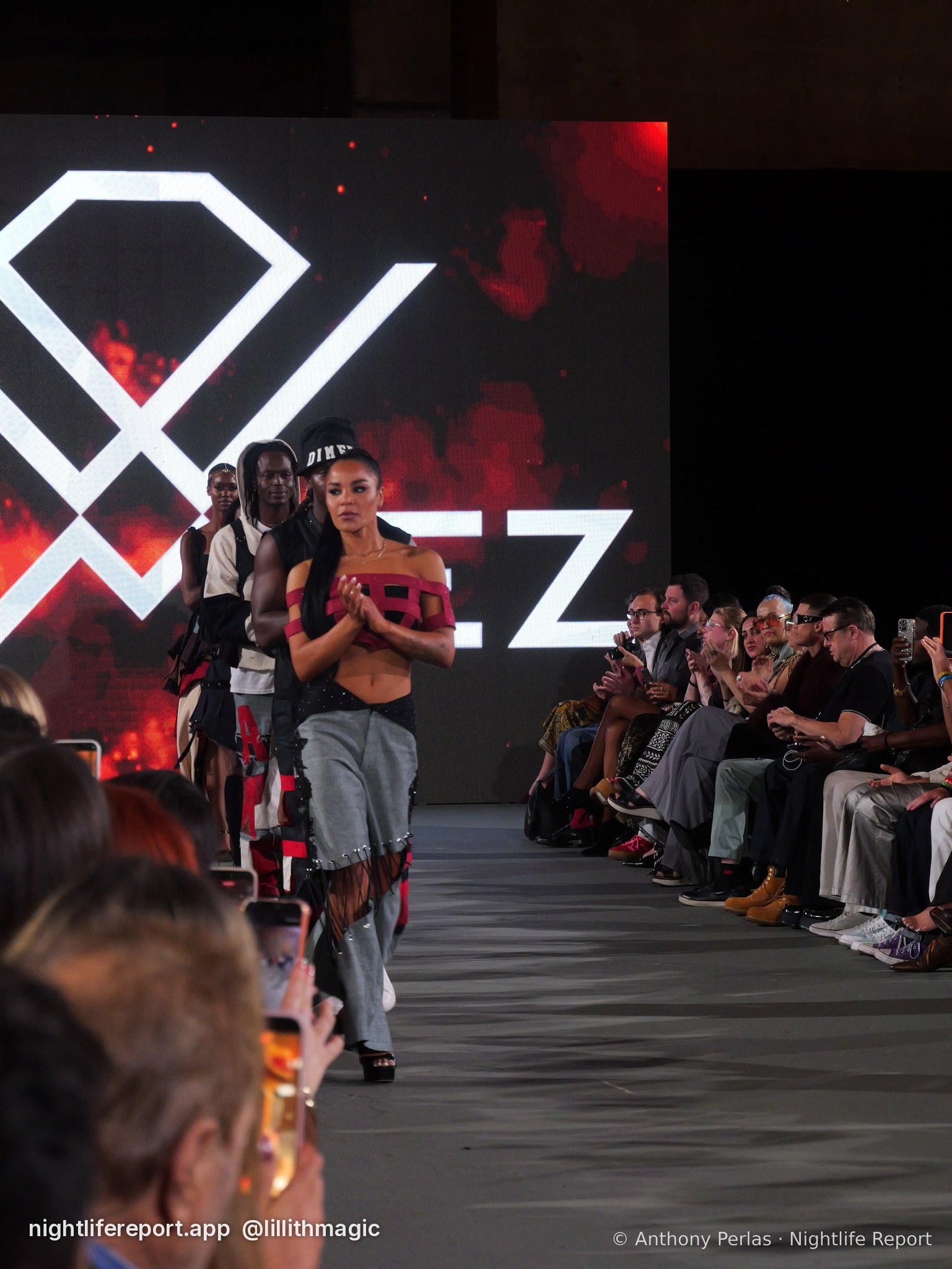
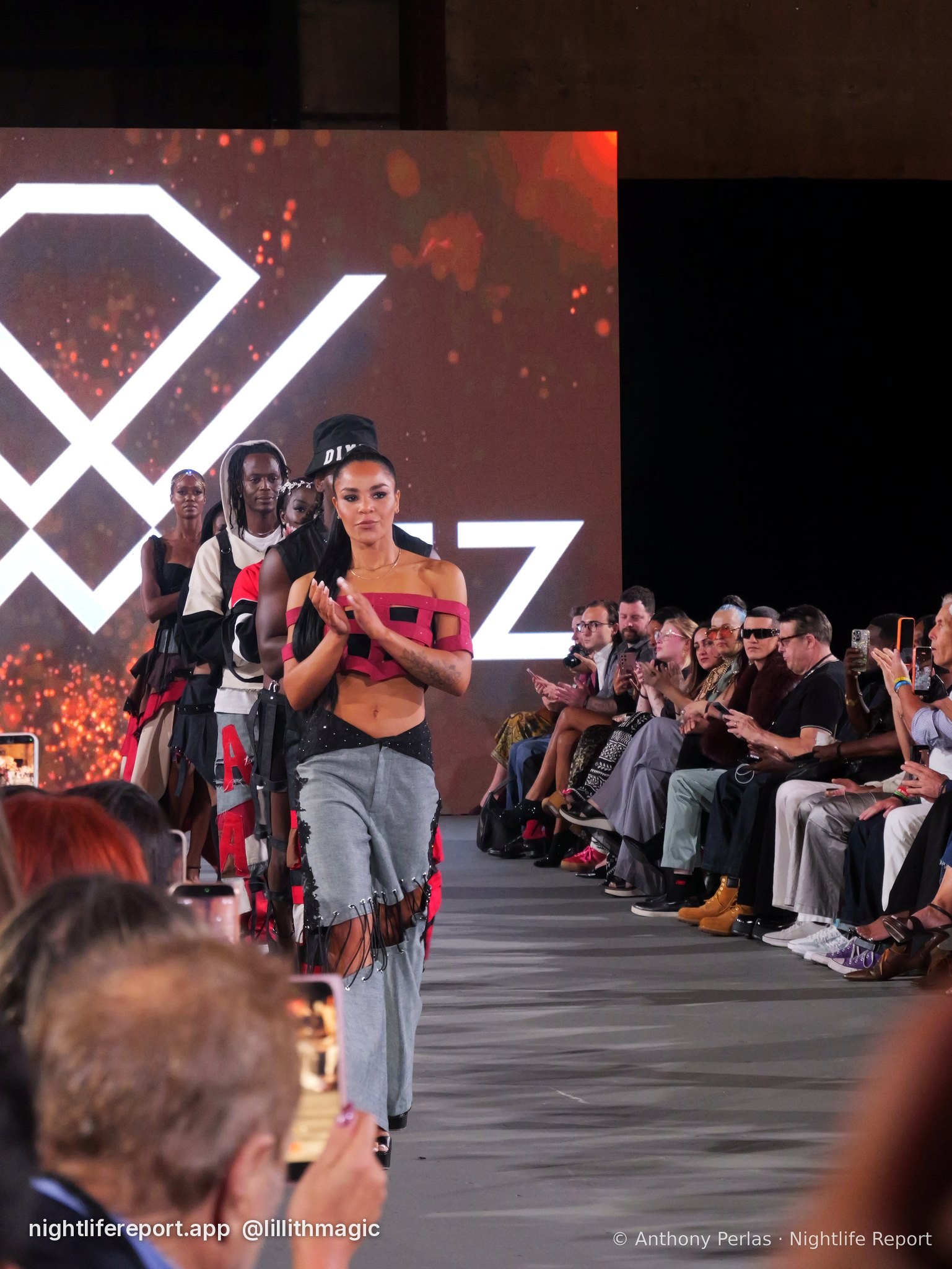
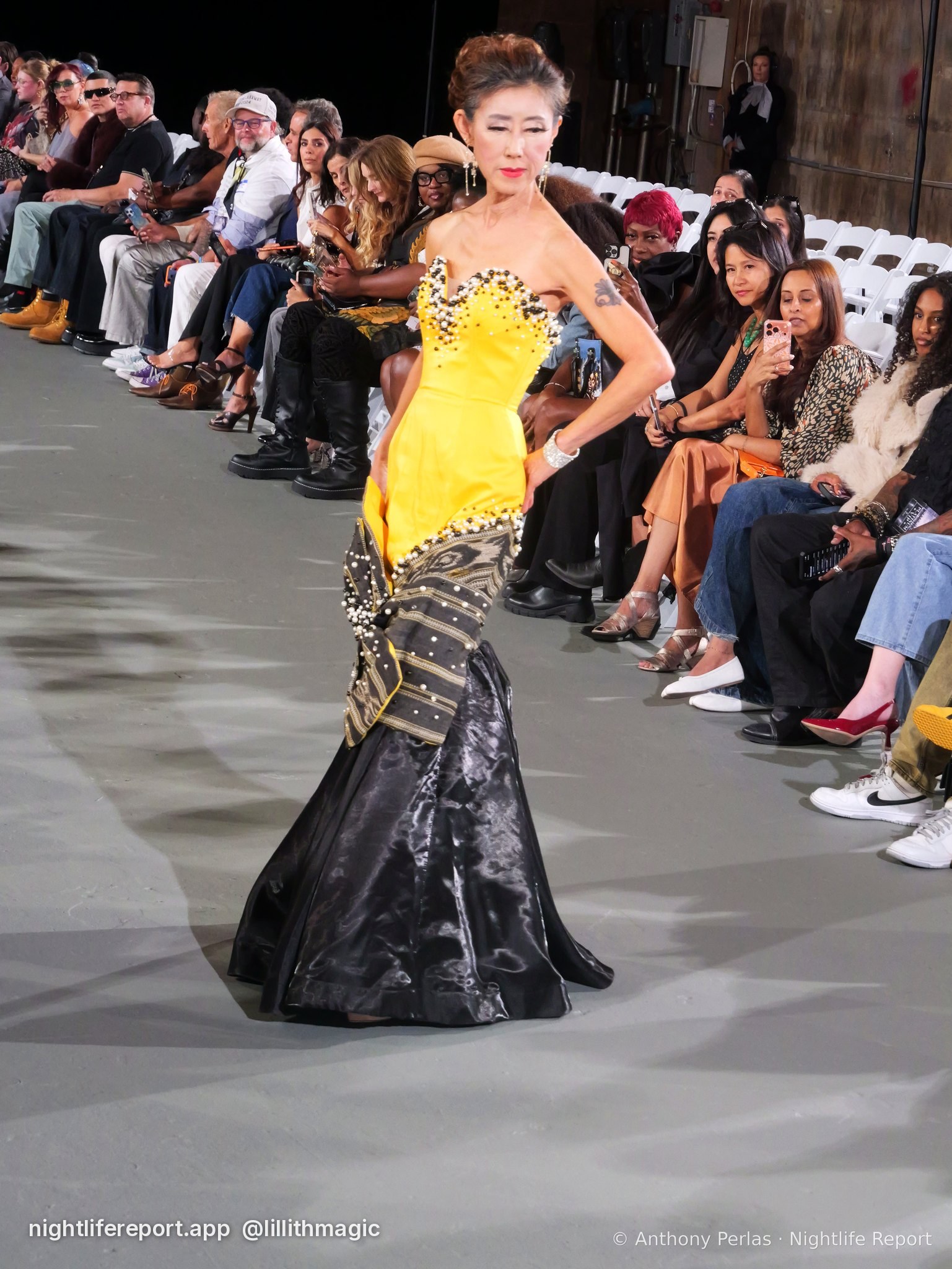
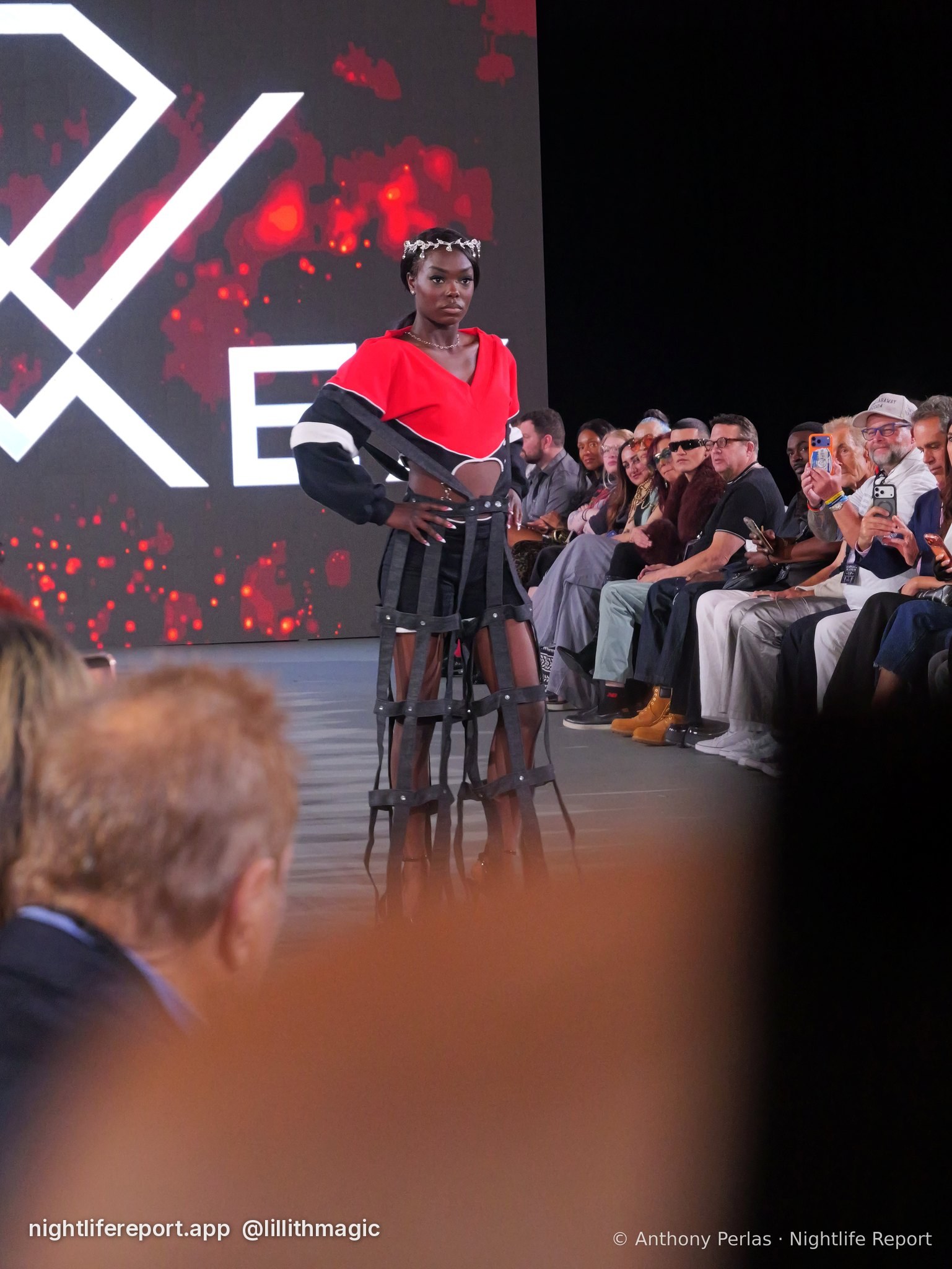
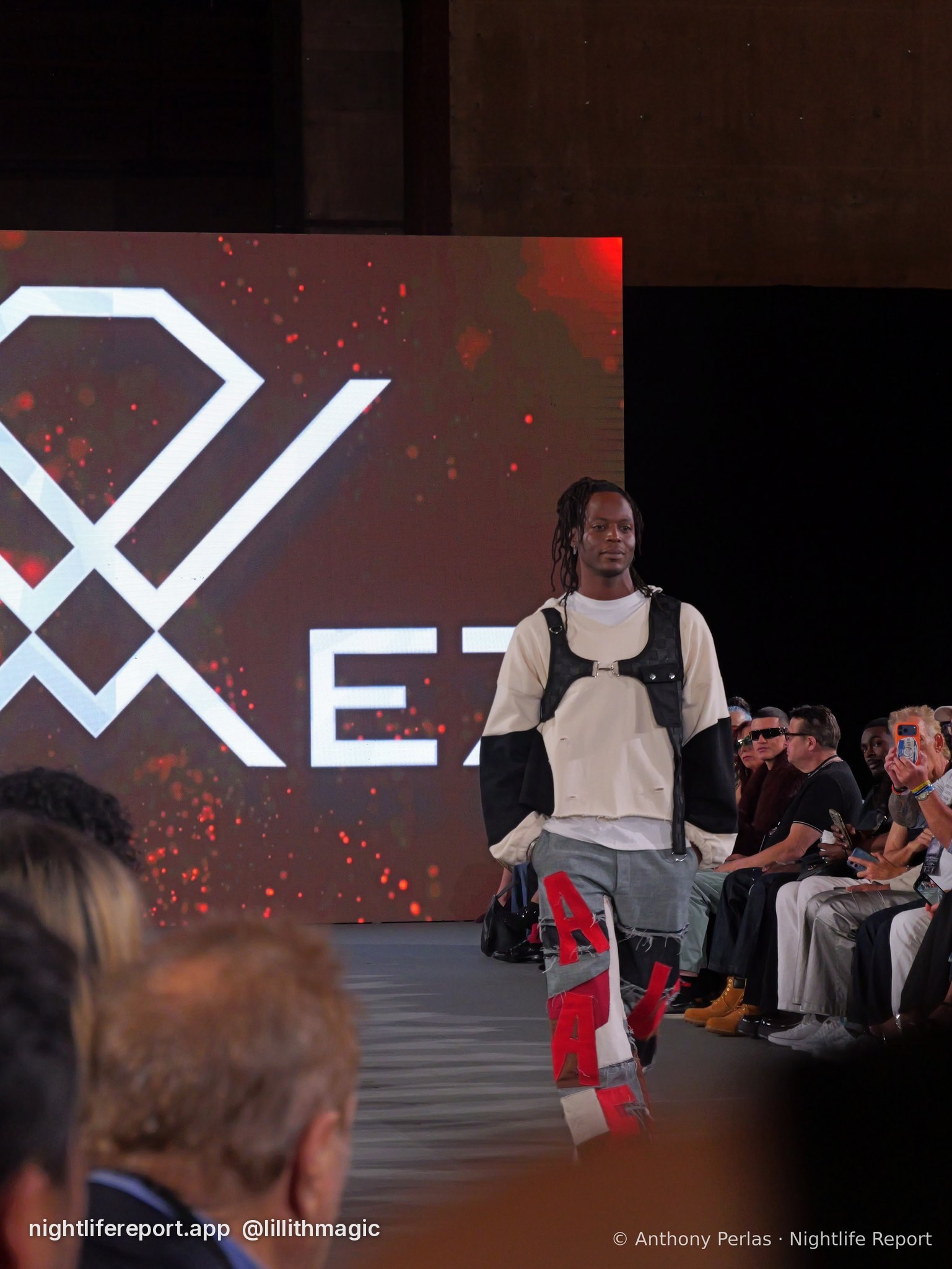
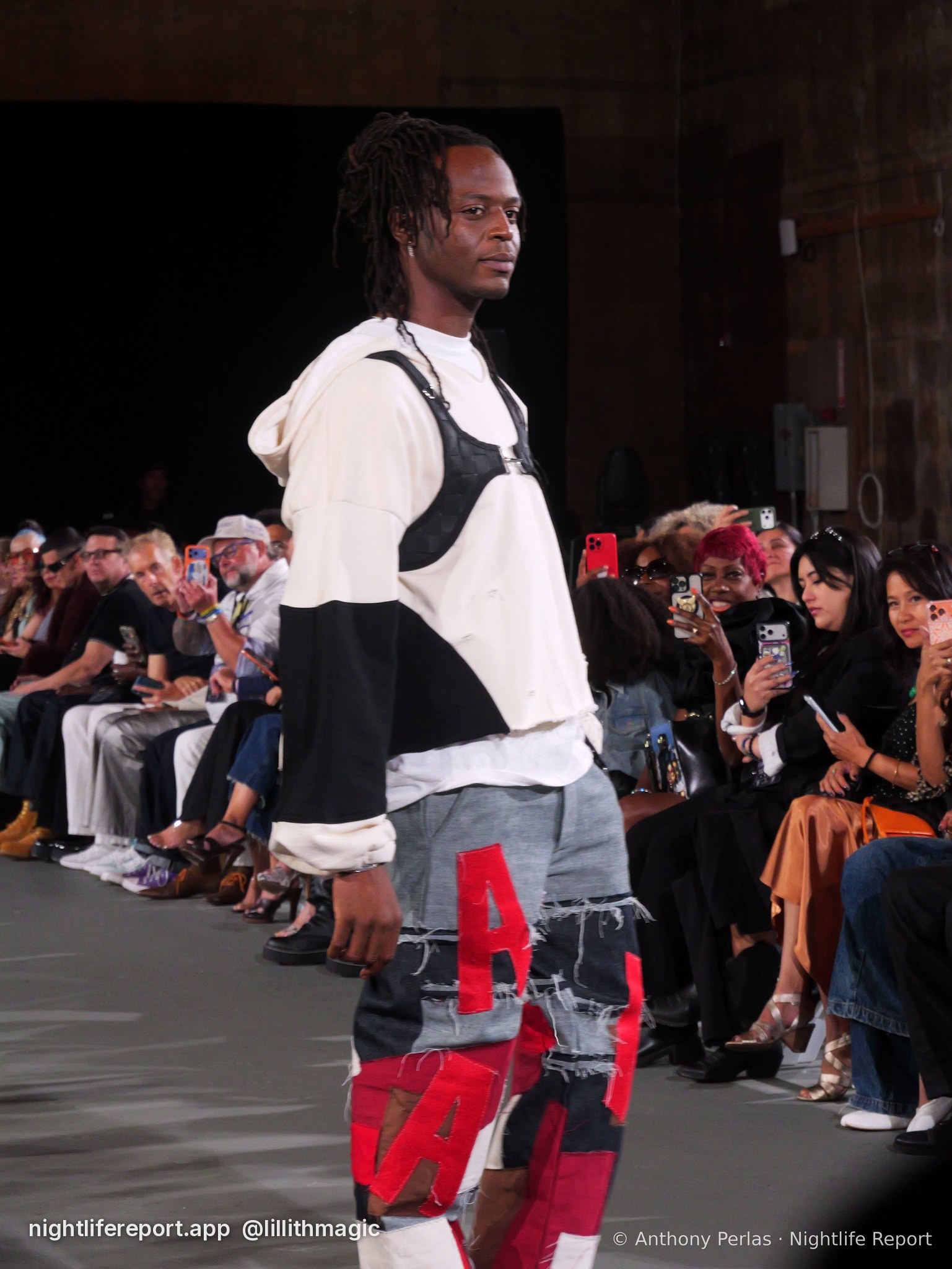
    7 of our best looks from Dimez at The Bureau Fashion Week LA, shot from the media pit at The Lot Studios in West Hollywood.

    Photos: Anthony Perlas / nightlifereport.app. Day 1, The Opening: Friday, Oct. 16, 2026, 6:00 PM. Every look: Dimez for The Bureau Fashion Week.

    Dimez showed at Day 1, The Opening of The Bureau Fashion Week in Los Angeles, Friday, Oct. 16, 2026, 6:00 PM, at The Lot Studios in West Hollywood. Below are the 7 frames we think are the strongest from the segment, in running order as we shot them.

    Looks, styling and garment credits for this show are on our Dimez looks and credits page.

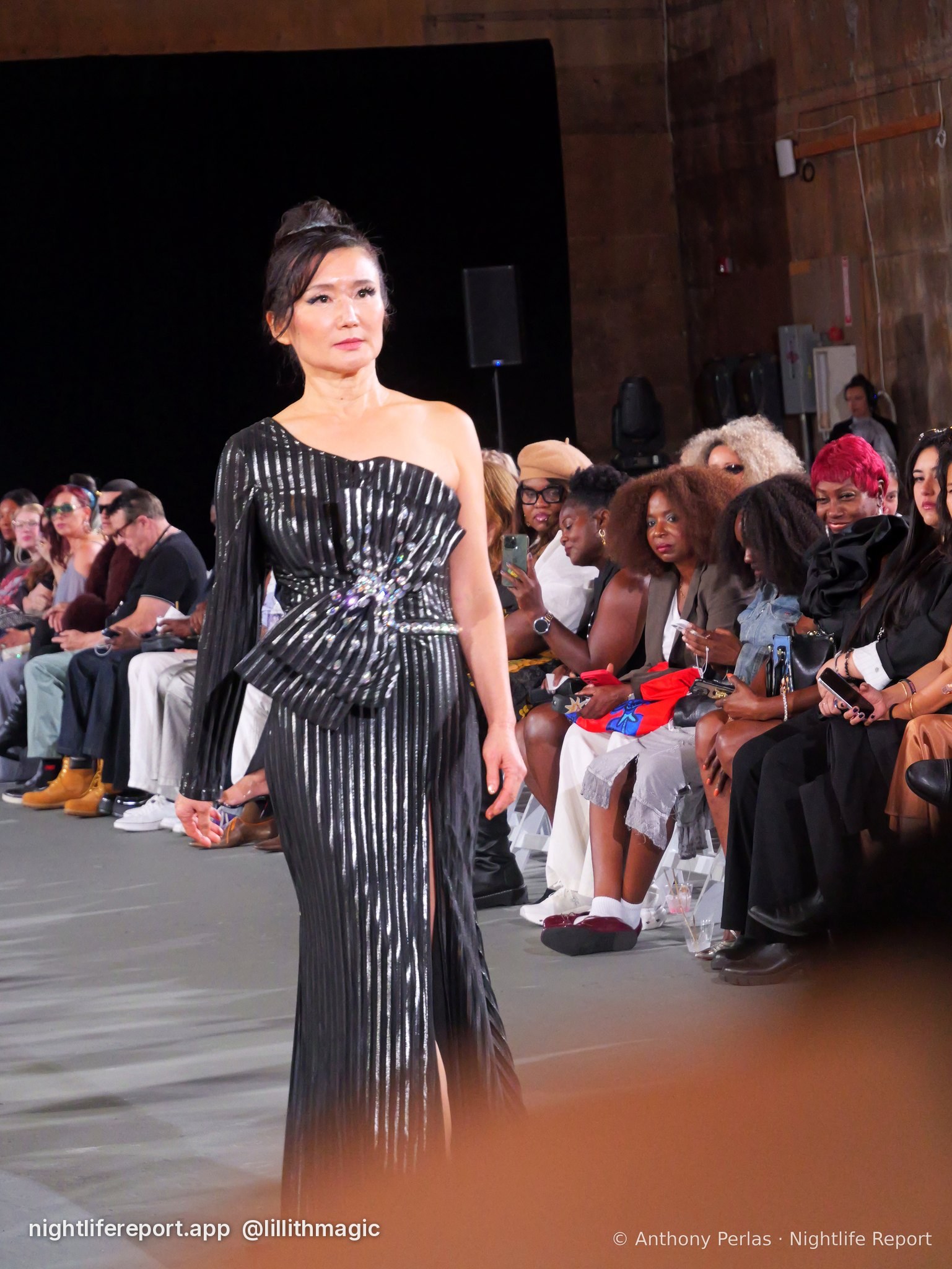
    Dimez look 1 on the runway at The Bureau Fashion Week LA, Day 1 Opening, Oct 2026
    Look 01 · frame P1000547 · Dimez for The Bureau Fashion Week · Photo: Anthony Perlas / nightlifereport.app
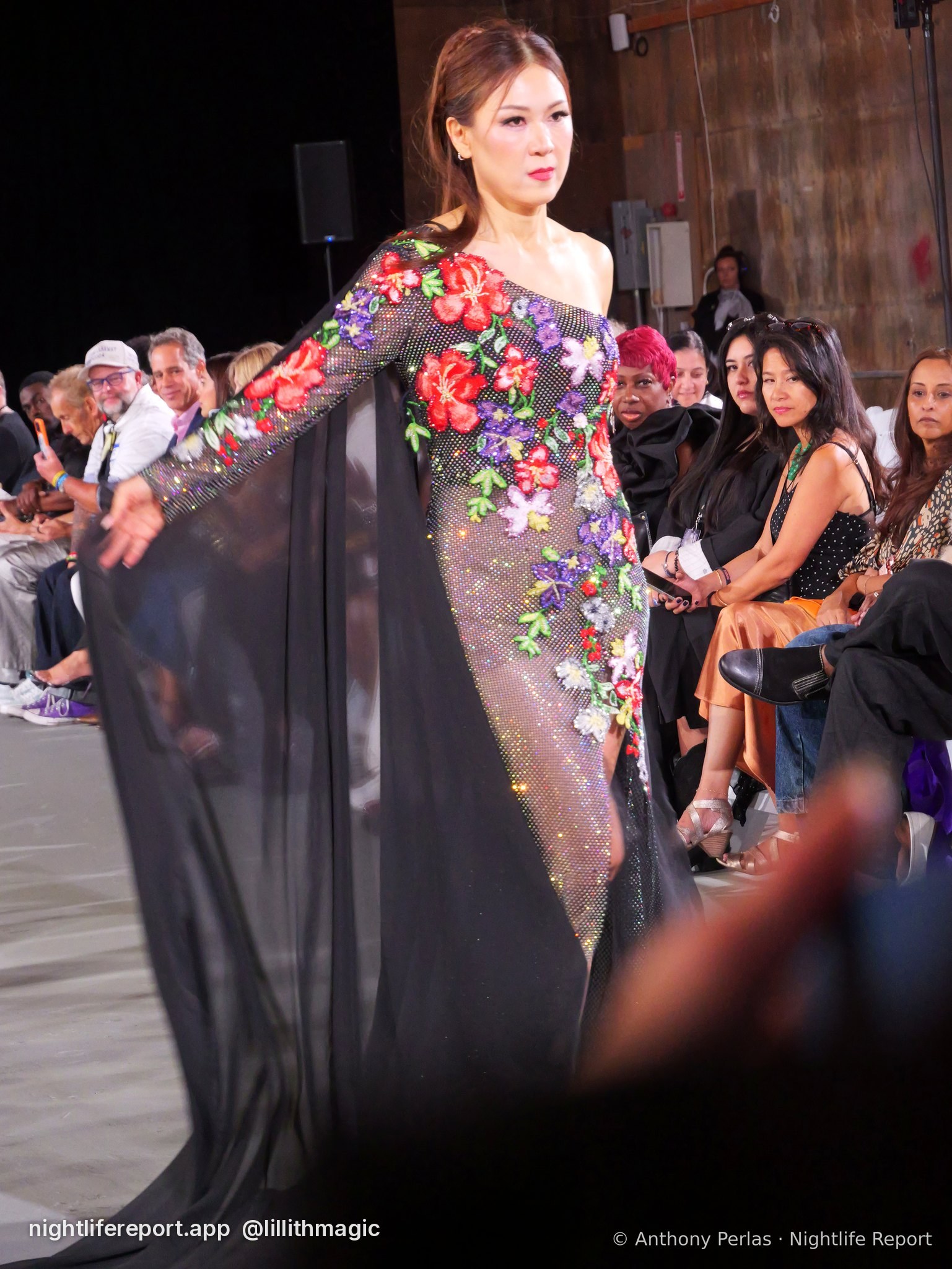
    Dimez look 2 on the runway at The Bureau Fashion Week LA, Day 1 Opening, Oct 2026
    Look 02 · frame P1000550 · Dimez for The Bureau Fashion Week · Photo: Anthony Perlas / nightlifereport.app
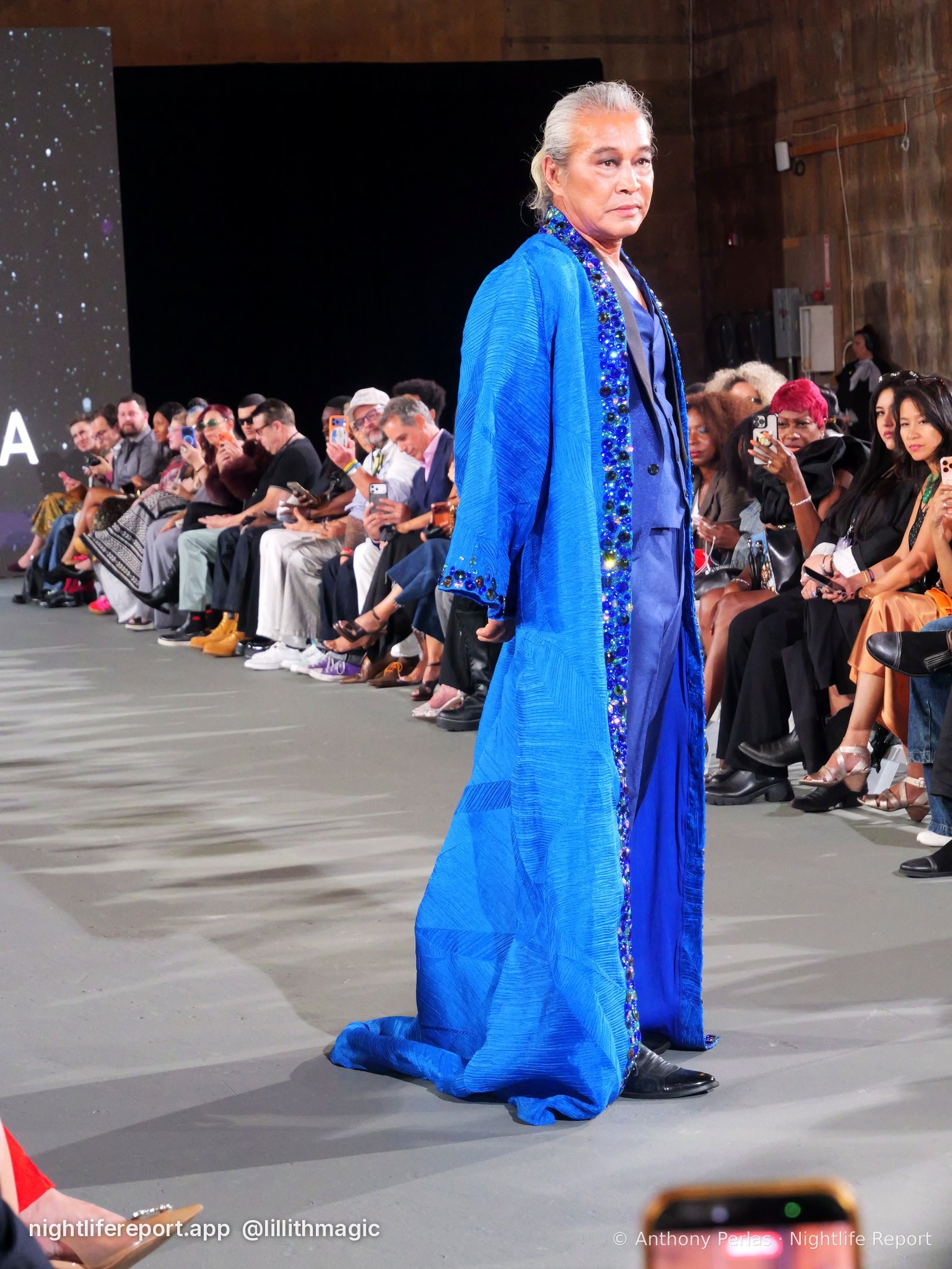
    Dimez look 3 on the runway at The Bureau Fashion Week LA, Day 1 Opening, Oct 2026
    Look 03 · frame P1000551 · Dimez for The Bureau Fashion Week · Photo: Anthony Perlas / nightlifereport.app
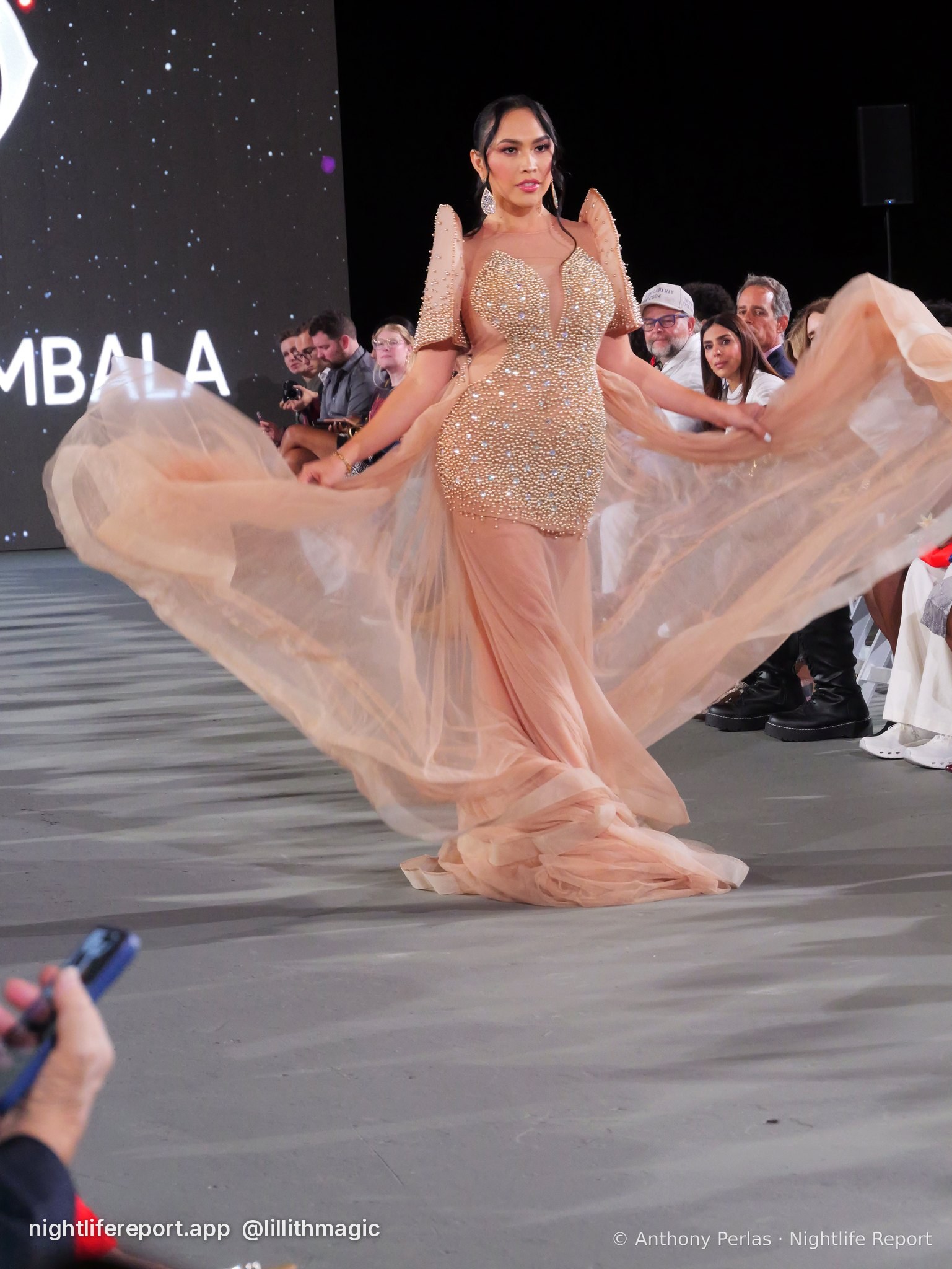
    Dimez look 4 on the runway at The Bureau Fashion Week LA, Day 1 Opening, Oct 2026
    Look 04 · frame P1000554 · Dimez for The Bureau Fashion Week · Photo: Anthony Perlas / nightlifereport.app
    Dimez look 5 on the runway at The Bureau Fashion Week LA, Day 1 Opening, Oct 2026
    Look 05 · frame P1000560 · Dimez for The Bureau Fashion Week · Photo: Anthony Perlas / nightlifereport.app
    Dimez look 6 on the runway at The Bureau Fashion Week LA, Day 1 Opening, Oct 2026
    Look 06 · frame P1000563 · Dimez for The Bureau Fashion Week · Photo: Anthony Perlas / nightlifereport.app
    Dimez look 7 on the runway at The Bureau Fashion Week LA, Day 1 Opening, Oct 2026
    Look 07 · frame P1000564 · Dimez for The Bureau Fashion Week · Photo: Anthony Perlas / nightlifereport.app

    Full gallery and purchasable photos

    This is a selection. The full Dimez set, along with every designer from both nights of The Bureau sorted by night and designer, is on Patreon for supporters on the $7 tier. Full-resolution, purchasable photos are available there too: patreon.com/aperlas.

    Request your photos

    Walked for Dimez, or on the design team? Email editor@nightlifereport.app with the look number and we’ll get you your photos.

    All photos © Anthony Perlas / Nightlife Report, watermarked. Please credit “Photo: Anthony Perlas / nightlifereport.app” and the designer “for The Bureau Fashion Week” when sharing. Tag @thebureaufashionweek.

    Nightlife Report is watching. Seen something? Send us a tip, especially if you’re drunk.

    editor@nightlifereport.app

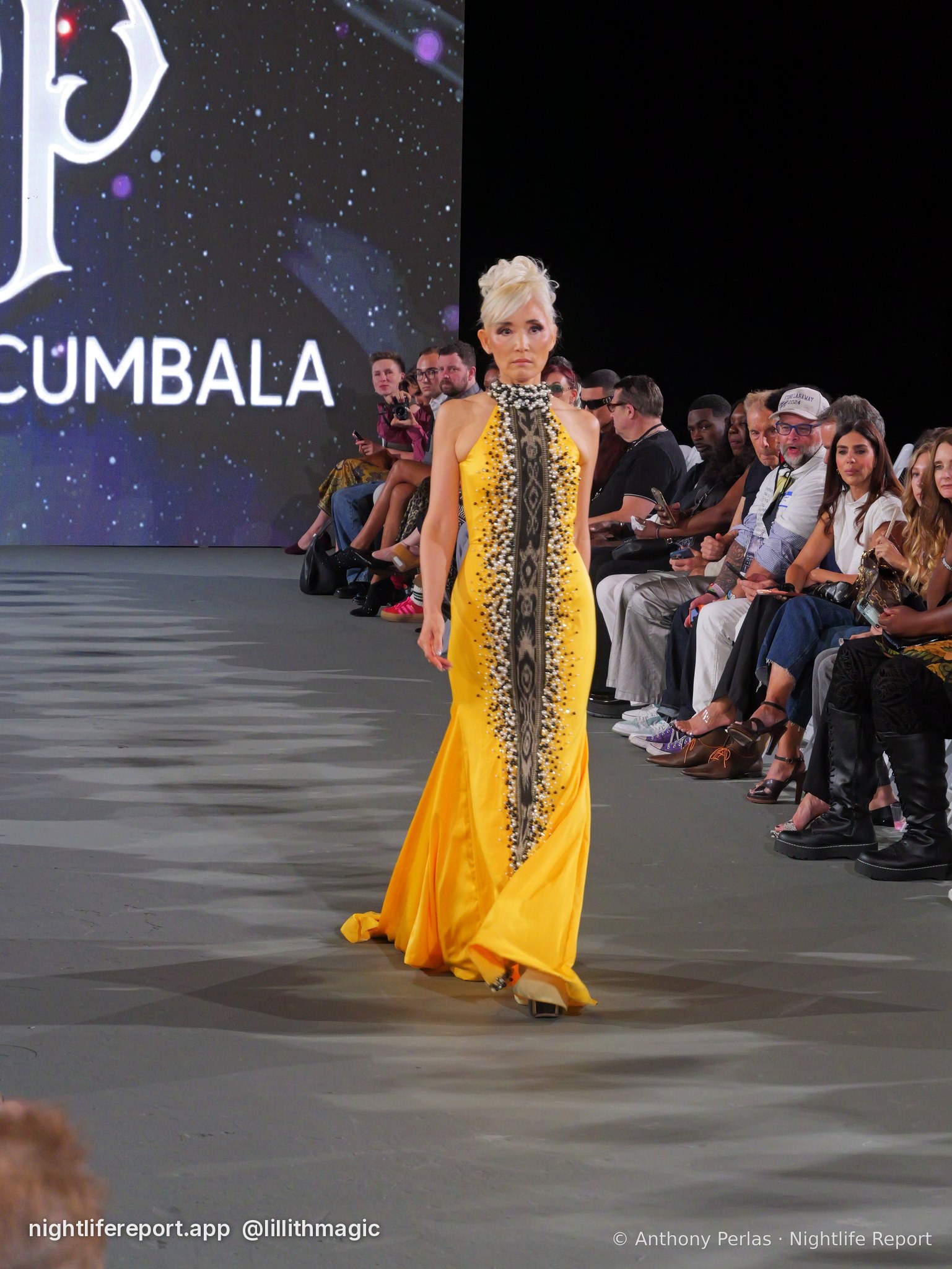
  • Gallery: Toshimi Pacumbala at The Bureau Fashion Week LA, Day 1 The Opening

    Gallery: Toshimi Pacumbala at The Bureau Fashion Week LA, Day 1 The Opening

    Gallery · Day 1 · The Opening

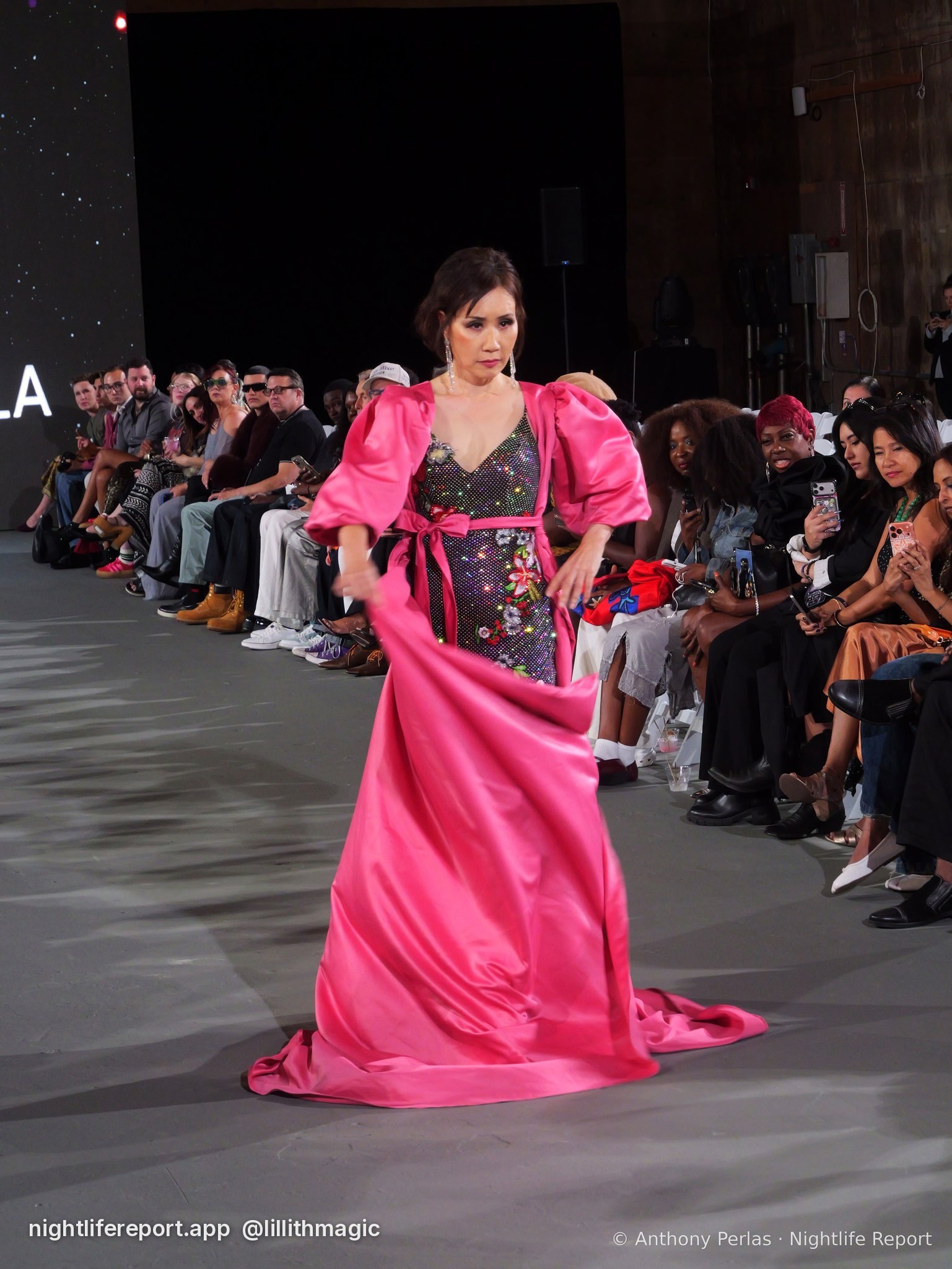
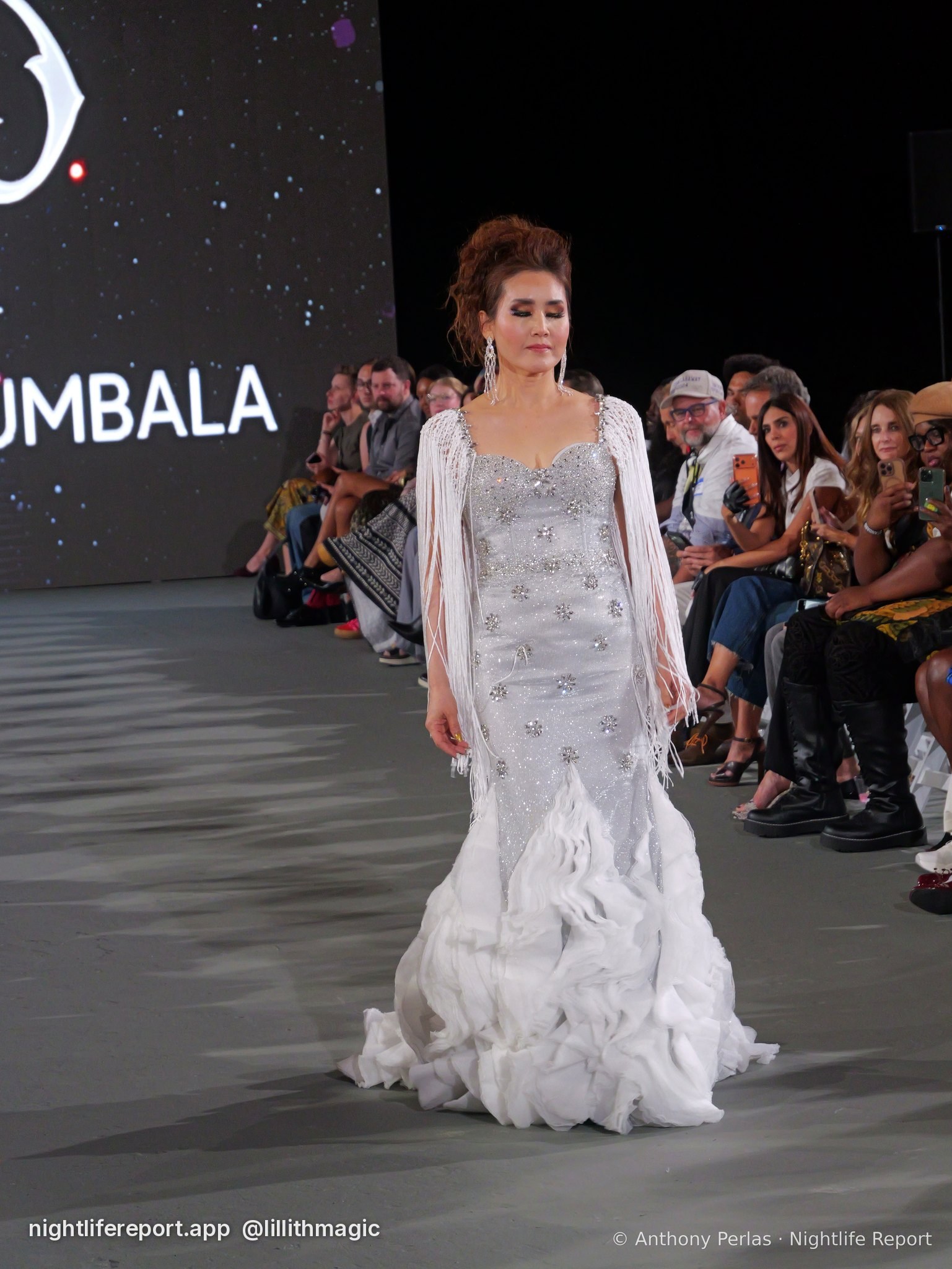
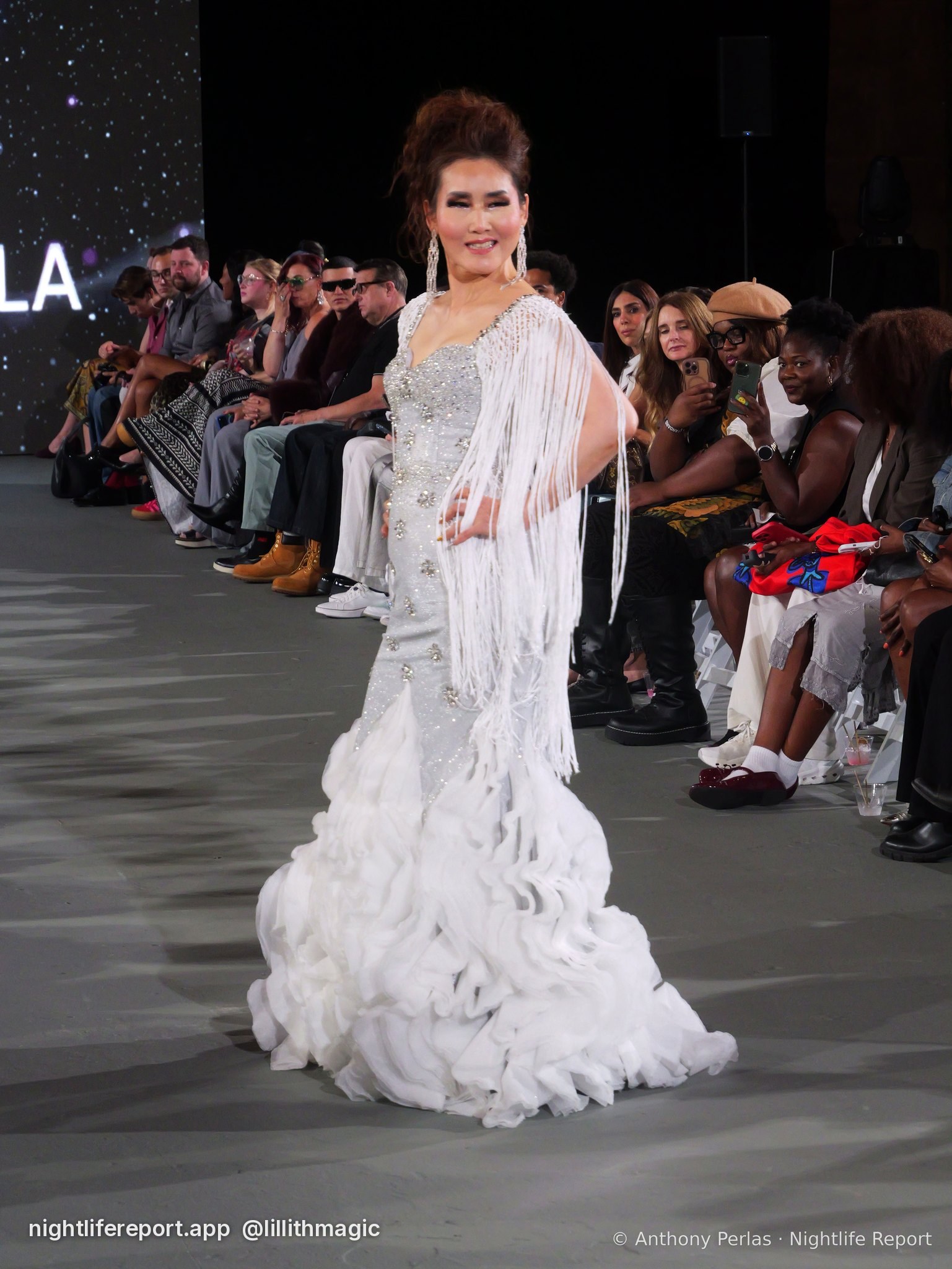
    10 of our best looks from Toshimi Pacumbala at The Bureau Fashion Week LA, shot from the media pit at The Lot Studios in West Hollywood.

    Photos: Anthony Perlas / nightlifereport.app. Day 1, The Opening: Friday, Oct. 16, 2026, 6:00 PM. Every look: Toshimi Pacumbala for The Bureau Fashion Week.

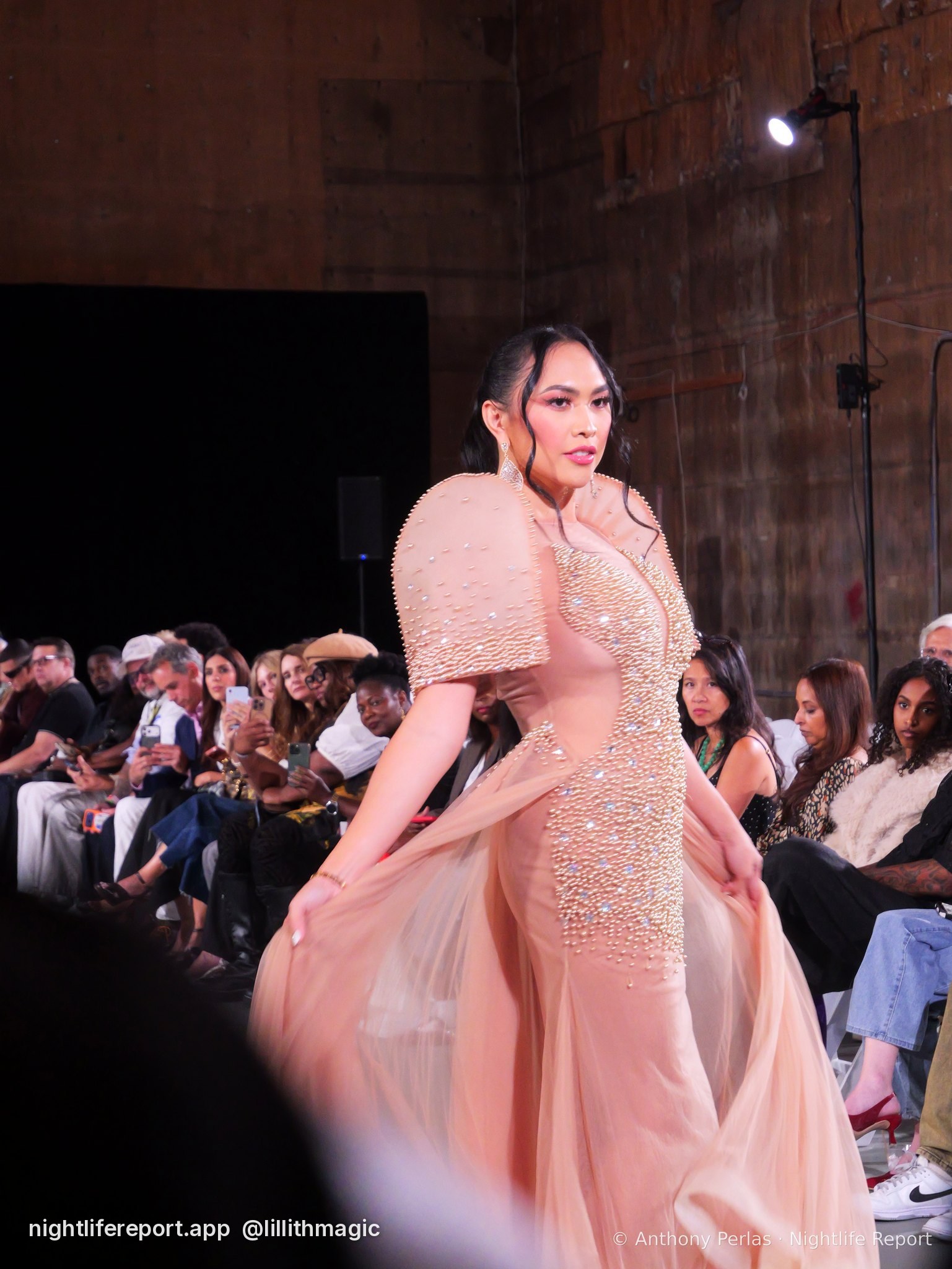
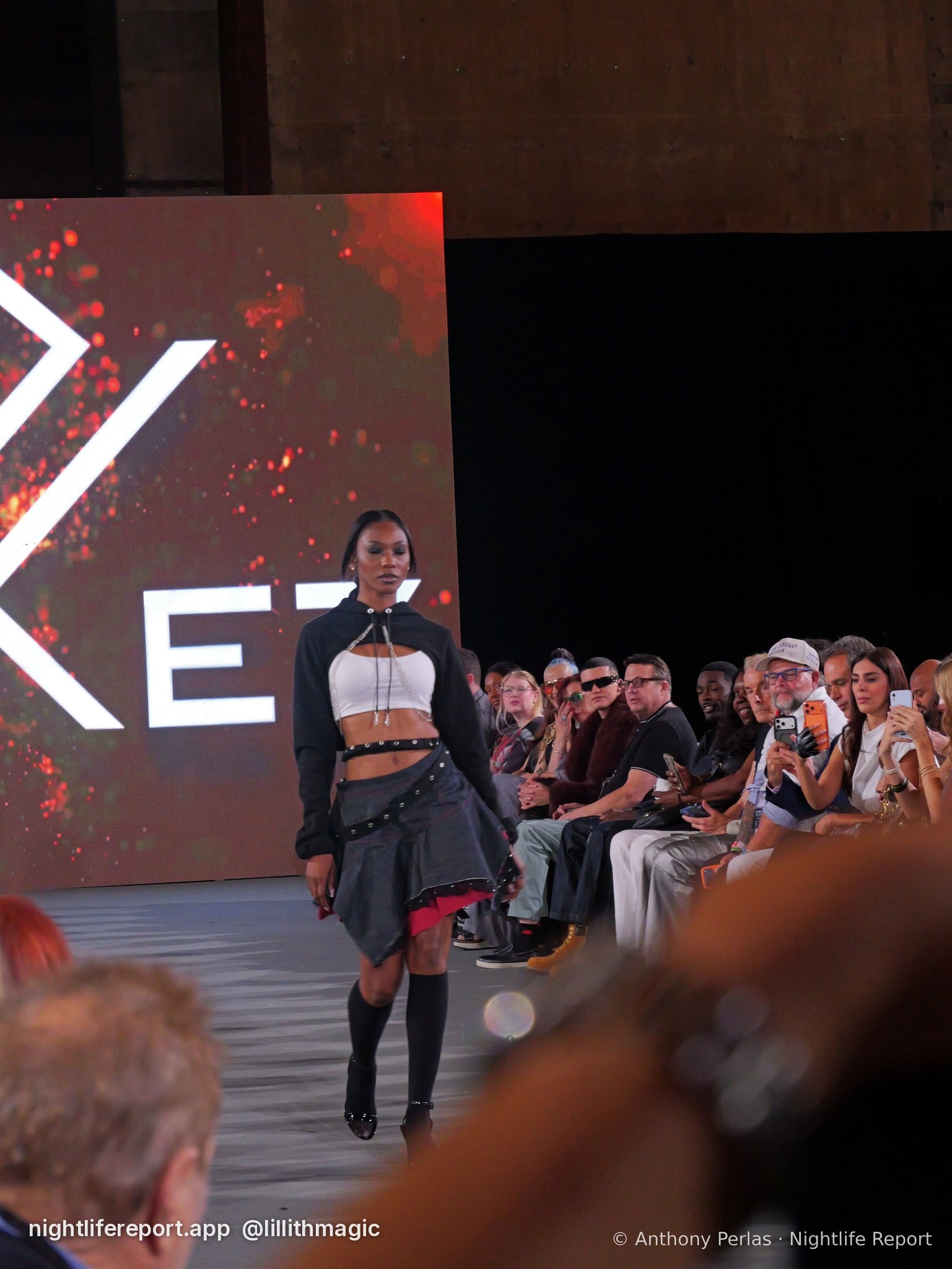
    Toshimi Pacumbala showed at Day 1, The Opening of The Bureau Fashion Week in Los Angeles, Friday, Oct. 16, 2026, 6:00 PM, at The Lot Studios in West Hollywood. Below are the 10 frames we think are the strongest from the segment, in running order as we shot them.

    Credit note: Toshimi Pacumbala is credited from the name shown on the runway backdrop during this segment. The label does not appear on The Bureau’s published Opening bill; if you have a correction, email editor@nightlifereport.app.

    Looks, styling and garment credits for this show are on our Toshimi Pacumbala looks and credits page.

    Toshimi Pacumbala look 1 on the runway at The Bureau Fashion Week LA, Day 1 Opening, Oct 2026
    Look 01 · frame P1000437 · Toshimi Pacumbala for The Bureau Fashion Week · Photo: Anthony Perlas / nightlifereport.app
    Toshimi Pacumbala look 2 on the runway at The Bureau Fashion Week LA, Day 1 Opening, Oct 2026
    Look 02 · frame P1000440 · Toshimi Pacumbala for The Bureau Fashion Week · Photo: Anthony Perlas / nightlifereport.app
    Toshimi Pacumbala look 3 on the runway at The Bureau Fashion Week LA, Day 1 Opening, Oct 2026
    Look 03 · frame P1000458 · Toshimi Pacumbala for The Bureau Fashion Week · Photo: Anthony Perlas / nightlifereport.app
    Toshimi Pacumbala look 4 on the runway at The Bureau Fashion Week LA, Day 1 Opening, Oct 2026
    Look 04 · frame P1000467 · Toshimi Pacumbala for The Bureau Fashion Week · Photo: Anthony Perlas / nightlifereport.app
    Toshimi Pacumbala look 5 on the runway at The Bureau Fashion Week LA, Day 1 Opening, Oct 2026
    Look 05 · frame P1000470 · Toshimi Pacumbala for The Bureau Fashion Week · Photo: Anthony Perlas / nightlifereport.app
    Toshimi Pacumbala look 6 on the runway at The Bureau Fashion Week LA, Day 1 Opening, Oct 2026
    Look 06 · frame P1000485 · Toshimi Pacumbala for The Bureau Fashion Week · Photo: Anthony Perlas / nightlifereport.app
    Toshimi Pacumbala look 7 on the runway at The Bureau Fashion Week LA, Day 1 Opening, Oct 2026
    Look 07 · frame P1000493 · Toshimi Pacumbala for The Bureau Fashion Week · Photo: Anthony Perlas / nightlifereport.app
    Toshimi Pacumbala look 8 on the runway at The Bureau Fashion Week LA, Day 1 Opening, Oct 2026
    Look 08 · frame P1000499 · Toshimi Pacumbala for The Bureau Fashion Week · Photo: Anthony Perlas / nightlifereport.app
    Toshimi Pacumbala look 9 on the runway at The Bureau Fashion Week LA, Day 1 Opening, Oct 2026
    Look 09 · frame P1000529 · Toshimi Pacumbala for The Bureau Fashion Week · Photo: Anthony Perlas / nightlifereport.app
    Toshimi Pacumbala look 10 on the runway at The Bureau Fashion Week LA, Day 1 Opening, Oct 2026
    Look 10 · frame P1000533 · Toshimi Pacumbala for The Bureau Fashion Week · Photo: Anthony Perlas / nightlifereport.app

    Full gallery and purchasable photos

    This is a selection. The full Toshimi Pacumbala set, along with every designer from both nights of The Bureau sorted by night and designer, is on Patreon for supporters on the $7 tier. Full-resolution, purchasable photos are available there too: patreon.com/aperlas.

    Request your photos

    Walked for Toshimi Pacumbala, or on the design team? Email editor@nightlifereport.app with the look number and we’ll get you your photos.

    All photos © Anthony Perlas / Nightlife Report, watermarked. Please credit “Photo: Anthony Perlas / nightlifereport.app” and the designer “for The Bureau Fashion Week” when sharing. Tag @thebureaufashionweek.

    Nightlife Report is watching. Seen something? Send us a tip, especially if you’re drunk.

    editor@nightlifereport.app

  • WeHo Whispers: The Fashion Internet’s Verdict on the 2026 Victoria’s Secret Show

    WeHo Whispers: The Fashion Internet’s Verdict on the 2026 Victoria’s Secret Show

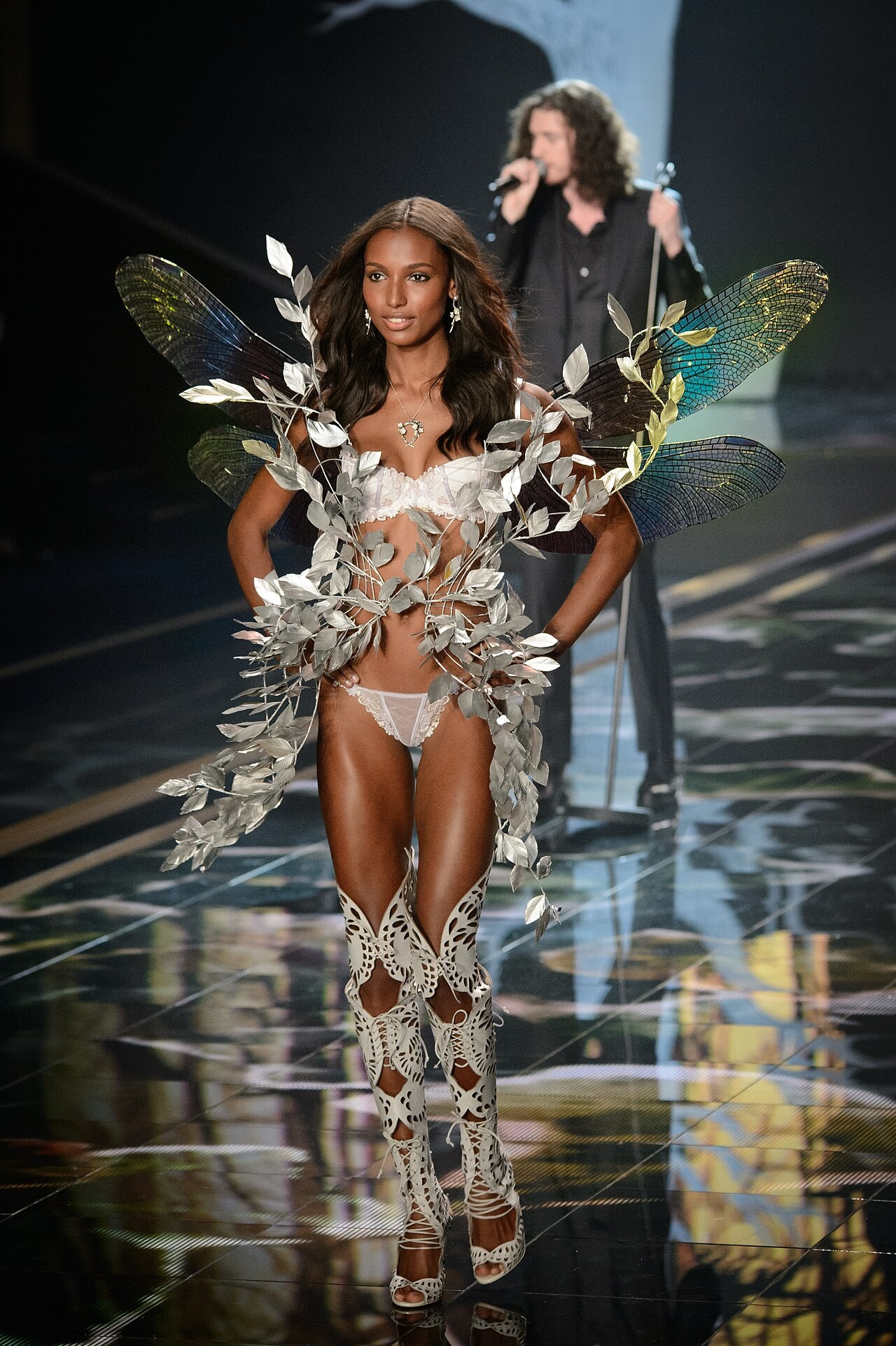
    Top photo: Jasmine Tookes at the 2014 Victoria’s Secret Fashion Show in London. Photo: Timesniper.com, CC BY 2.0, via Wikimedia Commons

    WeHo Whispers · Victoria’s Secret

    The Angels flew into Culver City on Sunday. By Monday the fashion internet had opinions, and honey, they were not whispering. Here’s what the forums, the bloggers and the group chats said, and what we think.

    By Nightlife Report. Tue Oct 20, 2026. Everything below is what other people published or posted, linked and attributed. Opinions are labeled as opinions. Nothing here is a rumor we made up.

    Quick setup for anyone who was out on Sunday night: the 2026 Victoria’s Secret Fashion Show came back to Los Angeles for the first time in 19 years, staged at Sony Pictures Studios in Culver City on Oct. 18, per LAmag and Elle. Adam Selman, in his second year as executive creative director, built it around the four seasons. Bella Hadid opened. Adriana Lima closed. And Kylie Jenner wore the $50 million Fantasy Bra. That last one is where the trouble started.

    1. The Bra Heard Round the Internet

    The Fantasy Bra hadn’t hit a runway since 2018. Grazia counts 4,410 natural diamonds set in 18-karat gold, made with Jacob & Co. Grazia also spotted Timothée Chalamet and Kris Jenner cheering from the front row. The forums, less moved:

    So Kylie Jenner gets the fantasy bra. Yawn. What a waste.

    theFashionSpot forum member Summer Day, as published by theFashionSpot

    The Fantasy Bra going to Kylie Jenner perfectly sums up what’s wrong with the new Victoria Secret show.

    A Reddit user, as quoted by The Tab

    Fans floated names they’d have preferred, Barbara Palvin, Candice Swanepoel, Adriana Lima and Alessandra Ambrosio among them, per Enstarz and The Tab. Selman’s defense, via The Tab: Jenner is a “cultural powerhouse.” Enstarz notes some viewers loved the moment, and that the gripes were individual opinions, not a consensus.

    Our take: The bra is a trophy. Trophies are supposed to mean you earned something. Hand it to the biggest following in the building and you get a great headline and a slightly cheaper trophy.

    2. Too Many Girls, Not Enough Tempo

    theFashionSpot rounded up its members’ reviews, and the theme was production, not people:

    • “They really should do a smaller cast. Like 45-50 girls. 70+ is waaaaaay too much.” (Mrs.T)
    • “The show had no momentum. It stayed flat and never picked up. You need tempo.” (melissablu)
    • “Overall, I think this year’s show had a stronger cast than last year’s, but somehow managed to deliver a weaker show.” (kitsune21)

    All three quoted from theFashionSpot’s forum roundup, Oct. 19, 2026.

    Not everyone was sour. Member ur6 called the wings “so big and beautiful,” naming Alex Consani, Adriana Lima, Elsa Hosk and Anok Yai’s as the best. Member imjustken was happy to see high-fashion regulars on the runway.

    Our take: Seventy-plus walks is a parade, not a show. Cut the cast, keep the wings.

    3. The Ones Who Didn’t Get a Call Back

    The casting drama started before the show. Former Angel Romee Strijd and VS alum Frida Aasen both said they were turned down, and Fashion Times reported fans threatening a boycott over it. We covered the details here.

    Then there’s the new Angel. Solange Omon won the brand’s open-casting docuseries Angels Among Us and debuted on the runway. Dominican outlet Punto y Coma reports fans of finalist Andreína Martínez flooded the brand’s post arguing she should have won, and that Victoria’s Secret defended its pick. We’ll say what the comment sections won’t: a 21-year-old walking her first major show doesn’t deserve a pile-on. Judge the casting, not the girl.

    4. The Editor Who Said It First

    Evie Magazine founder Brittany Hugoboom’s post on Sunday, asking where the unknown faces went, passed 800,000 impressions on X by Monday. We wrote a full response: Victoria’s Secret Stopped Scouting?. She also posted that Barbara Palvin walked six weeks after giving birth, with husband Dylan Sprouse cheering. That’s her report, and it’s the sweetest thing anyone posted all weekend.

    5. Overheard in the Audience

    • When Adéla’s song “Nicole Kidman” came on, Nicole Kidman herself laughed in the audience, per Elle.
    • Tate McRae performed “Housewife” as Gigi Hadid returned to the runway; Megan Thee Stallion, KATSEYE and Megan Moroney also performed, per Grazia and Elle.
    • Rosie Huntington-Whiteley returned after 16 years away, and Adriana Lima walked her 21st Victoria’s Secret runway, per Grazia.

    The Nightlife Report Verdict

    The wings were great. The bra was a casting stunt. The cast was too big. And the best runway in LA last weekend, dollar for dollar, was the one with no $50 million anything: independent designers at The Bureau Fashion Week in West Hollywood, two nights earlier. See the looks.

    When the casting fight is about who gets to walk, the benchmark it gets measured against is older than the show. The Ford standard, as Eileen Otte Ford laid it out: the “tall, thin, often blond” Ford woman with “wide-set eyes and a long neck” (AP), and the blue-eyed Nordic look Vogue credits her with popularizing in the early 1960s (“They work hard, and they look more American than American girls,” she said of Swedish models). Anyone under 5 feet 7 was told to forget it: “If you’re short you’re not going to model. That’s it” (The Telegraph). The high-fashion bracket, as Robert Lacey records it in Model Woman (Vanity Fair adaptation), started at 5 feet 8, with a 32- to 33-inch bust, a 20- to 21-inch waist and 33-inch hips, because, as she explained, “photographic models must fit manufacturers’ samples.” The 34-24-34 figure is often cited for Ford models (Los Angeles Times, 2014). That’s the historical benchmark, not Nightlife Report’s standard.
    Sources: Robert Lacey, Model Woman: Eileen Ford and the Business of Beauty (2015); the New York Times and AP obituaries (2014); The Telegraph; Vogue; Los Angeles Times. Her own books: Eileen Ford’s Book of Model Beauty (1968), Secrets of the Model’s World (1970), Eileen Ford’s A More Beautiful You in 21 Days (1972) and Eileen Ford’s Beauty Now and Forever (1977).

    Heard something from inside the tent? You know where to find us.

    Nightlife Report is watching. Seen something? Send us a tip, especially if you’re drunk.

    editor@nightlifereport.app

  • Fashion Week Isn’t Dead: Evie’s Editor Had a Blast in New York. We Had One in West Hollywood.

    Fashion Week Isn’t Dead: Evie’s Editor Had a Blast in New York. We Had One in West Hollywood.

    Commentary · Fashion Week

    Evie Magazine’s editor went to New York Fashion Week and had a blast. Good. So did we, three thousand miles west. A response to Brittany Hugoboom’s fashion-week coverage, and why “fashion week is dead” is the laziest take in fashion.

    By Nightlife Report. Tue Oct 20, 2026. Commentary. Every quote is linked to where it was published; anything we could not confirm is labeled as reported and attributed.

    Every season someone declares fashion week dead. Every season the shows go on anyway. Brittany Hugoboom, founder and editor in chief of Evie Magazine, answered the obituary writers better than most this fall. She opened her Sept. 26 Substack essay with a line we’d frame:

    Yes, I know fashion week was a couple weeks ago and I don’t care that it’s “dead” because I had a blast.

    Brittany Hugoboom, Vanity & Virtue, Sept. 26, 2026 (opening line of a paywalled post)

    What she covered

    • Alice + Olivia at NYFW. In “Inside Alice + Olivia’s Wonderland at NYFW” (Evie, Sept. 11, 2026), she covered the label’s Sept. 10 presentation on the first official day of New York Fashion Week, which Evie describes as turning the Upper East Side into “a maximalist, ultra-feminine wonderland.” She also admits she started toward Midtown before her taxi driver pointed her north to 64th and Park. Honest fashion writing includes the wrong turns.
    • Runway prep as a profession. Her Substack piece “The Model Body Is Back” (paywalled) is about the prep economy around the Victoria’s Secret show: trainers, classes and treatments. Evie followed with a first-person piece by trainer Justin Gelband (Jan. 8, 2026), who writes that as the show approaches, the models’ preparation becomes similar to training for the Olympics. We’re not going to talk about anyone’s body. We will say this: treating runway work as a discipline, not an accident, is the right frame.
    • The Victoria’s Secret casting debate. Covered in our companion piece.

    Our take

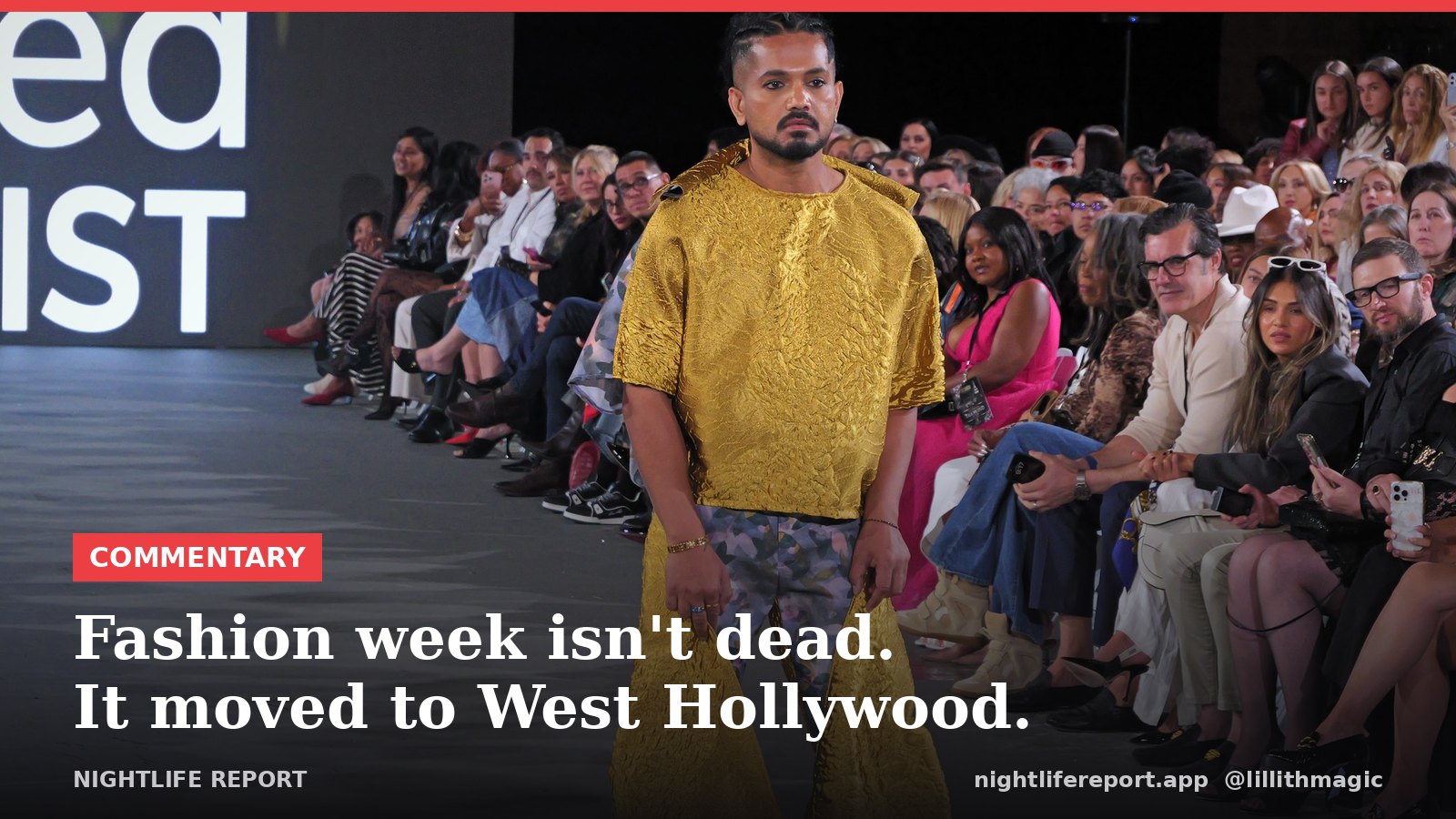
    Fashion week isn’t dead. It moved. The big houses still run New York, but the energy in 2026 is spread across dozens of independent weeks, and Los Angeles has a lot of them. We spent Oct. 16 and 17 in the photo pit at The Bureau Fashion Week at The Lot Studios in West Hollywood. Eleven designers across two nights, from Idaho formalwear to Beverly Hills couture to swim. Nobody in that room thought fashion was over.

    Hugoboom’s best instinct is the one most fashion media lost: go to the show, describe the room, have an opinion, and make it fun. That’s not a conservative or a liberal idea. It’s just journalism with taste. Where we’d add to her coverage: the independent shows deserve the same attention as the Upper East Side. Same craft, same nerves backstage, far fewer cameras.

    Here’s ours. Day 1 and Day 2 galleries, every look credited to its designer: The Bureau Fashion Week LA, October 2026.

    Brittany Hugoboom’s articles and posts are hers; we link to them so you can read her in full. Quotes are short excerpts for commentary. Paywalled posts were not read past their public preview.

    Nightlife Report is watching. Seen something? Send us a tip, especially if you’re drunk.

    editor@nightlifereport.app

  • Victoria’s Secret Stopped Scouting? Evie’s Brittany Hugoboom Says So. Here’s Our Take.

    Victoria’s Secret Stopped Scouting? Evie’s Brittany Hugoboom Says So. Here’s Our Take.

    Commentary · Victoria’s Secret

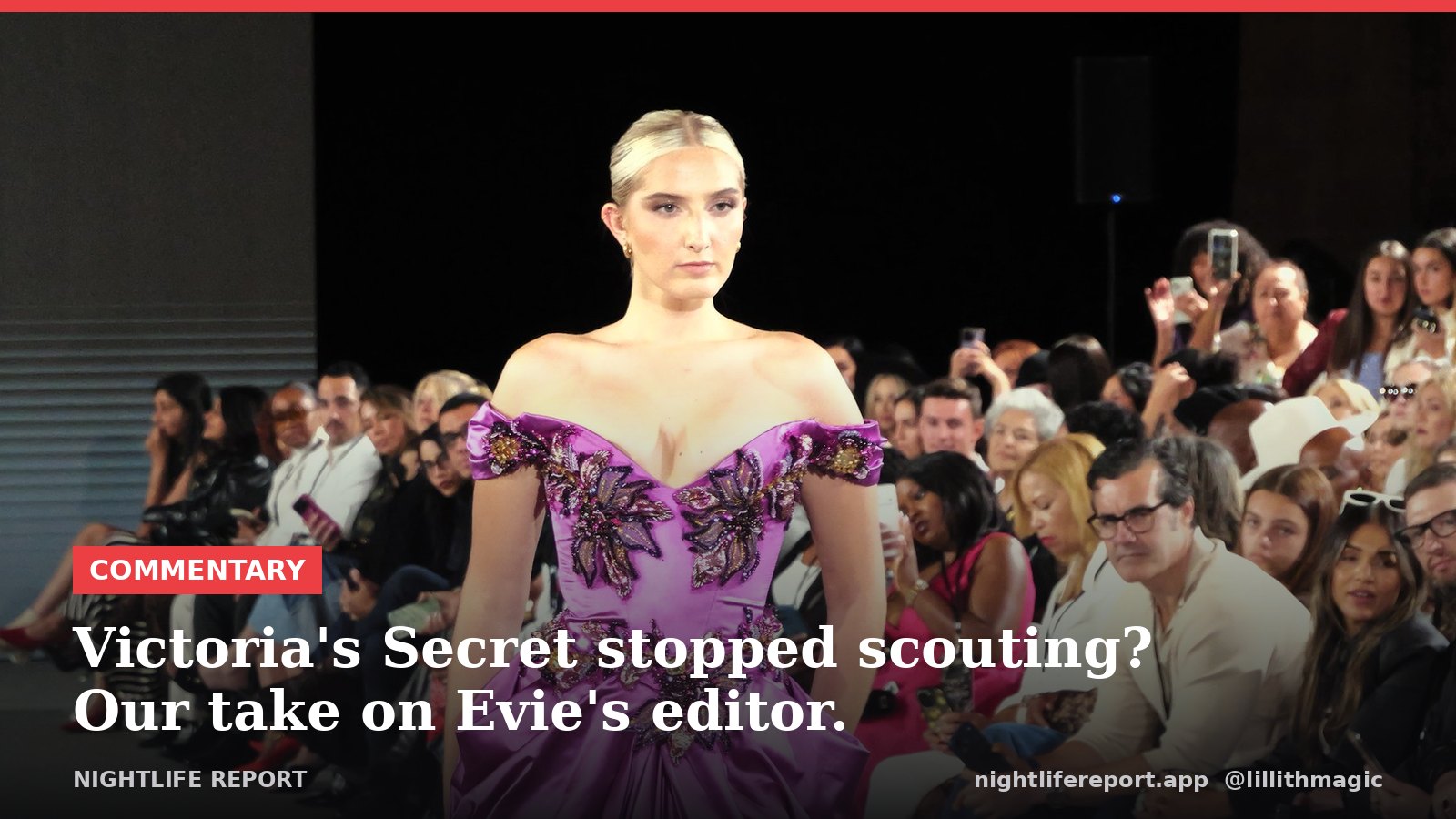
    Evie Magazine’s editor in chief says Victoria’s Secret stopped discovering new faces. We think she’s half right, and the other half is happening on runways like the ones we shoot in West Hollywood.

    By Nightlife Report. Tue Oct 20, 2026. Commentary. Every quote is linked to where it was published; anything we could not confirm is labeled as reported and attributed.

    Brittany Hugoboom founded Evie Magazine and runs it as editor in chief. She’s a former model who got her start after winning ELLE’s model search, she writes the paid Substack Vanity & Virtue, and spent the Victoria’s Secret Fashion Show weekend doing what good fashion critics do: watching closely and saying the uncomfortable part out loud.

    On Sunday, Oct. 18, the day of the 2026 show at Sony Pictures Studios in Culver City, she posted on X:

    What frustrates me the most about Victoria’s Secret is that they won’t discover beautiful, young, unknown faces anymore.

    Brittany Hugoboom, X, Oct. 18, 2026

    She went further: the brand, in her words, leans on the returning icons and “otherwise using nepo babies and influencers.” And she asked the question that turned the post into the weekend’s most-shared take on the show: “Where are the stunning girls with under 1,000 followers you just found walking down the street in Brazil?” By Monday, X’s public counter had the post past 800,000 impressions.

    Hours later she put a longer version behind her paywall, “Victoria’s Secret Used to Sell a Fantasy. Now It Casts for Followers.” The subtitle is the thesis: “The icons still look incredible. But a brand can’t build its future entirely out of women we already know.” It’s a sequel, of sorts, to her October 2025 essay “The Death of the Angel: How Victoria’s Secret Misdiagnosed Its Own Illness.” We haven’t read past the paywall, so we’re responding to what she published in the open.

    Where she’s right

    Discovery was the product. The old show sold a fantasy, but the engine under it was scouting: unknown names who became household names on that runway. When a brand casts mostly people who arrive with an audience, it’s renting attention instead of creating it. That’s a fair critique, and the fans agree with her. After the show, the loudest complaint on Reddit and in fashion forums wasn’t about the clothes. It was about who got the moments. (Our roundup of that chatter is here.)

    The Fantasy Bra is the clearest case. Grazia reports the $50 million Jacob & Co. piece, the first runway Fantasy Bra since 2018, went to Kylie Jenner on her first Victoria’s Secret runway. Executive creative director Adam Selman called her a “cultural powerhouse.” Both things can be true. It’s still a casting choice that rewards an existing following over a new face.

    Where we’d push back

    Victoria’s Secret did try scouting this year, just on camera. Its open casting, filmed for the YouTube docuseries Angels Among Us, ended with 21-year-old Solange Omon named the newest Angel and walking the show, as Elle and Sports Illustrated Swimsuit reported. Fashion Times says thousands applied. You can argue the format is reality TV, and plenty of fans argued about the winner. But it’s not nothing. It’s a door that wasn’t there before.

    And the girl “you just found walking down the street” doesn’t go straight to a $50 million runway. She goes to the small shows first. That’s the part of the pipeline the big brands stopped paying attention to, and it’s the part we cover.

    Our take from the West Hollywood photo pit

    Two nights before the Victoria’s Secret show, we were in the media pit at The Bureau Fashion Week at The Lot Studios in West Hollywood: the Opening on Friday, Oct. 16, and the Finale on Saturday, Oct. 17. Eleven designers, a runway full of working models, most of whom you’ve never heard of yet. That’s where discovery lives in 2026: independent designers, small runways, and people who show up with a camera and actually credit who they shot.

    So we’ll take Hugoboom’s challenge literally. If Victoria’s Secret wants new faces, they’re not hiding. They’re on runways in LA every season. We publish the looks, we credit every designer, and we keep a list. Start here.

    Agree with her? Think the influencer era is just the new scouting? Tell us on the forum.

    Brittany Hugoboom’s posts and essays are hers; we link to them so you can read her in full. Quotes are short excerpts for commentary. Her Substack essays are paywalled and we have not read their full text.

    Nightlife Report is watching. Seen something? Send us a tip, especially if you’re drunk.

    editor@nightlifereport.app

  • Battle of the Gods: The Business of Beauty, a Five-Part Series

    Battle of the Gods: The Business of Beauty, a Five-Part Series

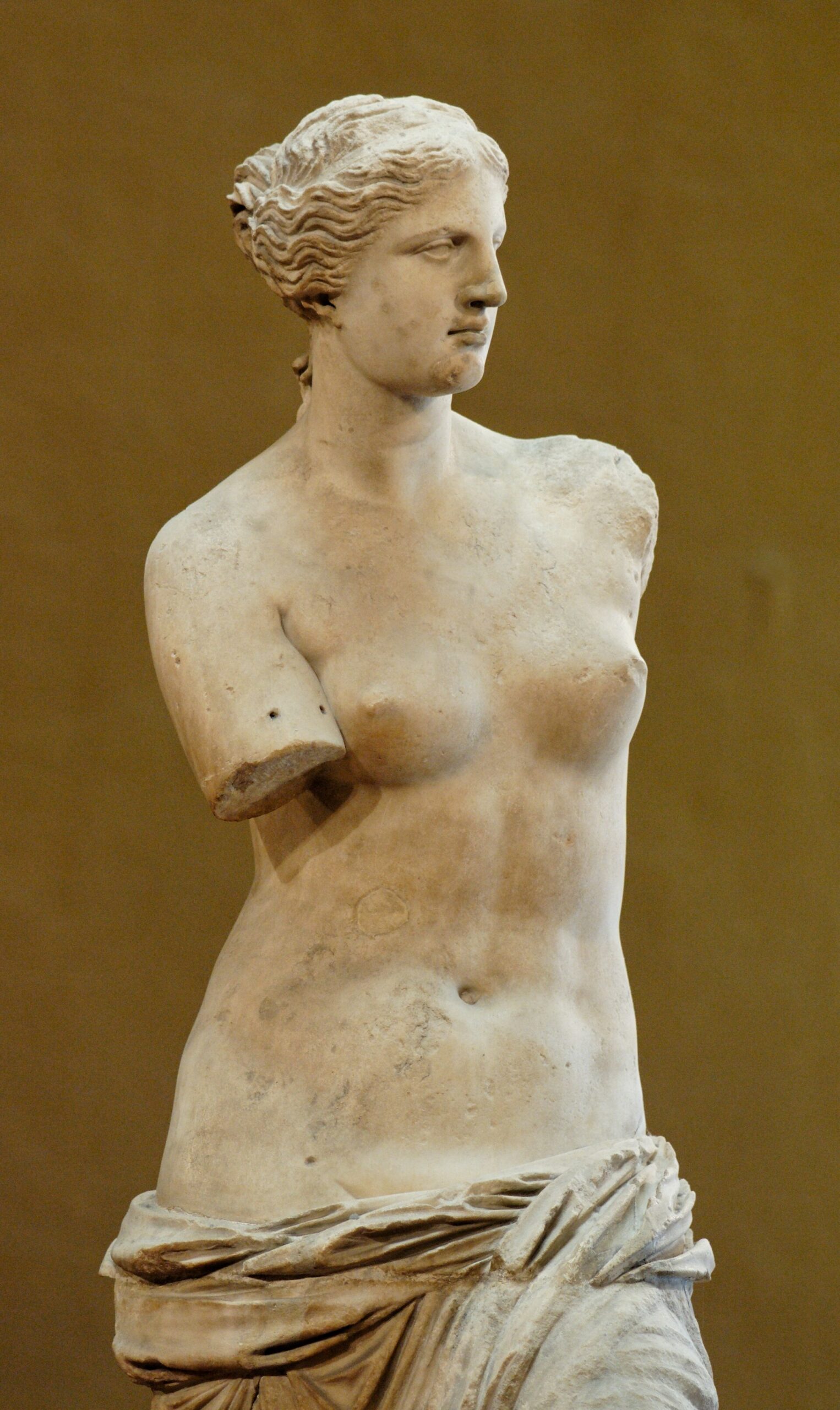
    Top image: Venus de Milo, Musée du Louvre. Photo: Jastrow (2007), public domain, via Wikimedia Commons.

    Nightlife Report’s Battle of the Gods frames fashion coverage through myth. In the Venus Games, Venus is Ava Kortman’s champion and Athena is Emily Sophie Christine’s. The myth sits on top of a real industry: agencies, contracts, runways, cameras, and crowds that decide who’s remembered. This five-part series covers that industry’s history, from a 1940s Manhattan booking office back to Mount Ida, and connects each part to modeling and the business of beauty.

    The series

    1. Eileen Ford Built the Business of Beauty
      How Eileen and Jerry Ford turned modeling into an industry after World War II: vouchers, Friday paydays, commissions, chaperones, famous discoveries and real controversies. The business of beauty exists in its modern form because of her.
    2. The History of Modeling: From Worth’s House Mannequins to AI Twins
      Marie Vernet in the Worth salon, Lucile’s “goddesses,” the camera, the 1990 Vogue supermodels, and the new consent rules for digital replicas.
    3. The Colosseum: Spectacle, Crowds and the Runway as Arena
      Titus’s 100-day opening, numbered gates, Augustus’s seating chart and the first giveaways. Why a runway is still an arena.
    4. The Trojan War: The Judgment of Paris and the Face That Launched a Thousand Ships
      Aphrodite against Athena, Helen of Sparta, Agamemnon of Mycenae, Marlowe’s famous line, and what Schliemann’s dig at Troy has to do with styling.
    5. Aphrodite vs. Venus: Two Goddesses, Two Business Models
      The Greek force and the Roman franchise: cults, Caesar’s Venus Genetrix, Praxiteles, Botticelli, and Dolce & Gabbana’s Venus dress.

    The Ford standard, as Eileen Otte Ford laid it out: the “tall, thin, often blond” Ford woman with “wide-set eyes and a long neck” (AP), and the blue-eyed Nordic look Vogue credits her with popularizing in the early 1960s (“They work hard, and they look more American than American girls,” she said of Swedish models). Anyone under 5 feet 7 was told to forget it: “If you’re short you’re not going to model. That’s it” (The Telegraph). The high-fashion bracket, as Robert Lacey records it in Model Woman (Vanity Fair adaptation), started at 5 feet 8, with a 32- to 33-inch bust, a 20- to 21-inch waist and 33-inch hips, because, as she explained, “photographic models must fit manufacturers’ samples.” The 34-24-34 figure is often cited for Ford models (Los Angeles Times, 2014). That’s the historical benchmark, not Nightlife Report’s standard.
    Sources: Robert Lacey, Model Woman: Eileen Ford and the Business of Beauty (2015); the New York Times and AP obituaries (2014); The Telegraph; Vogue; Los Angeles Times. Her own books: Eileen Ford’s Book of Model Beauty (1968), Secrets of the Model’s World (1970), Eileen Ford’s A More Beautiful You in 21 Days (1972) and Eileen Ford’s Beauty Now and Forever (1977).

    Vote: Battle of the Gods

    Read the myths, then cast your vote. Battle of the Gods: The Venus Games crowning puts first and second place between Venus (Aphrodite) and Minerva (Athena). It’s one vote per email at blog.nightlifereport.app/vote, and voting closes Tue Oct 20, 2026, 11:59 PM PT. We score the performance, never the person’s looks.

    Every story in the series cites its sources, including encyclopedias, museums, ancient texts in public-domain translations, and major press, with links at the bottom of each post. Images are public domain or Creative Commons from Wikimedia Commons, credited on each post.


    Nightlife Report is watching. Seen something? Send us a tip, especially if you’re drunk. editor@nightlifereport.app

    More Nightlife Report: nightlifereport.app · blog.nightlifereport.app · forum.nightlifereport.app · wiki.nightlifereport.app · patreon.com/aperlas · Join the newsletter (Mailchimp)

  • Aphrodite vs. Venus: Two Goddesses, Two Business Models

    Aphrodite vs. Venus: Two Goddesses, Two Business Models

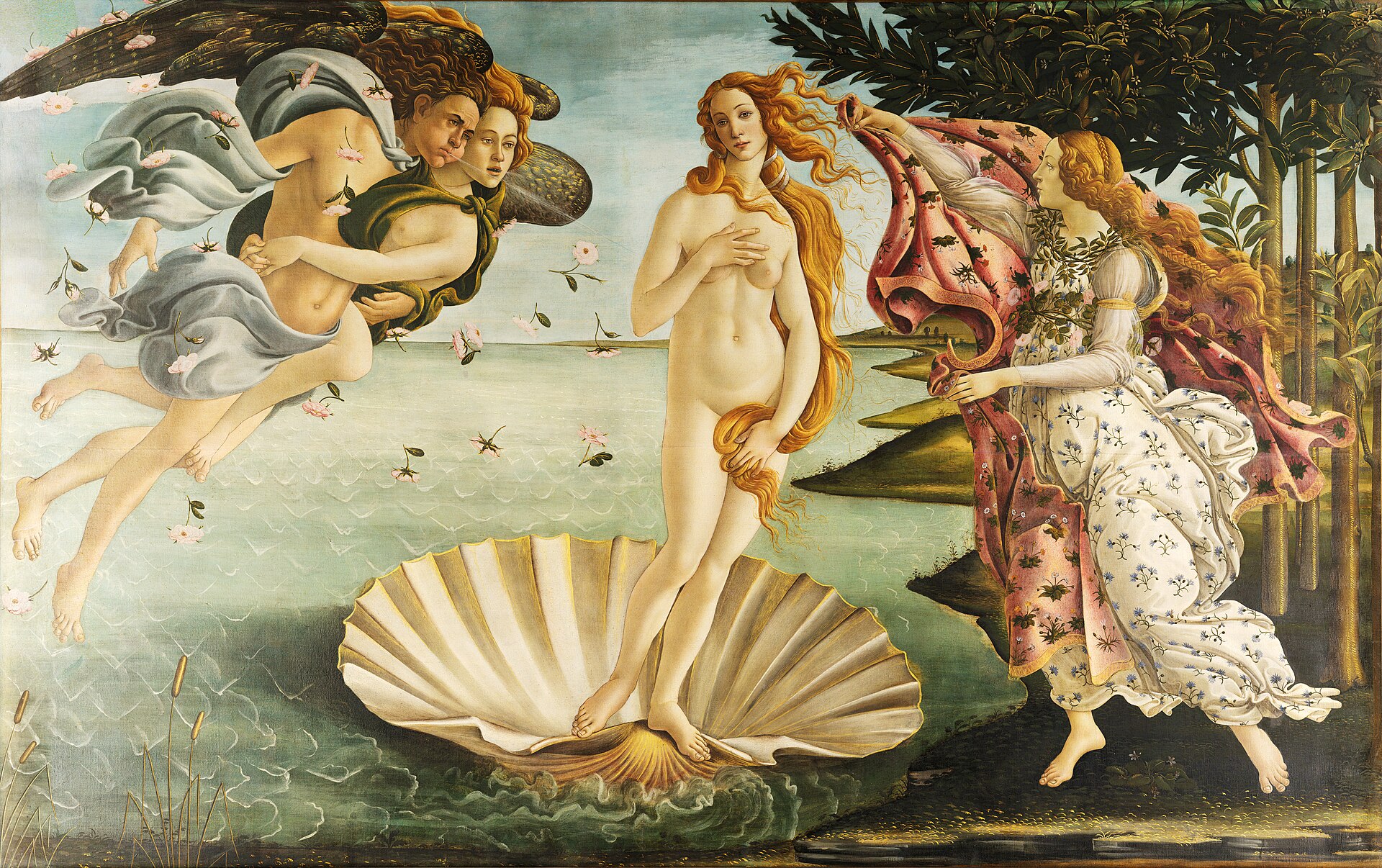
    Top image: Sandro Botticelli, The Birth of Venus, c. 1485, Uffizi Galleries, Florence. Public domain, via Wikimedia Commons.

    Battle of the Gods: The Business of Beauty, part 5 of 5. Series hub.

    In the Venus Games, Ava Kortman fights for Venus. Most people treat Venus and Aphrodite as two names for one goddess, and the ancients did eventually merge them. But they began as different figures with different jobs, and the difference maps neatly onto modeling. Aphrodite is desire as a force of nature. Venus is desire turned into an institution, with a family tree, a temple and a brand. One is the moment a model steps into the light. The other is the house that keeps her there.

    Aphrodite: born of the sea, worshipped from Cyprus to Corinth

    Encyclopaedia Britannica describes Aphrodite as “the ancient Greek goddess of sexual love and beauty, identified with Venus by the Romans.” She was not only a love goddess. Britannica says she was “widely worshipped as a goddess of the sea and of seafaring” and “honored as a goddess of war, especially at Sparta, Thebes, Cyprus, and other places.” Some scholars believe her worship came to Greece from the East, since many of her attributes recall the Near Eastern goddesses Ishtar and Astarte.

    Her most famous origin story is Hesiod’s. In the Theogony, a white foam spreads on the sea, “and in it there grew a maiden.” She drew near Cythera, then came to Cyprus. “Her gods and men call Aphrodite, and the foam-born goddess and rich-crowned Cytherea” (Hugh G. Evelyn-White’s translation). Britannica notes that the name was linked to the Greek aphros, foam. A Homeric Hymn instead makes her the daughter of Zeus and Dione.

    Her symbols and stories, per Britannica: a magical girdle “which made its wearer irresistible”; the cockle shell; doves, swans and sparrows; pomegranates, apples, roses, myrrh and myrtle. Zeus married her to Hephaestus, and she had an affair with Ares. With the Trojan Anchises she became the mother of Aeneas. Her main cult centers were Paphos and Amathus on Cyprus, the island of Cythera, and Corinth on the mainland. Britannica adds that “her public cult was generally solemn and even austere.” The city of Aphrodisias in today’s Turkey was named for her. And of course she won the Judgment of Paris (part 4).

    Venus: from garden goddess to the mother of Rome

    Venus started somewhere much quieter. Britannica calls her an “ancient Italian goddess associated with cultivated fields and gardens and later identified by the Romans with the Greek goddess of love, Aphrodite.” Once identified with Aphrodite, she took on the Greek family tree: daughter of Jupiter and Dione, wife of Vulcan, mother of Cupid. Romans then gave her civic roles that the Greek goddess mostly didn’t have.

    • Venus Verticordia, “changer of hearts.” Platner and Ashby’s Topographical Dictionary of Ancient Rome records her temple, built in 114 BC “to atone for a case of incest among the Vestals.” The epithet “referred to the power of the goddess to turn the mind from lust to purity.” The day of dedication was April 1. Britannica says that as Verticordia she was “charged with the protection of chastity in women and girls.”
    • Venus Erycina. This cult was imported from Mount Eryx in Sicily. Digital Augustan Rome records a temple outside the Colline Gate that was vowed in 184 BC and dedicated in 181 BC.
    • Venus Victrix and Venus Genetrix. Here Venus becomes politics. Macquarie University’s coinage exhibition notes that Pompey built a temple of Venus Victrix (“the Conqueror”) into his theater. Julius Caesar, who had publicly proclaimed his descent from Venus through Aeneas at his aunt’s funeral, vowed a temple before the Battle of Pharsalus. He built it to Venus Genetrix, “the Mother,” in his new forum, and the exhibition says “Venus only acquired the epithet Genetrix or ‘mother’ under Caesar.” The temple was dedicated on September 26, 46 BCE.

    So the difference in one line: Aphrodite is a force; Venus is a franchise. The Greek goddess is desire, the sea and the irresistible girdle. The Roman goddess is a dynasty’s ancestor, a general’s patron, a guardian of marriage and a face on the coins. Caesar’s moneyers put Venus on their issues. That’s an early version of a brand putting its muse on the product.

    Art history: from fully dressed to the most famous painting in the world

    Britannica notes that early Greek art showed Aphrodite “fully dressed and without distinguishing features.” Britannica credits the great Greek sculptors of the 5th century BCE with first giving her an individual image. The most famous statue of all was the one Praxiteles carved for the Cnidians: “the first full-scale female nude,” which later became “the model for such Hellenistic masterpieces as the Venus de Milo.”

    Pliny the Elder’s account of that statue is really a business story. Praxiteles made two versions of the goddess and offered both at the same price. The people of Cos chose the draped one “on the grounds of propriety and modesty.” The Cnidians bought the other, and Pliny says “many persons before now have purposely undertaken a voyage to Cnidos” just to see it. King Nicomedes later offered to pay off the city’s entire public debt for it. The Cnidians refused, “and with good reason, for by this statue Praxiteles has perpetuated the glory of Cnidos.” One image of the goddess turned a city into a destination. That’s the same thing a campaign image does for a fashion house now.

    The Louvre’s Venus de Milo was found on the island of Melos in 1820, and King Louis XVIII gave it to the museum in March 1821. The Louvre still poses the question “Aphrodite or Amphitrite?” Amphitrite was a sea goddess “particularly worshipped on the island of Melos.” The museum says the case for Aphrodite rests partly on “the jewellery she once wore.” Even the most famous Venus in the world gets identified partly by her accessories.

    Then there’s Botticelli. The Uffizi’s own description of the Birth of Venus (c. 1485, tempera on canvas) says the painting “actually shows the goddess of love and beauty arriving on land, on the island of Cyprus, born of the sea spray and blown there by the winds, Zephyr and, perhaps, Aura.” The subject “was perhaps suggested by the poet Agnolo Poliziano.” It was probably commissioned by a member of the Medici family, though, the Uffizi notes, “there is nothing written about the painting before 1550.” The orange trees in it are read as a Medici emblem. In other words it was patron-commissioned imagery, which is also how luxury advertising works.

    From the Uffizi to the runway

    Fashion has been quoting Botticelli for a long time. The V&A’s 2016 exhibition Botticelli Reimagined showed “a dress and trouser suit of fragmented details from The Birth of Venus from Dolce & Gabbana’s 1993 collection.” It displayed them alongside two Elsa Schiaparelli evening dresses from 1938 inspired by Botticelli’s Pallas and the Centaur. Pallas is Athena, so both of our goddesses were in the same gallery. Artsy’s record of the Dolce & Gabbana “Venus Dress: Look 15” lists the model as Karen Mulder at the Spring/Summer 1993 show in Milan. The Guardian noted that Lady Gaga wore the dress in 2013 while promoting her single “Venus.” The same V&A show traced Botticelli’s composition to Ursula Andress emerging from the sea “clasping a conch shell” in Dr. No (1962).

    The archetypes in modeling

    Here’s how we read the two goddesses as working archetypes on a runway. This is Nightlife Report’s interpretation, not ancient doctrine.

    • The Aphrodite entrance. Botticelli’s Venus arrives. She doesn’t pose on land. She’s carried in on the wind. That’s the opening walk: the moment the room looks up. It’s the “Presence” score in the Venus Games, the thing Eileen Otte Ford called an “X factor” (part 1).
    • The Venus Genetrix house face. Caesar made Venus the mother of his family line. Fashion houses do the same with a long-term face, someone whose image becomes the brand’s lineage over many seasons. Carmen Dell’Orefice, still on Ford’s books at 83, is the Guardian‘s “definitive Ford model.”
    • The Venus Victrix campaign. Venus “the Conqueror” belonged to generals. In modeling, that’s the winning season, the show that turns into contracts.
    • The Verticordia boundary. The Roman “changer of hearts” guarded propriety. The modern equivalent is consent and contract: New York’s rules on digital replicas, deal memos and image use.

    Athena (Minerva to the Romans), Emily Sophie Christine’s champion, offered Paris victory in war. She’s the strategist’s archetype, and the Schiaparelli dresses show she has her own place in fashion history. Paris picked Aphrodite on Mount Ida. Readers decide who wins the Venus Games: vote in the Battle of the Gods crowning. As always, we score the performance, never the person’s looks.

    The full series: Battle of the Gods: The Business of Beauty.

    Sources

    1. “Aphrodite,” Encyclopaedia Britannica. britannica.com
    2. “Venus,” Encyclopaedia Britannica. britannica.com
    3. Hesiod, Theogony, in Hesiod, the Homeric Hymns, and Homerica, trans. Hugh G. Evelyn-White, Project Gutenberg. gutenberg.org
    4. Samuel Ball Platner and Thomas Ashby, A Topographical Dictionary of Ancient Rome, “Venus Verticordia, Aedes,” Perseus Digital Library. perseus.tufts.edu
    5. Digital Augustan Rome, “Venus Erycina, Aedes (Extra Porta Collinam).” digitalaugustanrome.org
    6. Macquarie University, Australian Centre for Ancient Numismatic Studies, “Caesar’s Divine Heritage and the Battle for Venus.” mq.edu.au
    7. “Temple of Venus Genetrix,” Wikipedia (dedication date). wikipedia.org
    8. Pliny the Elder, Natural History 36.4, trans. John Bostock and H. T. Riley, Perseus Digital Library. perseus.tufts.edu
    9. Musée du Louvre, “Ideal Greek Beauty: Venus de Milo and the Galerie des Antiques,” and “Vénus de Milo” collection record. collections.louvre.fr · louvre.fr
    10. Gallerie degli Uffizi, “Birth of Venus,” Sandro Botticelli (text by Daniela Parenti). uffizi.it
    11. “Botticelli Reimagined,” V&A exhibition, 2016, via UAL Exhibiting Fashion. arts.ac.uk · vam.ac.uk
    12. Artsy, “Venus Dress: Look 15,” Dolce & Gabbana. artsy.net
    13. “Destination Venus: how Botticelli became a brand,” The Guardian, March 5, 2016. theguardian.com
    14. Image: Sandro Botticelli, The Birth of Venus, c. 1485, Uffizi, Florence. Public domain, via Wikimedia Commons (Google Art Project).

    Nightlife Report is watching. Seen something? Send us a tip, especially if you’re drunk. editor@nightlifereport.app

    More Nightlife Report: nightlifereport.app · blog.nightlifereport.app · forum.nightlifereport.app · wiki.nightlifereport.app · patreon.com/aperlas · Join the newsletter (Mailchimp)
  • The Trojan War: The Judgment of Paris and the Face That Launched a Thousand Ships

    The Trojan War: The Judgment of Paris and the Face That Launched a Thousand Ships

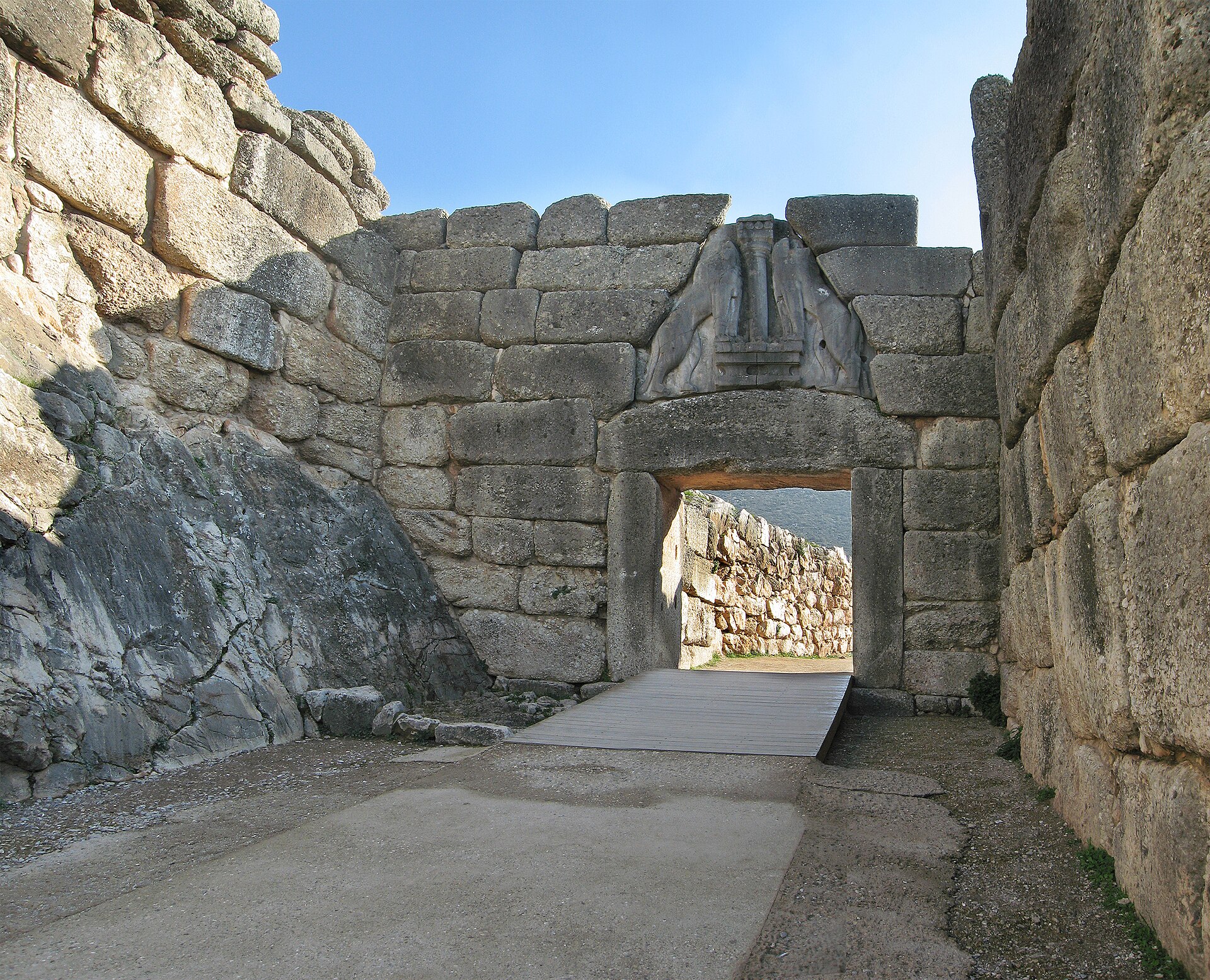
    Top image: The Lion Gate at Mycenae, Agamemnon’s city in the legend. Photo: Andreas Trepte, CC BY-SA 2.5, via Wikimedia Commons.

    Battle of the Gods: The Business of Beauty, part 4 of 5. Series hub.

    The Venus Games final is Venus, Ava Kortman’s champion, against Athena, Emily Sophie Christine’s champion. That matchup didn’t start with us. The most famous beauty contest in Western literature was Aphrodite against Athena, with Hera as a third contestant and a Trojan prince as the only judge. It ended with a burned city. The Judgment of Paris is the founding myth of the business of beauty. A face became a cause, then a fleet, then a war.

    The contest: who judged, and what each goddess offered

    Most people know the story from Homer’s world, but the Iliad mostly takes the judgment for granted. Near the end of the poem, Homer explains why Hera, Poseidon and Athena kept hating Troy. In Samuel Butler’s public-domain translation, which uses the Roman names, they “forgave not the wrong done them by Alexandrus in disdaining the goddesses who came to him when he was in his sheepyards, and preferring her who had offered him a wanton to his ruin.” Alexandrus is Paris.

    The full scene comes from the lost epic Cypria, known through a later summary by Proclus. In Hugh G. Evelyn-White’s translation of that summary, Strife arrives “while the gods are feasting at the marriage of Peleus” and “starts a dispute between Hera, Athena, and Aphrodite as to which of them is fairest.” Hermes leads the three to Paris on Mount Ida, “and Alexandrus, lured by his promised marriage with Helen, decides in favour of Aphrodite.”

    The mythographer Apollodorus spells out the offers. In J. G. Frazer’s translation, Hera promised “the kingdom over all men; and Athena promised victory in war, and Aphrodite the hand of Helen.” Frazer notes that the famous golden apple “first appears in late writers, such as Lucian and Hyginus.”

    Look at what was actually judged. Paris wasn’t scoring three faces. He was weighing three offers: power, victory, and the most desirable partner in the world. The first beauty contest was really a bidding war, and that’s the business of beauty in its oldest form. Beauty was never only something to look at. It was leverage. In the modern version, the “offer” is the contract a face brings with it: the campaign, the cosmetics deal, the cover. As part 1 of this series shows, Ford turned that leverage into a rate card.

    Helen, Sparta and Mycenae

    Encyclopaedia Britannica summarizes the traditional account: Paris “ran off with Helen, wife of Menelaus of Sparta, whose brother Agamemnon then led a Greek expedition against Troy.” The war lasted ten years and ended with the Greeks sacking the city. Britannica adds that this version was recorded centuries later, and “the extent to which it reflects actual historical events is not known.” Agamemnon was king of Mycenae. Britannica says that when Helen left, Menelaus “invoked the oath of Tyndareus, according to which the suitors of Helen were sworn to defend her marriage,” and the kings bound by it formed the allied army under Agamemnon’s command.

    Apollodorus says Paris was entertained by Menelaus in Sparta for nine days. On the tenth, Menelaus left for Crete and Paris “persuaded Helen to go off with him.” Ancient writers argued about her agency for centuries. Apollodorus also preserves a stranger tradition: “some say that Hermes … stole Helen and carried her to Egypt,” while “Alexander repaired to Troy with a phantom of Helen fashioned out of clouds.” Frazer’s notes trace this version to the poet Stesichorus and to Euripides’ Helen. In that version, the Greeks and Trojans died for an image. For an industry now arguing about licensed digital twins, that idea is close to home.

    The face that launched a thousand ships

    The line everyone knows isn’t Greek. It comes from Christopher Marlowe’s Doctor Faustus, Elizabethan England, where Faustus sees Helen summoned and says:

    Was this the face that launch’d a thousand ships,
    And burnt the topless towers of Ilium?

    Marlowe’s round number is close to the ancient count. Apollodorus lists the Greek contingents ship by ship (Mycenae “a hundred ships,” Sparta “sixty ships”) and totals them: “The total of ships was one thousand and thirteen.”

    Homer gives the other side in a scene at the Scaean gates. The old men of Troy watch Helen walk toward the tower, and in Butler’s translation they say: “Small wonder that Trojans and Achaeans should endure so much and so long, for the sake of a woman so marvellously and divinely lovely. Still, fair though she be, let them take her and go, or she will breed sorrow for us and for our children after us.” King Priam answers differently: “I lay no blame upon you, it is the gods, not you who are to blame.”

    That ambivalence is the most honest thing ever written about beauty and power: admiration and blame in the same breath. Then Priam reminds everyone that the people who actually decided things were the ones holding the contest.

    Troy is real. The war is still a question.

    UNESCO lists the Archaeological Site of Troy at Hisarlik, in northwestern Turkey, as a World Heritage Site with “4,000 years of history.” It notes that Heinrich Schliemann began the first excavations there in 1870. The British Museum adds that Frank Calvert, who owned land next to the mound, helped convince Schliemann where to dig. Schliemann then announced that in the layer now called Troy II he had found the city of King Priam, along with treasure that he believed included “the jewels of Helen.” A famous photograph shows the jewelry being worn, and the British Museum’s caption reads: “The model here is his Greek wife, Sophia.”

    He was wrong about the date. The British Museum says any plausible background for the war “must have been at least a thousand years later” than Schliemann’s Troy II, when Mycenaean Greece was in contact with Troy. “Homer was a poet and not a historian.” Even so, the archaeologist’s first move was a styling decision: put the jewels on a model and take the picture. From a famous dig to a fashion editorial is a short step.

    Beauty as cause

    Why does this myth still frame fashion coverage? Because it gets the economics right. Beauty moves resources. In the myth, it raised a thousand ships. In the modern market, it moves ad budgets, licensing fees and audiences. The face of a cosmetics brand is still called a “face.” Ford’s discovery Karen Graham became “the first face of Estée Lauder,” as the New York Times put it. The myth also gets the ethics right. Blaming the woman at the center of the story has always been the easy move. Priam’s answer, that the people who set up the contest carry the responsibility, still holds up.

    That’s why the Venus Games hands its final decision to readers, and why its rule is that we score the performance, never the person’s looks. Paris judged alone and took a bribe. Our crowd judges in the open, one vote per email. Venus or Athena: the Battle of the Gods crowning vote is the modern Mount Ida.

    Next in the series: Aphrodite vs. Venus: Two Goddesses, Two Business Models.

    Sources

    1. Homer, The Iliad, trans. Samuel Butler (books 3 and 24), Project Gutenberg. gutenberg.org
    2. Proclus, summary of the Cypria, in Hesiod, the Homeric Hymns, and Homerica, trans. Hugh G. Evelyn-White, Project Gutenberg. gutenberg.org
    3. Apollodorus, Library, Epitome 3, trans. J. G. Frazer (1921), Perseus Digital Library, Tufts University. perseus.tufts.edu
    4. Christopher Marlowe, The Tragical History of Doctor Faustus, Project Gutenberg. gutenberg.org
    5. “Trojan War,” Encyclopaedia Britannica. britannica.com
    6. “Agamemnon,” Britannica (Scholars edition). britannica.com
    7. UNESCO World Heritage Centre, “Archaeological Site of Troy.” whc.unesco.org
    8. British Museum, “The search for the lost city of Troy.” britishmuseum.org
    9. Wilson, Eric, Eileen Ford obituary, The New York Times, 2014 (syndicated at CNBC).
    10. Image: Andreas Trepte, “Lions-Gate-Mycenae,” CC BY-SA 2.5, via Wikimedia Commons.

    Nightlife Report is watching. Seen something? Send us a tip, especially if you’re drunk. editor@nightlifereport.app

    More Nightlife Report: nightlifereport.app · blog.nightlifereport.app · forum.nightlifereport.app · wiki.nightlifereport.app · patreon.com/aperlas · Join the newsletter (Mailchimp)
  • The Colosseum: Spectacle, Crowds and the Runway as Arena

    The Colosseum: Spectacle, Crowds and the Runway as Arena

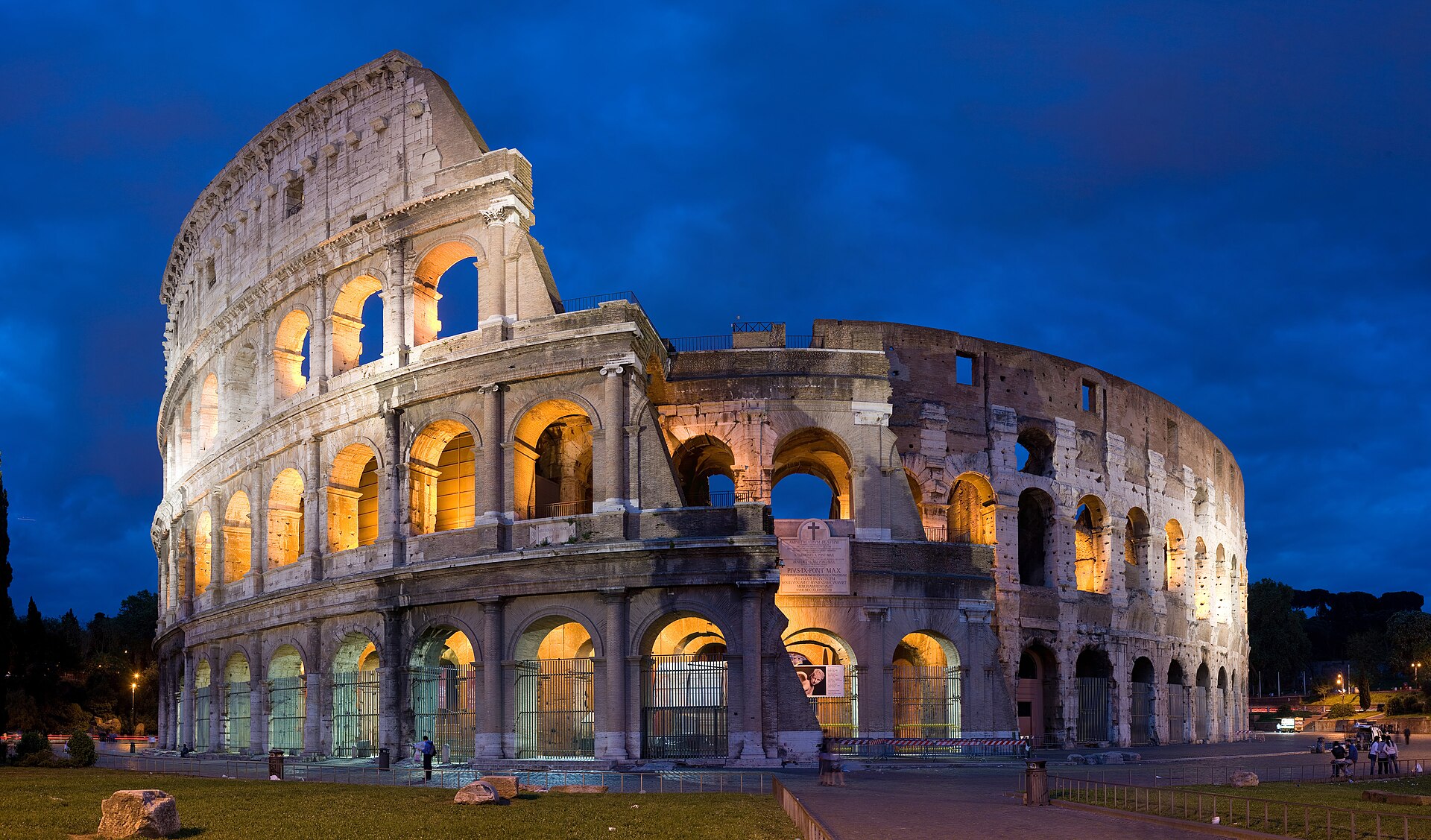
    Top image: The Colosseum, Rome. Photo: Diliff, April 2007, CC BY-SA 2.5, via Wikimedia Commons.

    Battle of the Gods: The Business of Beauty, part 3 of 5. Series hub.

    We’ve called the Venus Games a Colosseum since the first head-to-head. It’s worth looking at what the real building was: what it held, how it moved crowds, and what it sold. The runway at a fashion week works the same way on a smaller scale. It’s an arena, and much of its design was worked out in Rome nearly two thousand years ago.

    A building named for a statue

    Its official name is the Flavian Amphitheatre. The Parco archeologico del Colosseo, which manages the site today, says it “became known as the Colosseum because of a colossal statue that stood nearby.” It was built in the first century CE by the emperors of the Flavian dynasty. Rome’s tourism office says Vespasian chose land between the Palatine, Esquiline and Caelian hills that had been occupied by the artificial lake of Nero’s Domus Aurea. That was a political statement in concrete: a private pleasure palace turned into a public stadium.

    Construction began under Vespasian around 70–72 CE. His son Titus completed and dedicated the building in 80 CE. The numbers are still big: about 189 meters long, 156 meters wide and more than 48 meters high, according to Turismo Roma. The Open University says it could hold “around 50,000 people at a time.” The Parco calls it “the largest amphitheatre in the world.” The arena floor was a large wooden platform covered with sand. Our word arena comes from the Latin harena, sand. Beneath it, Emperor Domitian later built the hypogeum, a network of tunnels, cages and lifts that let animals, fighters and scenery appear as if from nowhere.

    One hundred days of opening night

    The Roman historian Cassius Dio describes Titus’s dedication games. There was “a battle between cranes and also between four elephants.” Animals “both tame and wild were slain to the number of nine thousand.” Titus also “suddenly filled this same theatre with water” for a staged naval battle. “These were the spectacles that were offered,” Dio writes, “and they continued for a hundred days.” The poet Martial opened his Book of Spectacles with a boast for the building: “All labor yields to Caesar’s Amphitheater” (as translated in the University of Chicago’s Encyclopaedia Romana).

    Dio also records a detail any event producer will recognize. Titus “would throw down into the theatre from aloft little wooden balls variously inscribed, one designating some article of food, another clothing, another a silver vessel or perhaps a gold one.” Spectators who caught one exchanged it for the prize named on it. That was the swag bag, 1,946 years before this October’s LA Fashion Week.

    The spectacle was also violent in a way no runway is. The Open University notes that the shows included gladiatorial games, animal hunts and the public execution of criminals. The Colosseum comparison here is about staging, crowds and attention. It is not about cruelty. The Venus Games scores performance, never anyone’s looks, and nobody gets hurt.

    Engineering a crowd

    The building was a machine for moving and sorting people. According to the Encyclopaedia Romana, each of the first three stories had 80 arches, and 76 of the ground-level arches were numbered “to assist spectators in finding their assigned seats.” On the long axis were the Porta Triumphalis, “through which the gladiators paraded,” and the Porta Libitinensis, through which the dead and wounded were carried out. On the short axis were entrances reserved for the emperor, the magistrates and the Vestal Virgins. Above the top story, 240 masts held the velarium, an awning worked by a detachment of sailors to shade the crowd.

    Where you sat said who you were. The habit is older than the Colosseum itself. Suetonius writes that Augustus “put a stop by special regulations to the disorderly and indiscriminate fashion of viewing the games.” Under the senate decree that followed, “the first row of seats should be reserved for senators.” Augustus “separated the soldiery from the people,” gave “special seats to the married men of the commons” and put boys in their own section next to their teachers. He also sent women to the upper seats at gladiatorial shows. “Only the Vestal virgins were assigned a place to themselves, opposite the praetor’s tribunal.”

    The Open University adds the political point. The amphitheater “provided the emperor with an important political tool,” a place where “he could appear in front of the people.” An emperor who sponsored games bought goodwill and got to be seen doing it.

    Decline, quarry, icon

    The Parco dates the building’s slow decline to 438, “with the abolition of the gladiatorial games by order of Valentinian III.” In the Middle Ages and Renaissance it became “a quarry for building materials, part of it being used for the construction of St. Peter’s Basilica.” It also sheltered animals, workshops and houses before Romantic-era writers and artists brought it back as a monument. Today it hosts exhibitions and “modern spectacles,” which completes the loop.

    The runway as a modern arena

    Put the floor plan of a fashion show next to the Colosseum’s and the parallels are hard to miss.

    • The entrance is the event. The Porta Triumphalis was a parade gate, and the top of a runway is the same thing. The first steps out of the dark set the tone for the whole look, which is why the Venus Games scores the Walk separately.
    • Backstage is the hypogeum. Domitian’s tunnels and lifts existed to make an appearance look effortless. A show’s backstage, with its dressers, hair and makeup teams and line-up boards, does the same job for a quick change.
    • The front row is Augustus’s seating chart. Editors, buyers, sponsors and talent sit in a ranked map of status. The people with the best view are the people the producers most need to impress.
    • The crowd is part of the show. Rome’s amphitheater was where the emperor went to be seen. A modern show is staged as much for the photo pit and the phones in the seats as for the clothes. Our explainer on how a fashion week really works covers the money behind that.
    • Giveaways buy goodwill. Titus threw inscribed wooden balls. Fashion week hands out gift bags. Both turn spectators into word of mouth.

    The arena is also where beauty becomes business. A Roman sponsor paid for a spectacle to earn popularity. A designer pays for a runway slot so a collection gets seen, photographed and bought, and a model’s walk is what carries the clothes past the cameras. That’s the logic behind framing the Venus Games as gods in an arena: The Venus Games: Inside the Colosseum set the stage, and the Battle of the Gods crowning vote hands the final say to the crowd.

    Next in the series: The Trojan War: The Judgment of Paris and the Face That Launched a Thousand Ships.

    Sources

    1. Parco archeologico del Colosseo, “The Colosseum” (official site). colosseo.it
    2. Turismo Roma, “The Flavian Amphitheatre (The Colosseum).” turismoroma.it
    3. The Open University, “Travelling for culture: the Grand Tour: 1.1 The Colosseum in antiquity.” open.edu
    4. James Grout, “Colosseum,” Encyclopaedia Romana, University of Chicago. penelope.uchicago.edu
    5. Cassius Dio, Roman History 66.25, trans. Earnest Cary (Loeb Classical Library), via LacusCurtius. penelope.uchicago.edu
    6. Suetonius, Life of Augustus 44, trans. J. C. Rolfe (Loeb Classical Library), via LacusCurtius. penelope.uchicago.edu
    7. PBS, The Roman Empire in the First Century, timeline (Colosseum completed, 80 CE). pbs.org
    8. “Colosseum,” Wikipedia (hypogeum under Domitian; etymology of arena). wikipedia.org
    9. Image: Diliff, “Colosseum in Rome, Italy – April 2007,” CC BY-SA 2.5, via Wikimedia Commons.

    Nightlife Report is watching. Seen something? Send us a tip, especially if you’re drunk. editor@nightlifereport.app

    More Nightlife Report: nightlifereport.app · blog.nightlifereport.app · forum.nightlifereport.app · wiki.nightlifereport.app · patreon.com/aperlas · Join the newsletter (Mailchimp)
  • The History of Modeling: From Worth’s House Mannequins to Superintelligence Twins

    The History of Modeling: From Worth’s House Mannequins to Superintelligence Twins

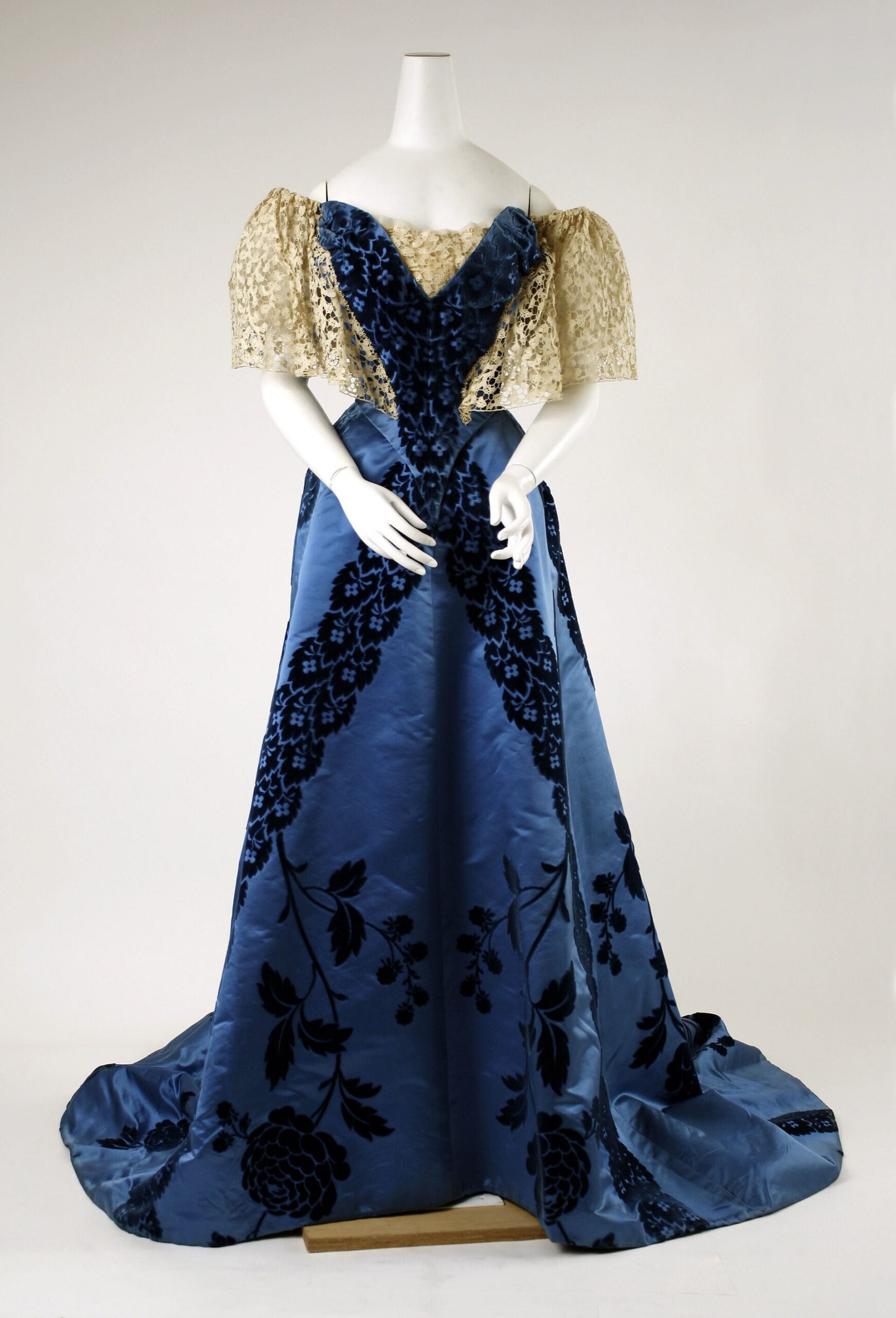
    Top image: House of Worth evening dress, 1898–1900. The Metropolitan Museum of Art, 1976.258.3a, b. CC0, via Wikimedia Commons.

    Battle of the Gods: The Business of Beauty, part 2 of 5. Series hub.

    Start with the word itself. Fashion historian Caroline Evans points out that in the nineteenth-century couture salon, the French word mannequin meant the woman, while le modèle meant the gown she showed. The model gown was a one-off, both an exclusive dress for a private client and “a prototype (hence the term model) sold to a fashion buyer for adaptation to the mass market.” So modeling began as a sales job. It still is one. The Venus Games scores Walk, Presence, Styling and Camera because those are the four ways a model sells a garment. Here is how that job was invented, and how it keeps getting reinvented.

    1850s Paris: Worth, Marie Vernet and the first house mannequins

    Charles Frederick Worth, an Englishman working in Paris, “is generally thought to be the first couturier to use live models,” Evans writes in the Encyclopedia of Clothing and Fashion. She adds that many dressmakers already kept a young woman on hand to try on a dress, but their main way of showing clothes was “a wooden or wicker dummy.” Worth met his wife, Marie Vernet, while she was modeling shawls for customers at their shared employer, the silk mercer Gagelin et Opigez. The couple opened their own couture house in 1858. Marie modeled in the Worth salons until the 1870s and then trained the house mannequins.

    Evans says the real innovation was organizational. Worth institutionalized the profession “within the increasingly bureaucratic structure of a couture house, having several trained house mannequins.” Vanity Fair has called Marie Vernet “arguably the first model-influencer.” She wore the house’s ball gowns to social events where, as the magazine puts it, nobility mixed with intellectuals and artists. A brand ambassador in 1860 did the same job as a brand ambassador in 2026: be seen in the clothes by the people who buy them.

    1890s to 1920s: the parade and the “goddesses”

    In London, Lady Duff Gordon, trading as Lucile, claimed to have staged the first mannequin parades in the late 1890s. She trained her mannequins in carriage and deportment and gave them stage names such as Hebe, Gamela and Dolores. Hebe is the name of the Greek goddess of youth, and Evans refers to the troupe as “Lucile’s ‘goddesses.’” When Lucile opened in New York in 1910 and Paris in 1911, she took four of her London mannequins with her. Dolores later joined the Ziegfeld Follies.

    In Paris, Paquin and Poiret led the move to live mannequins. Between 1900 and 1910 most couture houses had a cabine of in-house models, “poorly paid and barely respectable” but considered glamorous. When three paid mannequins appeared at the Auteuil racecourse in 1908, it caused outrage, and then the practice quickly became common. Poiret filmed a mannequin parade in 1910 and toured Europe with a troupe of mannequins in 1911. In 1913 both he and Paquin toured the United States. In 1924 Jean Patou traveled to New York to recruit six American mannequins to show in Paris for his American customers. Even a century ago, casting was a market decision: show the clothes on people the buyers recognize.

    The camera takes over

    Fashion photography needed a printing technology first. The Encyclopedia of Clothing and Fashion dates the halftone process to between 1881 and 1886, when it was invented and then refined enough to be affordable for fashion journals. Baron Adolf de Meyer became “the first important American photographer of fashion.” In 1924 Edward Steichen replaced de Meyer’s soft focus with “the clean geometric lines of photographic modernism.” In 1933 Martin Munkacsi photographed the model Lucile Brokaw running down a beach for Harper’s Bazaar, “blurred, in motion,” a picture the encyclopedia says “changed the course of fashion photography.” Richard Avedon and Irving Penn dominated the next generation.

    For decades, Evans notes, photographic models and runway mannequins were separate careers, “until well into the 1960s.” Agencies grew up around the camera. John Powers opened the first American model agency in 1923, and Ford followed in 1946 (part 1 of this series). The first French agency opened only in 1959, perhaps, Evans suggests, because Paris houses had always employed their own models.

    The Ford standard, as Eileen Otte Ford laid it out: the “tall, thin, often blond” Ford woman with “wide-set eyes and a long neck” (AP), and the blue-eyed Nordic look Vogue credits her with popularizing in the early 1960s (“They work hard, and they look more American than American girls,” she said of Swedish models). Anyone under 5 feet 7 was told to forget it: “If you’re short you’re not going to model. That’s it” (The Telegraph). The high-fashion bracket, as Robert Lacey records it in Model Woman (Vanity Fair adaptation), started at 5 feet 8, with a 32- to 33-inch bust, a 20- to 21-inch waist and 33-inch hips, because, as she explained, “photographic models must fit manufacturers’ samples.” The 34-24-34 figure is often cited for Ford models (Los Angeles Times, 2014). That’s the historical benchmark, not Nightlife Report’s standard.
    Sources: Robert Lacey, Model Woman: Eileen Ford and the Business of Beauty (2015); the New York Times and AP obituaries (2014); The Telegraph; Vogue; Los Angeles Times. Her own books: Eileen Ford’s Book of Model Beauty (1968), Secrets of the Model’s World (1970), Eileen Ford’s A More Beautiful You in 21 Days (1972) and Eileen Ford’s Beauty Now and Forever (1977).

    From haughty to kinetic

    In 1947 Christian Dior showed the New Look, and Evans writes that he encouraged his models to do theatrical turns, “knocking over ashtrays in the audience as their coats swung round.” The 1950s house style otherwise stayed “haughty and disdainful.” In the late 1950s Mary Quant broke it by showing on photographic models who “danced frenetically to jazz music and then froze in graphic, static poses on the catwalk.” Ready-to-wear in the 1960s required models to “dance, act, and clown.” At Courrèges in 1965, models danced to musique concrète. Pay jumped. Evans reports that top models could command $1,000 for a one-hour show in Milan. Jean Shrimpton and Twiggy became, in her words, “iconic figures of their times.”

    The supermodel economy

    The 1990s opened with what the BBC calls “an era-defining British Vogue cover.” It was shot by Peter Lindbergh and featured Cindy Crawford, Naomi Campbell, Tatjana Patitz, Linda Evangelista and Christy Turlington. George Michael’s “Freedom ’90” video, directed by David Fincher and starring the same five women, followed soon after. British Vogue recalls Evangelista’s famous line: “We don’t wake up for less than $10,000 a day.” By the end of the century, Evans writes, models were “firmly established as the new celebrities.” She also notes that despite Naomi Campbell’s visibility, models of color remained underrepresented at the start of the twenty-first century.

    The economics matter here. The supermodel turned the model from someone who sells a dress into someone who sells herself as a brand: the cosmetics contract, the exclusive, the cover. That’s the arc the Fords’ contracts started (see part 1). The Venus Games is a small, local version of the same story, where a reader vote turns a runway walk into a following.

    The digital and AI era

    Now the model can be in two places at once. In March 2025, The Business of Fashion reported that H&M planned to create digital twins of 30 models for use in AI-generated imagery such as social posts and marketing. According to the company, the models would own the rights to their twins and could license them to other brands, including H&M’s competitors. The same report notes that Levi’s shelved an earlier plan to use AI-generated models after “a firestorm of criticism online.” Makeup artists and photographers told BoF they worried about what happens to everyone else on set.

    Regulators moved too. Under New York’s Fashion Workers Act, in force since June 19, 2025, the state Department of Labor says clients “must obtain clear written approval from a model before creating or using the model’s digital replica,” covering “the scope, purpose, rate of pay, and length of time.” A power of attorney can no longer cover a model’s digital replica. Model Alliance executive director Sara Ziff told BoF that “model management companies will have to obtain consent separate from the representation agreement.”

    What stays the same

    Line up the eras and the job hasn’t changed much: Marie Vernet in a Worth shawl, Lucile’s “goddesses,” Munkacsi’s runner, the 1990 Vogue five, a licensed digital twin. A person, or now a person’s authorized likeness, makes a garment desirable by showing it moving, in the light, in front of the people who will pay for it. The tools change from salon to parade to camera to model and then to the replica. The contract questions stay the same: who is in the picture, who owns it, and who gets paid.

    Nightlife Report holds one line on this: no AI images of real people. The live runway, the real walk and the real photo pit are what we cover, and what we judge.

    Next in the series: The Colosseum: Spectacle, Crowds and the Runway as Arena.

    Sources

    1. Caroline Evans, “Fashion Models,” Encyclopedia of Clothing and Fashion, via Encyclopedia.com. encyclopedia.com
    2. “Fashion Photography,” Encyclopedia of Clothing and Fashion, via Encyclopedia.com. encyclopedia.com
    3. “How Marie Vernet Became History’s First Model-Influencer,” Vanity Fair. vanityfair.com
    4. “The superstar models who ruled the 90s,” BBC Culture, Sept. 2023. bbc.com
    5. “Linda Evangelista’s Vogue Interview: The Rebirth Of The Indomitable Super,” British Vogue. vogue.co.uk
    6. “H&M Knows Its AI Models Will Be Controversial,” The Business of Fashion, March 25, 2025. businessoffashion.com
    7. New York State Department of Labor, “New York State Fashion Workers Act FAQs.” dol.ny.gov
    8. Image: House of Worth evening dress, 1898–1900, The Metropolitan Museum of Art, 1976.258.3a, b (CC0), via Wikimedia Commons.

    Nightlife Report is watching. Seen something? Send us a tip, especially if you’re drunk. editor@nightlifereport.app

    More Nightlife Report: nightlifereport.app · blog.nightlifereport.app · forum.nightlifereport.app · wiki.nightlifereport.app · patreon.com/aperlas · Join the newsletter (Mailchimp)