
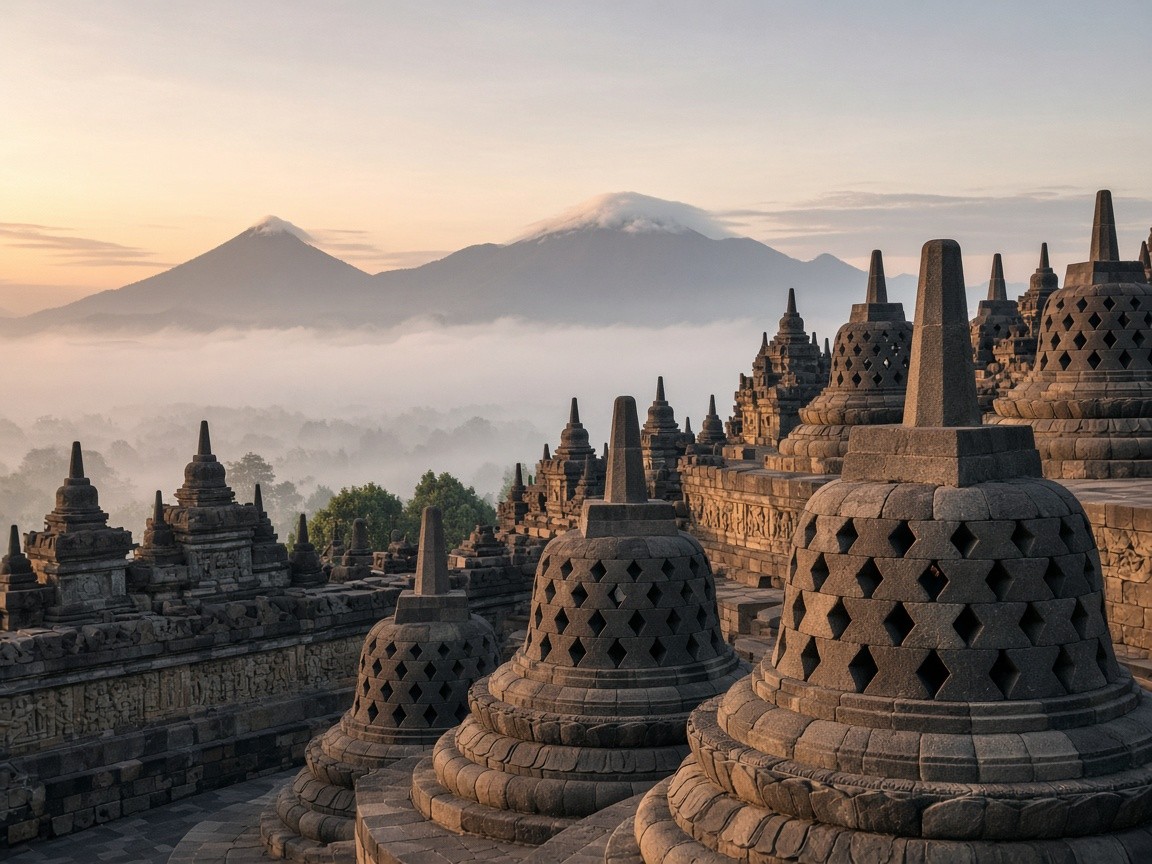
A 17-minute YouTube episode says Java’s greatest temple was a machine and its hidden reliefs were taken. We checked each claim against the record. Some numbers hold up. The cover-up does not. And the story leads straight to the Philippines.
Source video: My Lunch Break (YouTube). Quotes below are from its auto-transcript; screenshots are used for commentary and criticism.
What the video says
My Lunch Break opens with a promise: “Welcome to the destruction of the mainstream history.” The subject is Borobudur in Central Java, the largest Buddhist monument on Earth, about 2 million stone blocks, dated to the 800s. The host’s first question is fair: “Can you even imagine your town having a meeting, all getting together and just throwing one of these together?”
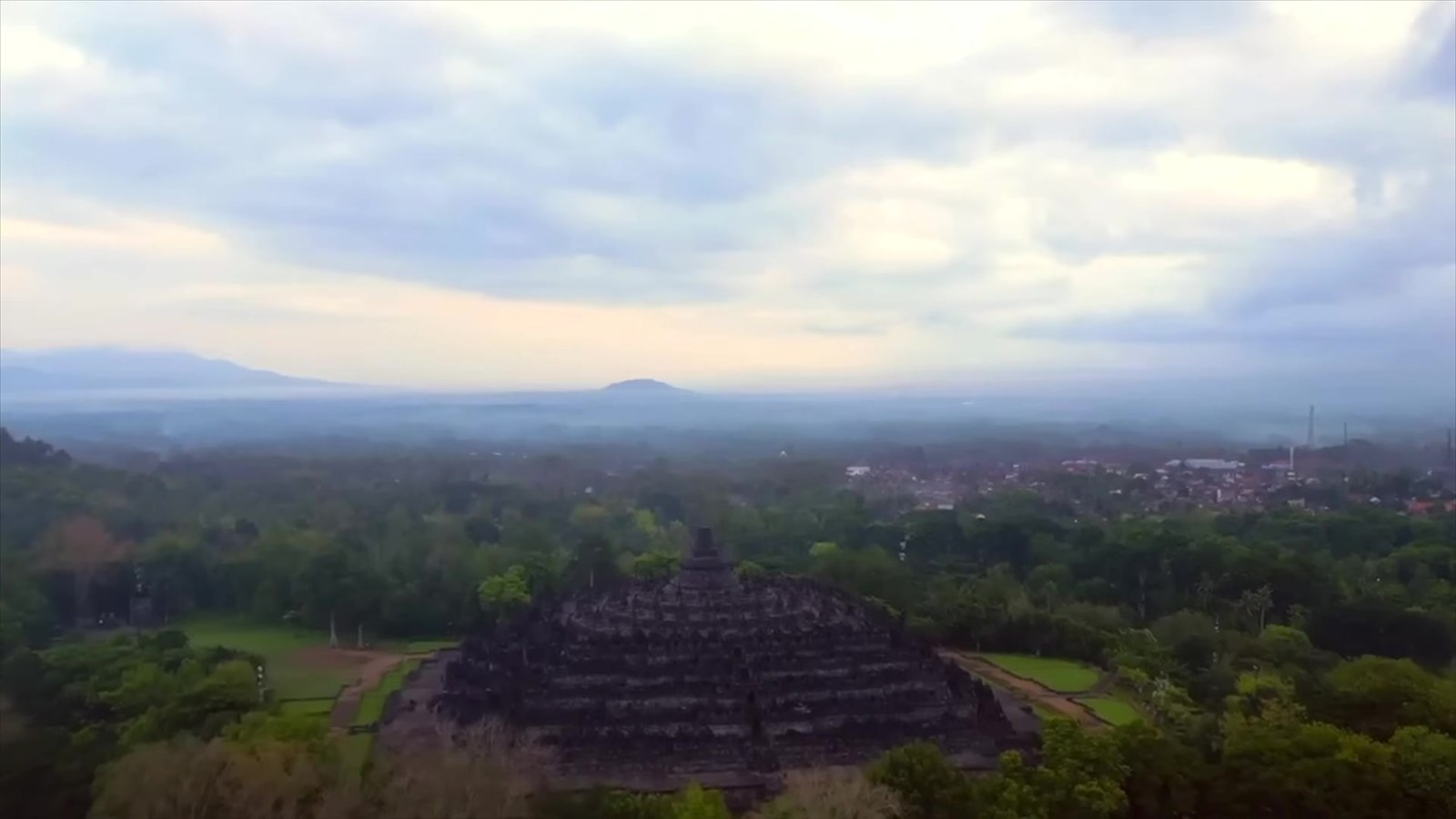
He makes three big claims.
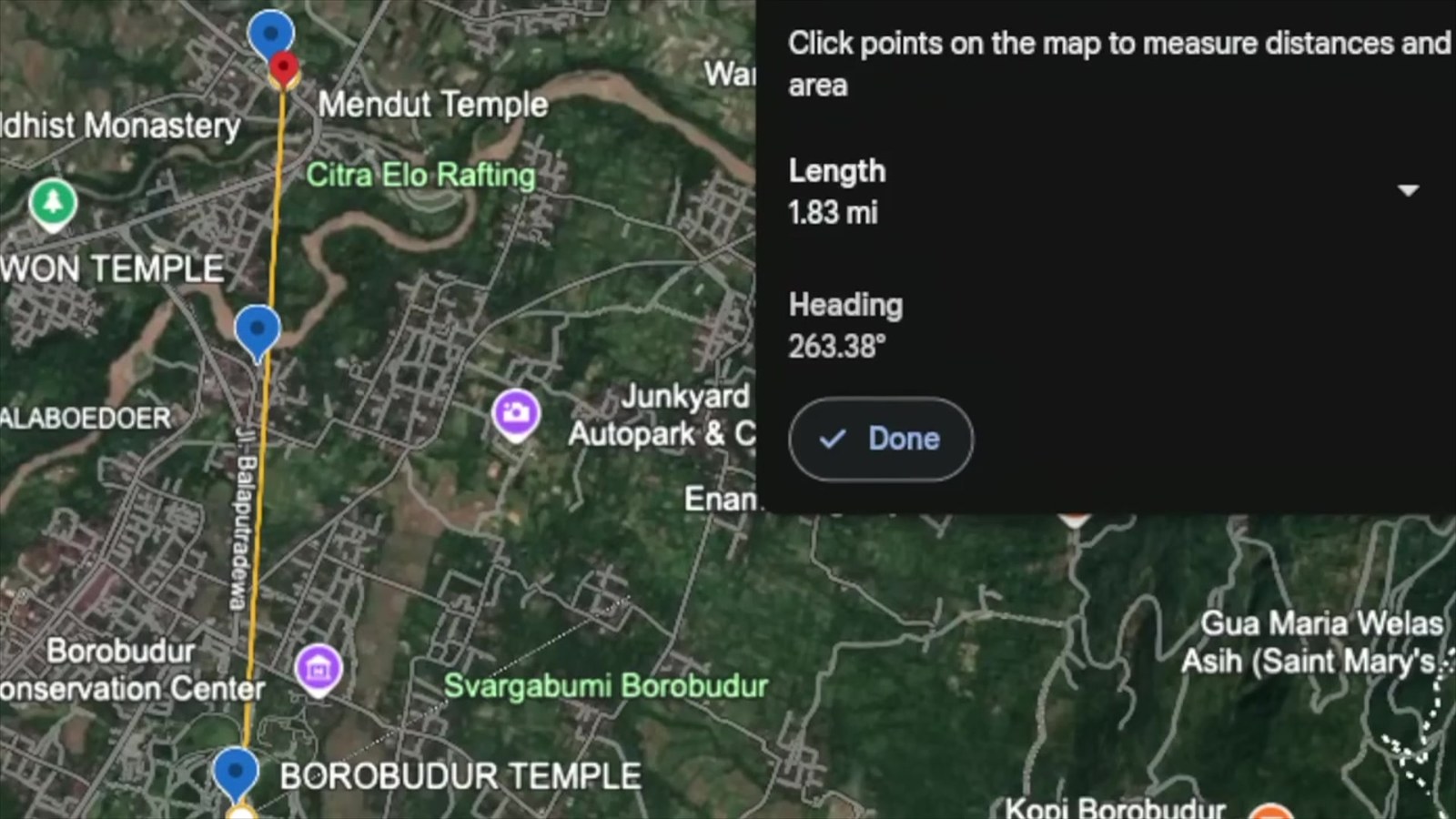
1. The straight line. Borobudur, Pawon and Mendut sit on one line that passes through the centre of each temple. “This was not by accident. They had technology and they were advanced.” He adds that a 1-degree error “would have thrown the entire thing off by dozens of meters.”
RelatedSt. Thérèse’s Thimble: Every Soul Full, Not Every Soul Equal
2. The machine. “I don’t believe this is just some random stones. I believe it is a machine.” He points to the 123 by 123 m base, the volcanoes nearby, and says restorations cut the height from 138 ft to 115 ft: “I believe that this turned off the machine.” He presents this as belief. We label it a theory.
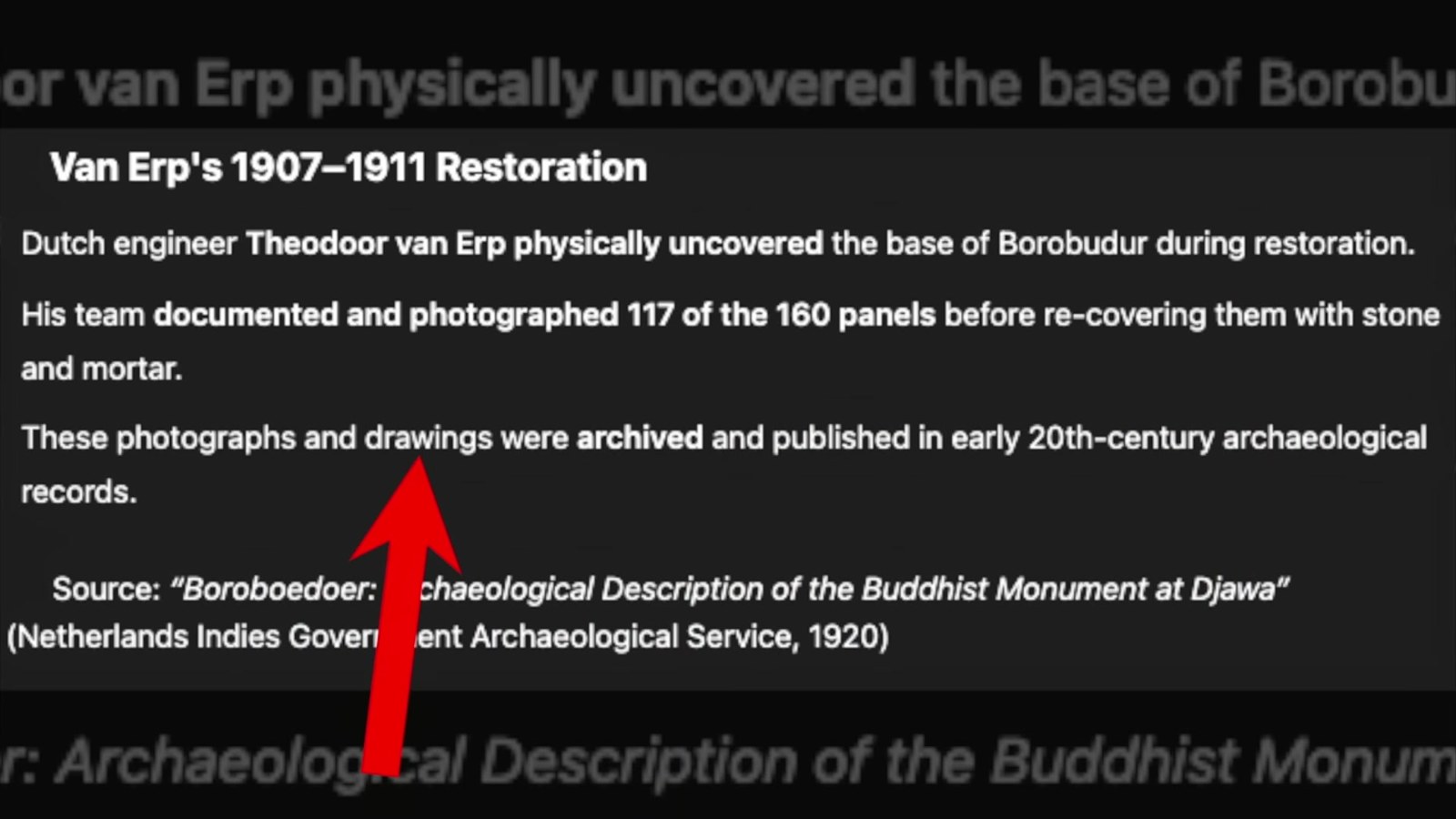
3. The hidden panels. He says Theodoor van Erp photographed 117 of 160 buried base panels in 1907-1911, the other 43 were sealed forever, and “somebody has those.” He closes: “We are the people that they wrote these stories for and I want them back.”
What the video gets right
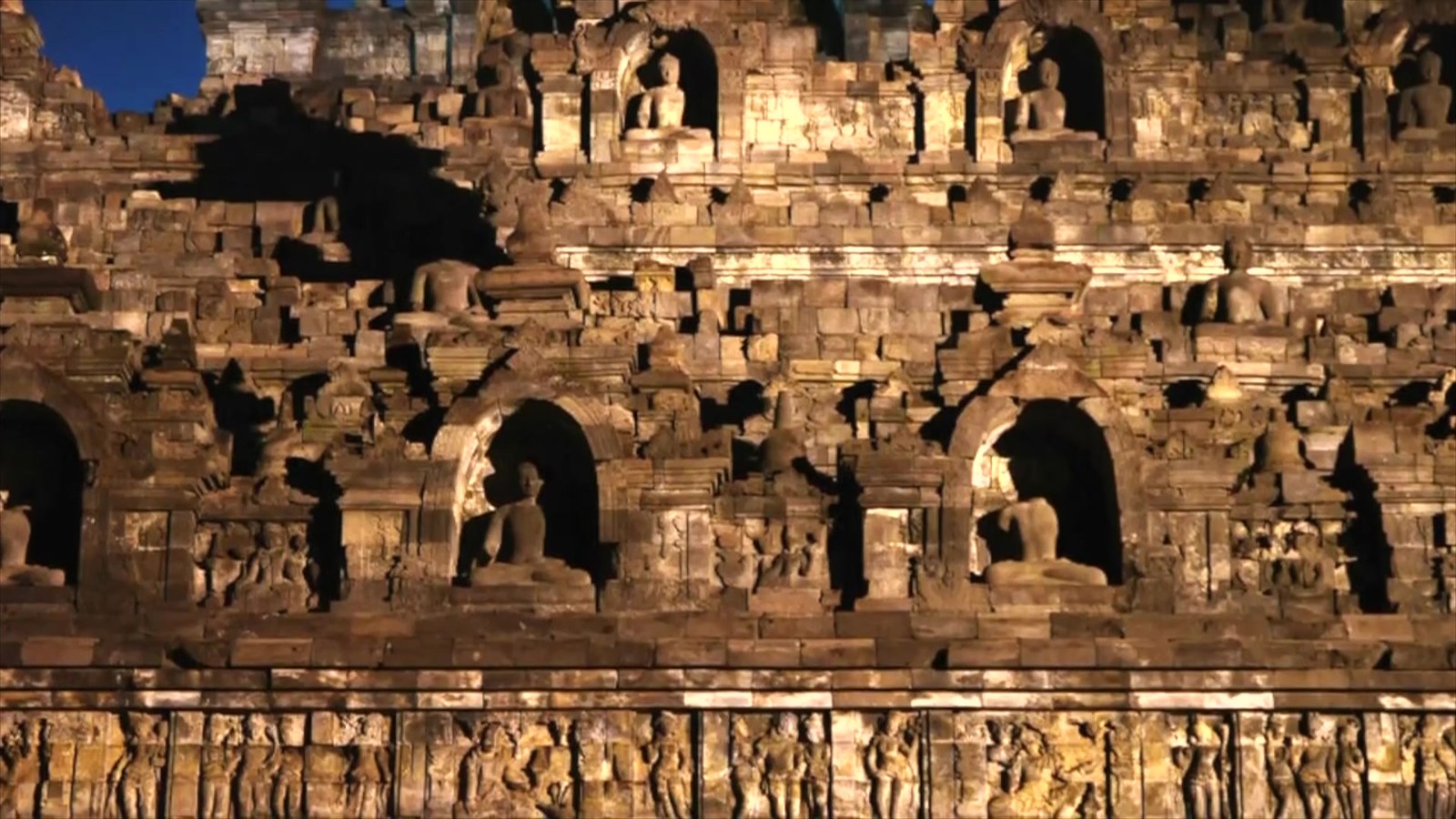
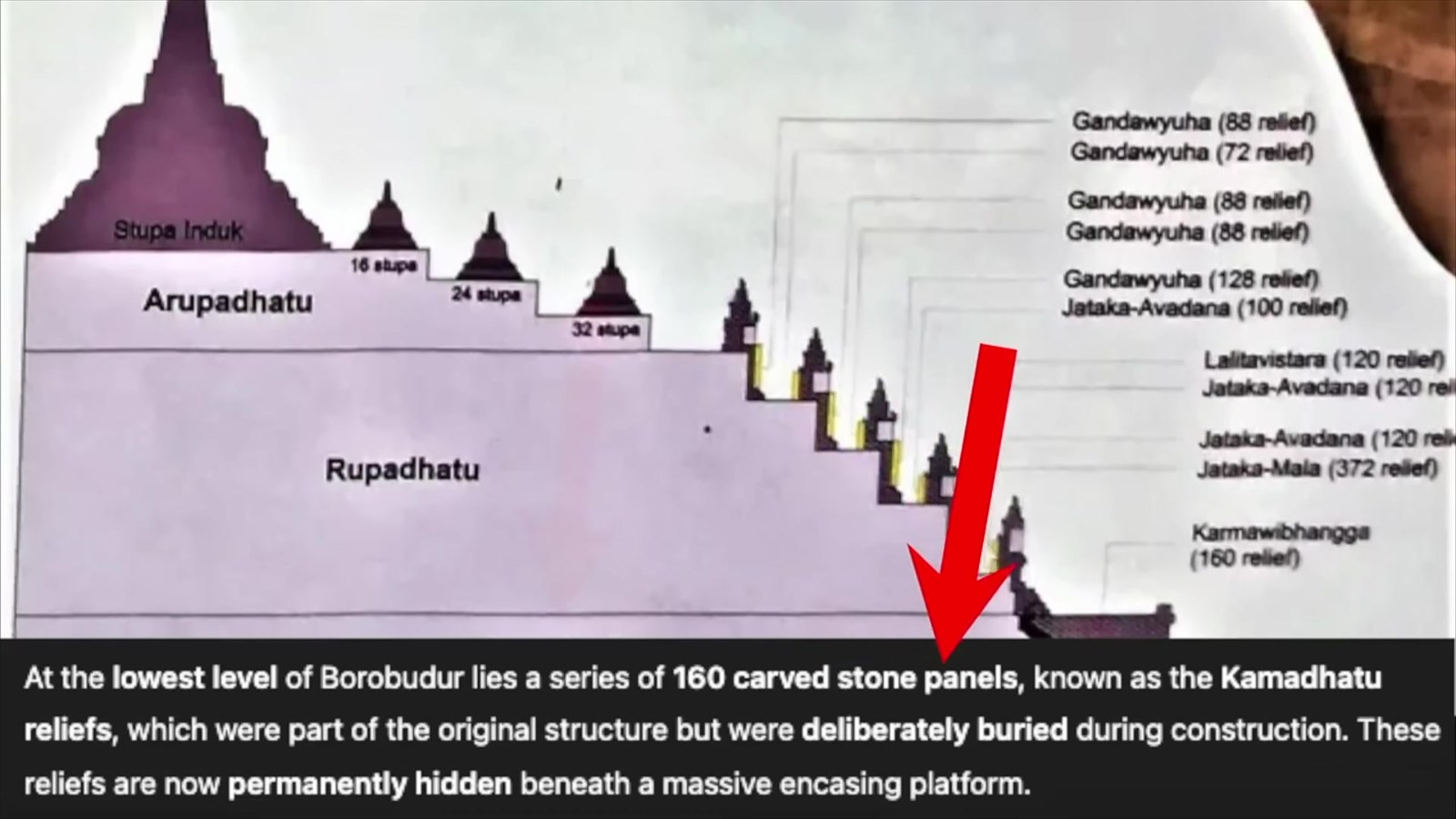
Credit where it is due. His panel counts match the standard scholarship: 2,672 relief panels in total, 1,460 narrative and 1,212 decorative. The hidden foot holds 160 Karmavibhangga panels on cause and effect. Above them run 120 panels on the Buddha’s life, 720 Jataka and Avadana tales, and 460 panels of Sudhana’s quest from the Gandavyuha. The base is about 123 m a side. And the monument really was buried under volcanic ash and jungle when the British heard about it in 1814.
What the record shows
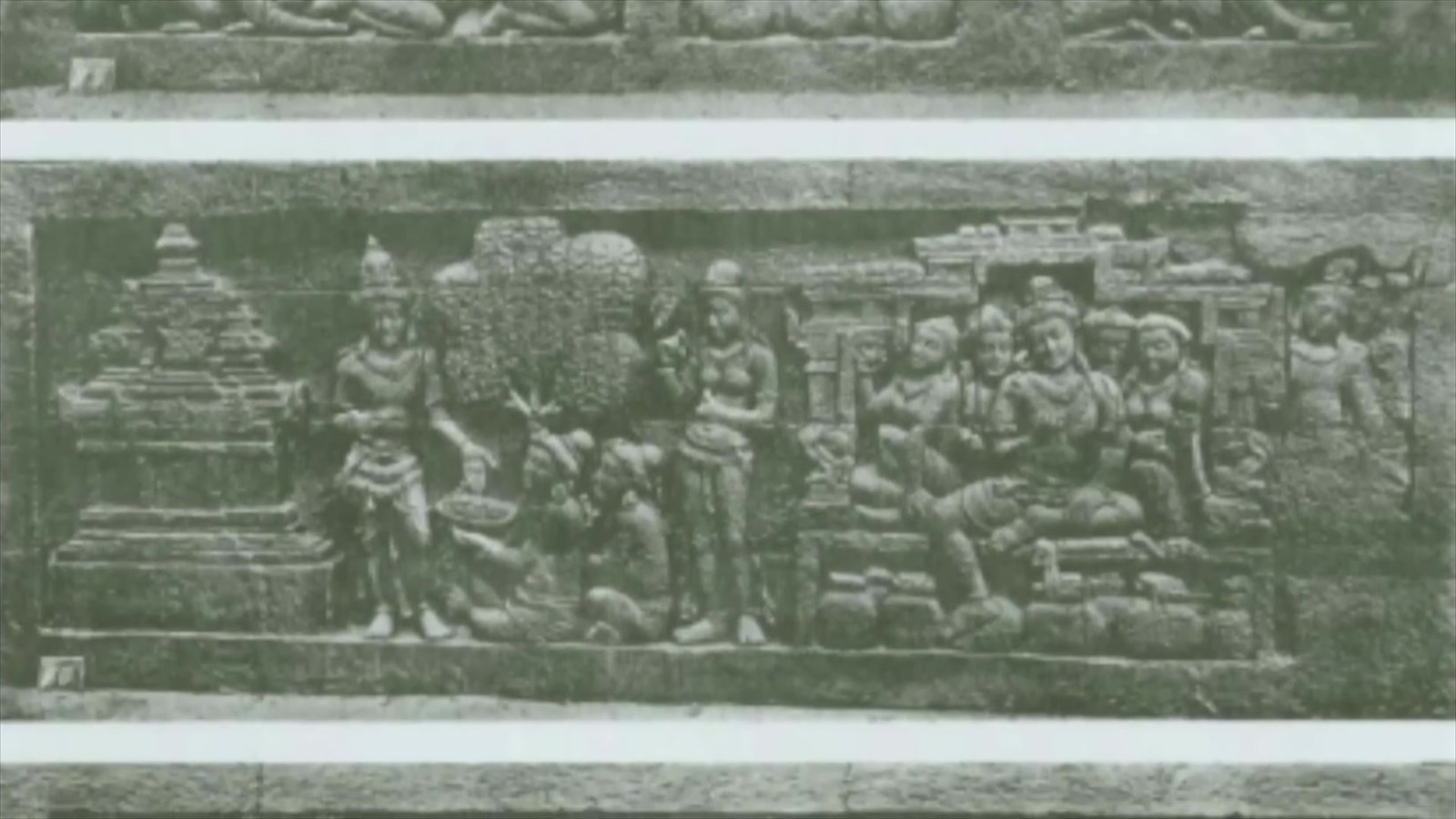
The hidden panels were not lost. Engineer J. W. IJzerman uncovered the hidden foot in 1885. Between 1890 and 1891, Kassian Céphas, a Javanese photographer, photographed all 160 Karmavibhangga panels before they were covered again. Those plates are held at Leiden University Library and are viewable online. The panels show moral lessons: good deeds bring good outcomes, harm brings hard consequences, and scenes of heaven and hell. That matches the video’s own summary. It does not show an energy device.
Why were they buried? Scholars debate it. The leading explanation is structural: the builders added the wide stone foot during construction to stop the earth-filled mound from slumping. A second view is a change of plan. Both are theories. A modern cover-up is not supported, because the foot was already in place when the monument was found.
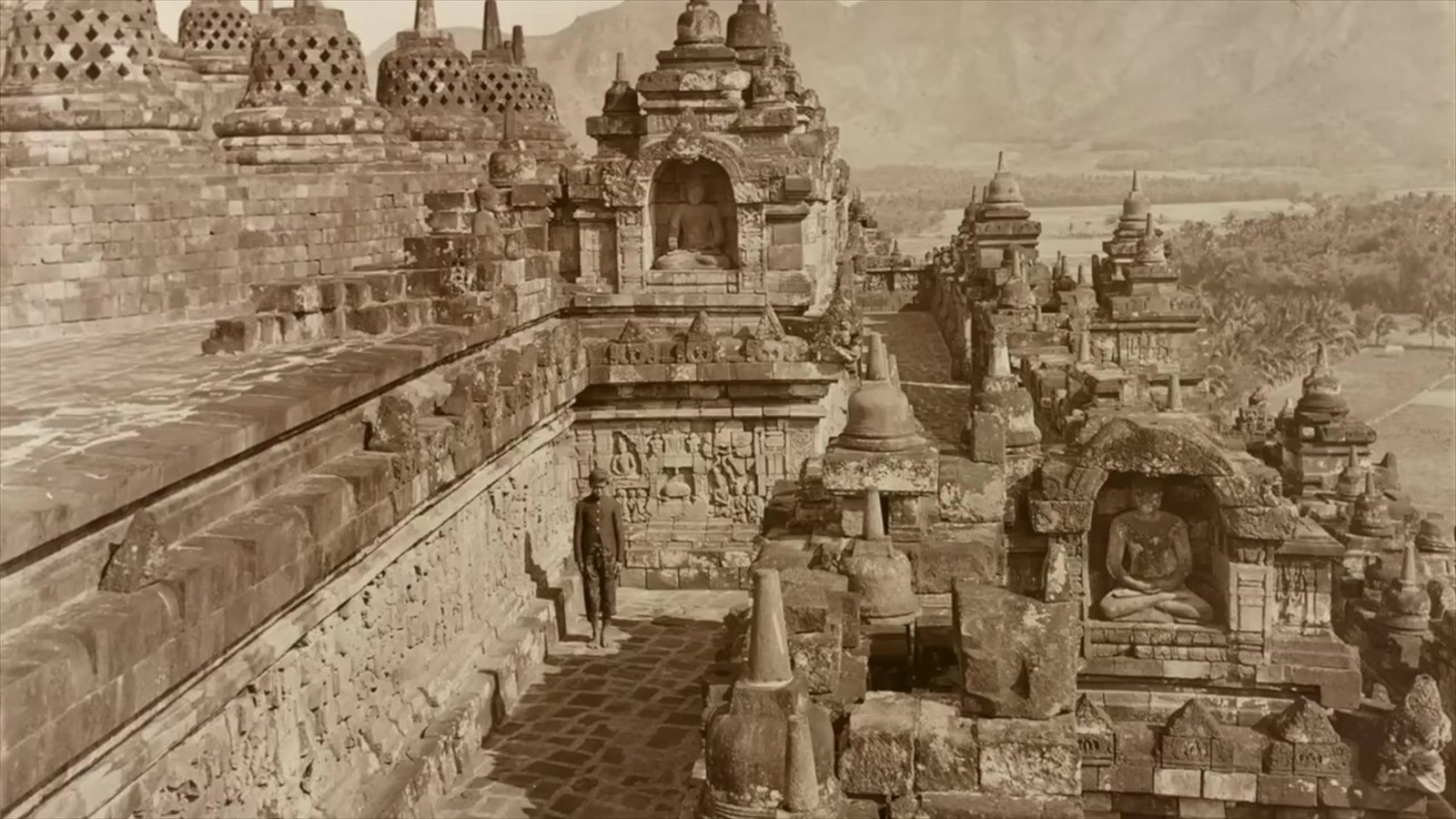
The height. Borobudur is thought to have stood about 42 m (about 138 ft); today it is about 35 m (115 ft). The difference is mostly the lost top pinnacle, which was already missing when the Dutch arrived. Van Erp built a replacement spire around 1911, then took it down because no one could prove what the original looked like.
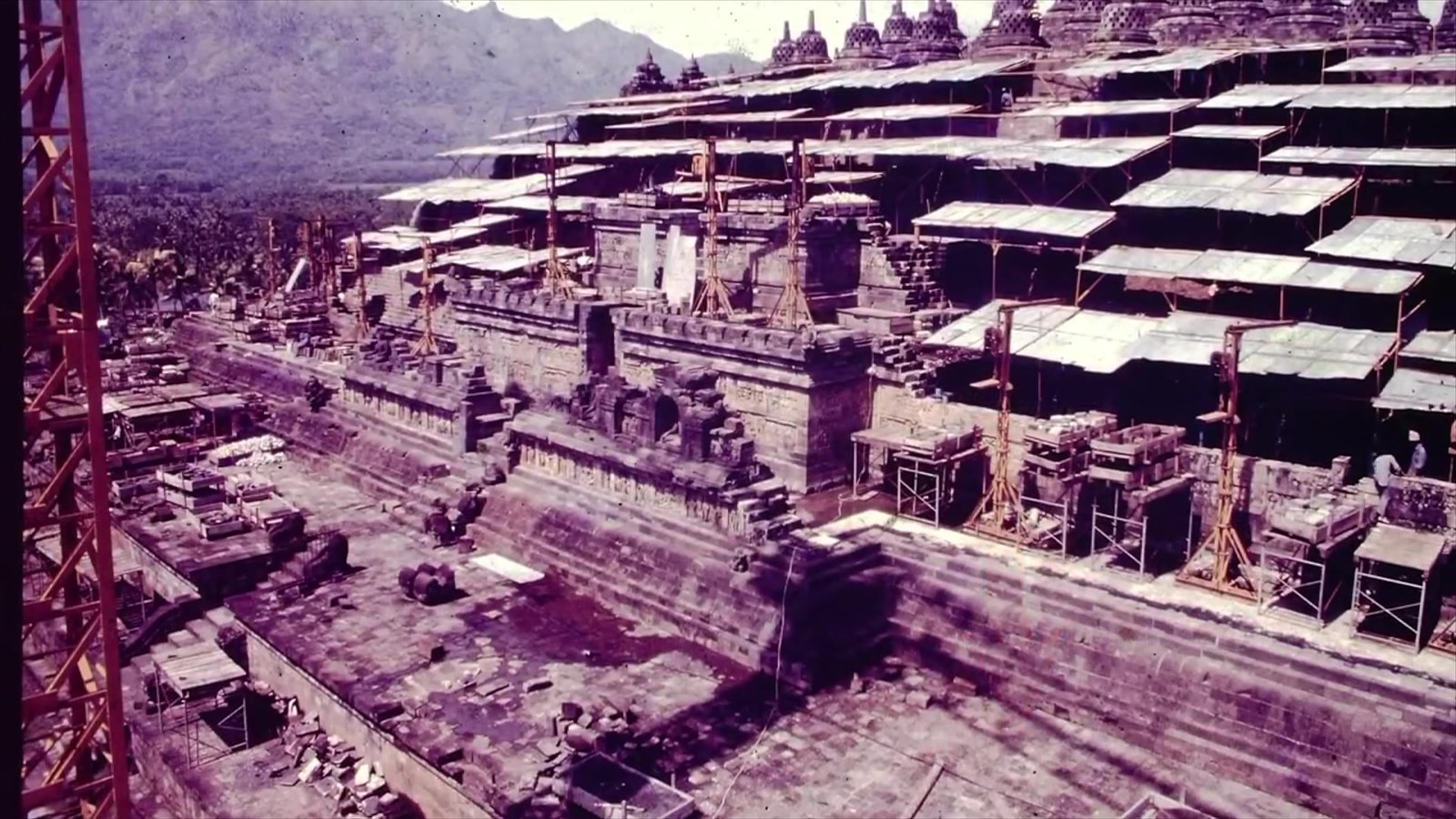
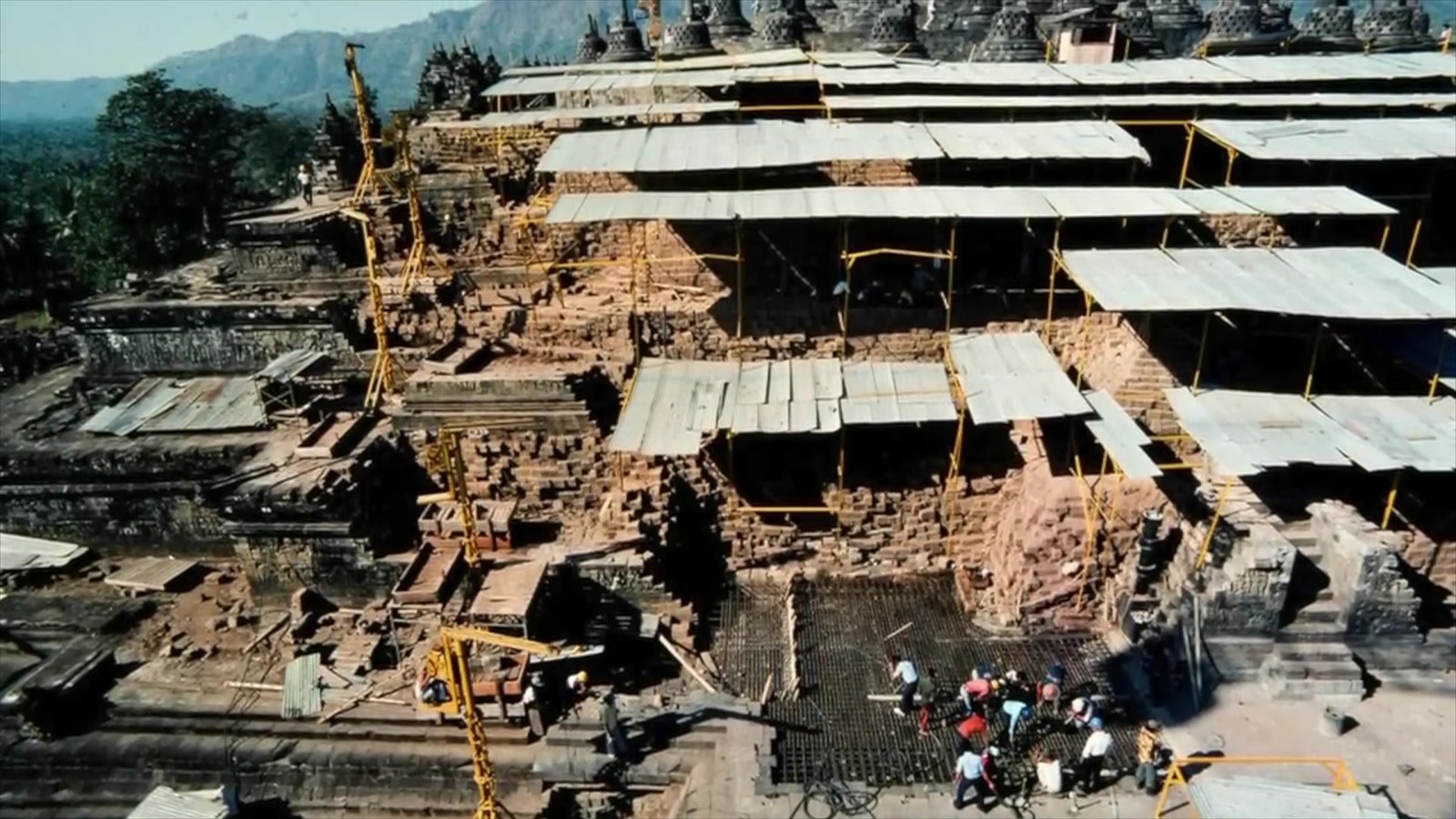
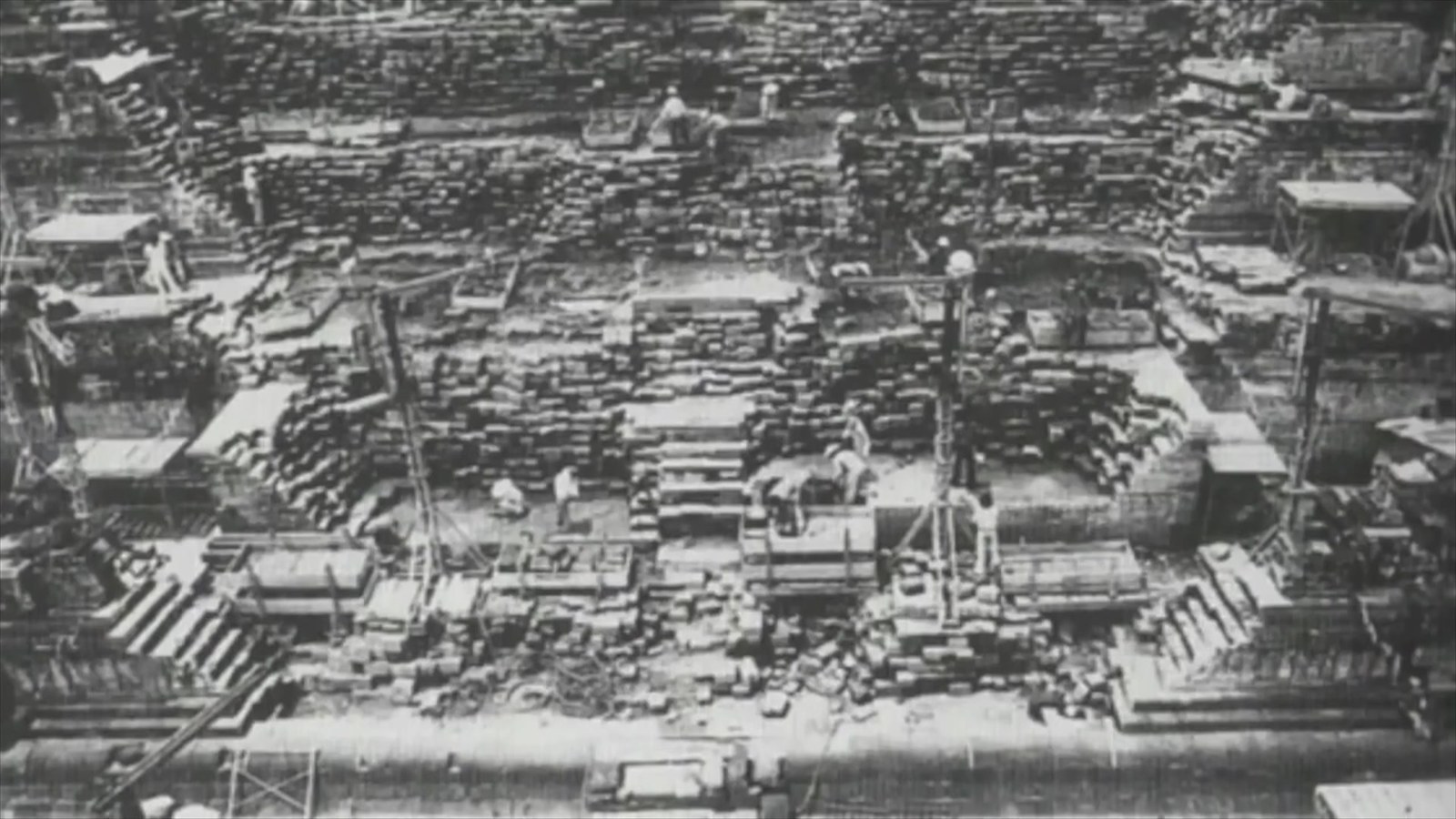
The 1970s restoration. The 1975-1982 project was led by an Indonesian archaeologist, Prof. Soekmono, with UNESCO support. Rainwater was seeping into the mound and the gallery walls were tilting. Workers took the square terraces apart, added concrete foundations and drainage, and put the stones back in place. Critics still argue about the concrete. But the goal was to stop a collapse, not to switch anything off.
The line. The alignment is real. Mendut, Pawon and Borobudur lie close to a straight line about 3 km long, and most scholars read it as a deliberate pilgrim route. Laying a line that straight needs sighting poles, cords and patience, which Javanese builders had.
Steelman the debunkers
The strongest point against the video is simple: the photographs exist. Anyone can count the 160 panels in Céphas’s plates. “It looks too advanced for the 800s” is a feeling, not evidence, and the people of Mataram left inscriptions, tools and other temples, such as Prambanan, that show how they worked.
Debunk the debunkers
The video’s instinct is not all wrong, though. Pieces of Borobudur did leave Java. In 1896 the Dutch colonial government let King Chulalongkorn of Siam take cartloads of Borobudur sculpture, including Buddha statues and relief stones; many are in Bangkok today. Local Javanese people knew about the “hill” long before Thomas Stamford Raffles got the credit in 1814. And colonial-era scholars set the first story. So the right attitude is the one the video asks for, applied both ways: open the source, check who benefits, then decide.
The Filipino thread
Borobudur was built under the Sailendra dynasty, a family tied by marriage and trade to Srivijaya, the maritime power that ran the sea lanes of island Southeast Asia. The Philippines was part of that world.
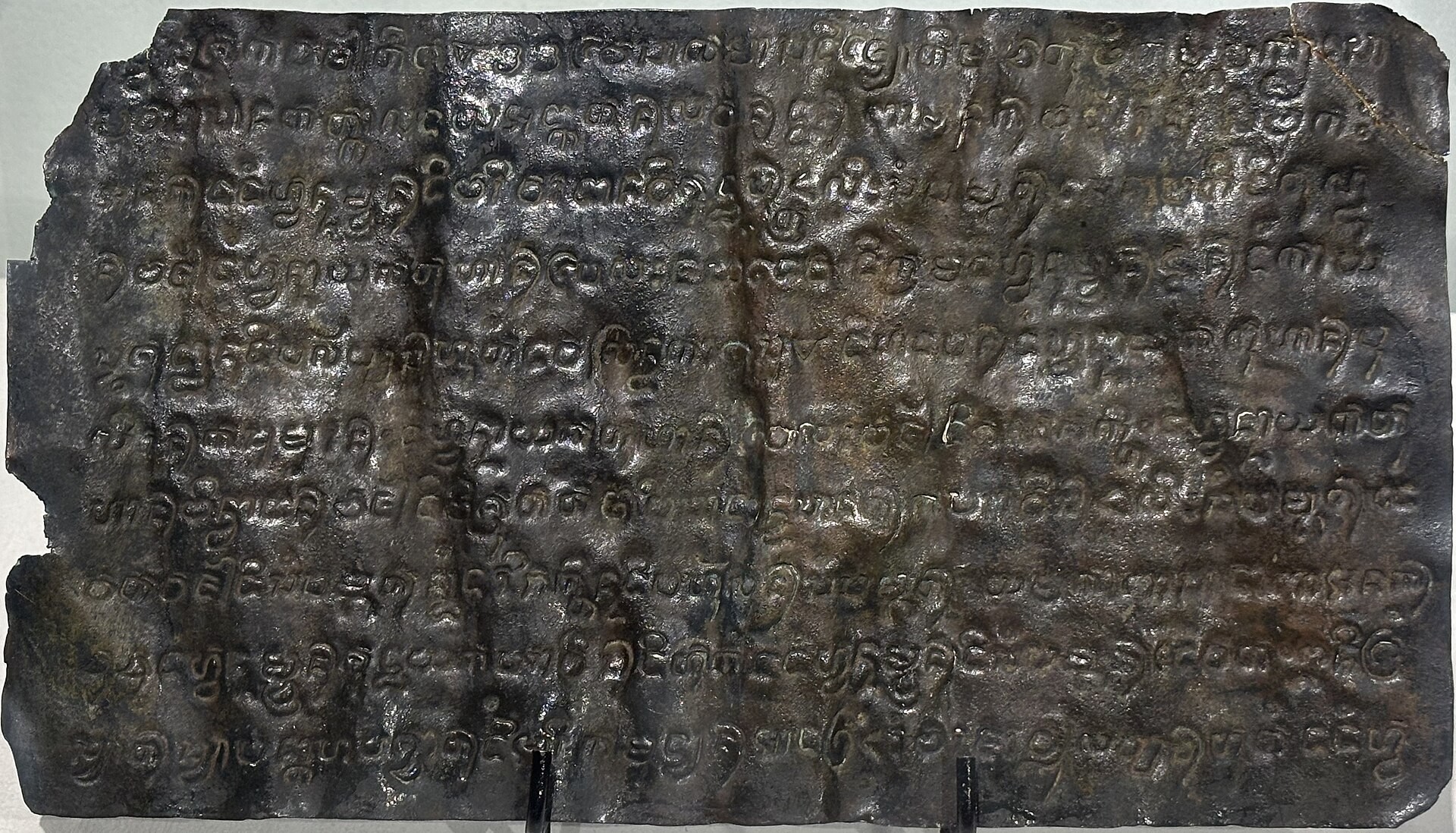
The Laguna Copperplate (900 AD), the oldest known document from the Philippines, is written in Kawi, the same script family used in Java’s temple-age inscriptions. It mentions Medang, which scholar Antoon Postma suggested may be the Javanese Medang (Mataram) kingdom, the realm that ruled near Borobudur. That link is a strong possibility, not settled fact.
Butuan in Mindanao had ocean-going balangay boats dated as early as 320 AD, a gold-working culture, and the Golden Tara, a Hindu-Buddhist figure found in Agusan in 1917. Chinese Song dynasty records list envoys from Butuan in 1001. Later, Majapahit’s 1365 court poem, the Nagarakretagama, names places that some historians identify with Philippine islands, such as Solot (possibly Sulu). Those identifications are debated.
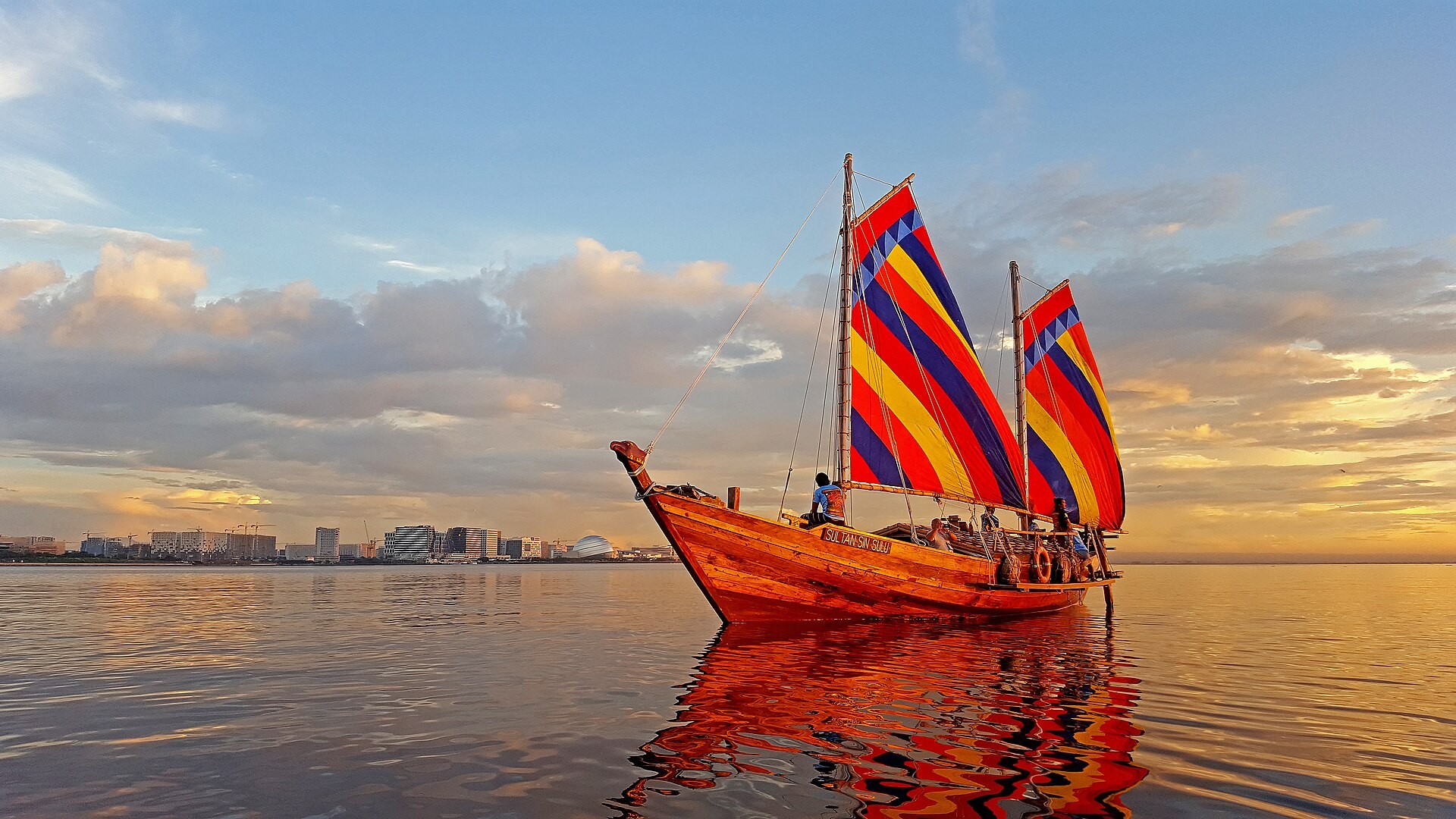
The point is not that Filipinos built Borobudur. They did not. The point is that our ancestors were trading partners, sailors and writers in the same network that produced it.
Four collaborators, one lesson
- Sofhia Flores (@sofhiafloress) walks to carry her Filipino heritage with pride and to show others they can chase their dreams. That heritage was already written down in Kawi by 900 AD.
- Nicole Anne Williams (@nicolewilliams919) walks while earning her degree, and her next move is producing the show. Butuan built the ships and ran the trade.
- Bryan Vargas (@d.bryanbryxph) stopped asking whether he belonged and started backing what he brings. Filipinos stood in the same sea network as Borobudur’s builders.
- Lance Raymundo (@lanceraymundo) warns that trends can flatten creativity, and answers: stay original. Question the viral claim and the official one alike.
(Collaborator lines are paraphrased from their Nightlife Report interviews.)
FAQ
Were Borobudur’s hidden panels destroyed?
No. All 160 Karmavibhangga panels were photographed by Kassian Céphas in 1890-91 and remain in place under the stone foot. Four are left exposed at the southeast corner.
Was Borobudur a machine?
That is the video host’s theory. No physical evidence supports it. The monument is a Buddhist stupa and pilgrimage path built around 780-830 AD.
Did UNESCO cut the temple’s height?
No. The height difference comes from the missing top pinnacle, lost before the 1800s. The 1975-1982 restoration rebuilt the lower terraces to stop water damage.
Are Borobudur, Pawon and Mendut aligned?
Yes, roughly in a straight line about 3 km long, most likely as a planned pilgrim route.
What does Borobudur have to do with the Philippines?
The Laguna Copperplate (900 AD) uses the same Kawi script family as Java’s temple-age inscriptions and may name a Javanese kingdom. Butuan traded across the same Srivijaya-era sea network.
Sources
- My Lunch Break, YouTube episode on Borobudur: https://www.youtube.com/watch?v=69e0-HIPHaA
- UNESCO World Heritage Centre, Borobudur Temple Compounds (592).
- Miksic, J. (1990). Borobudur: Golden Tales of the Buddhas. Periplus.
- Krom, N. J. (1927). Barabudur: Archaeological Description. Martinus Nijhoff.
- Soekmono, R. (1976). Chandi Borobudur: A Monument of Mankind. UNESCO Press.
- Dumarçay, J. (1978). Borobudur. Oxford University Press.
- Céphas, K. (1890-91). Photographs of the hidden foot of Borobudur. Leiden University Library.
- Postma, A. (1992). The Laguna Copper-Plate Inscription. Philippine Studies 40(2).
- Raffles, T. S. (1817). The History of Java.
- Scott, W. H. (1984). Prehispanic Source Materials for the Study of Philippine History. New Day.
- National Museum of the Philippines: Balangay and Butuan collections.
- Field Museum, Chicago: Golden Tara of Agusan.
Listen and support
Hear more on the Nightlife Report podcast, and join the community at patreon.com/aperlas.
Screenshots: My Lunch Break (YouTube), used for commentary. Collaborator photos courtesy of Sofhia Flores (photographer @adamlupix), Bryan Vargas, Lance Raymundo and Nicole Anne Williams. Hero image: illustration. Lillith Magic · Directed by Anthony Perlas.
You might also like
 CultureEverything in Space Is Falling: Orbit as Free Fall
 ExplainersTao Group Hospitality: The Company Behind Marquee, OMNIA, TAO and Hakkasan
 ExplainersSpace Week: Swift’s Fiery Farewell, Voyager 1’s Light-Day and a Quiet Jet Flies East
 ExplainersWhat the Biggest Companies Sell Us to Get Bigger
 NewsBurberry Turns 170 With a Country-House Disco, and Damiani Takes Mariacarla Boscono to a Palazzo Party
 VideoWhy Thursday Is Jupiter’s Day: Dies Iovis and the Spiritual Forecast
Leave a Reply