
The gods didn't abandon us. We made the earth unlivable.
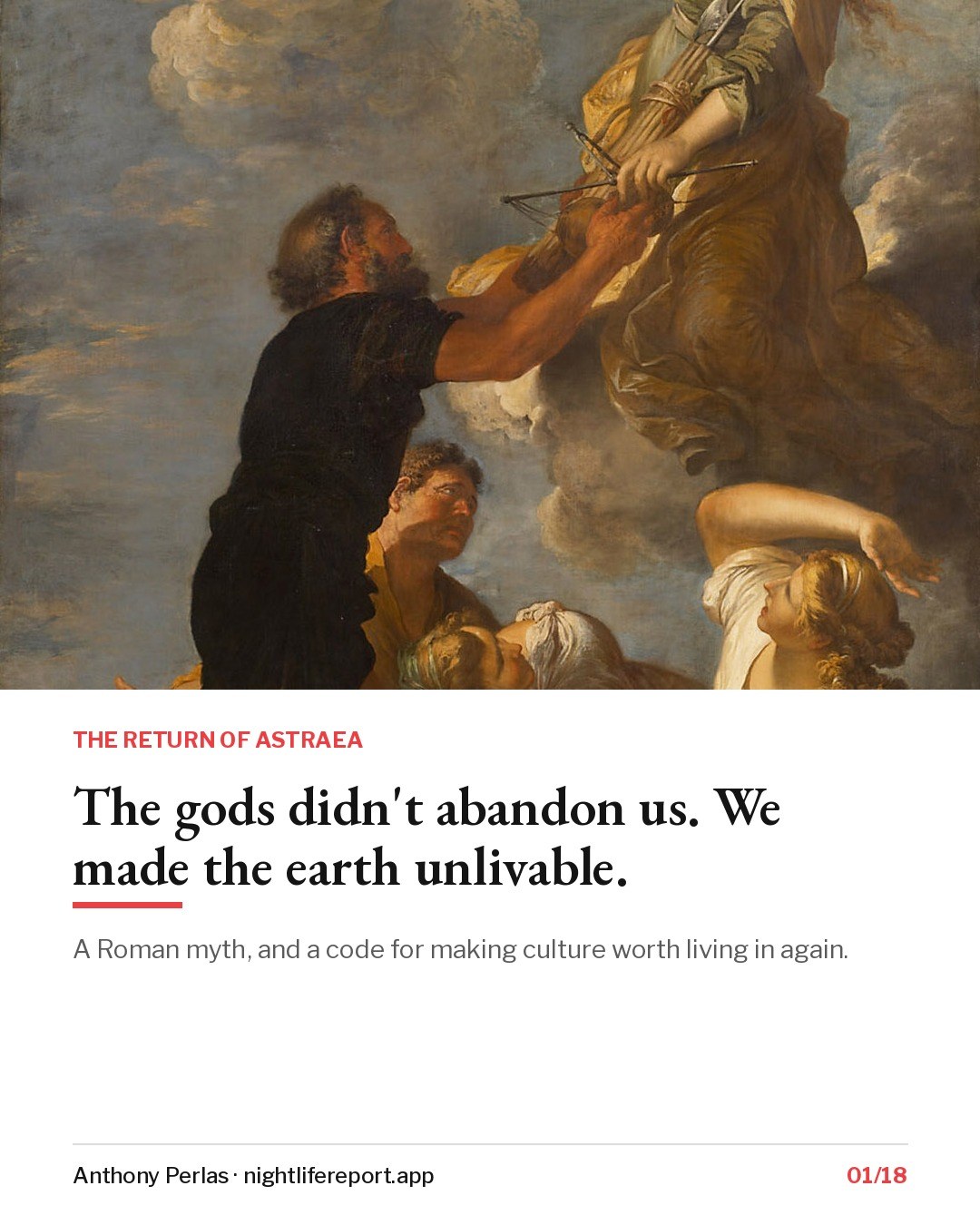
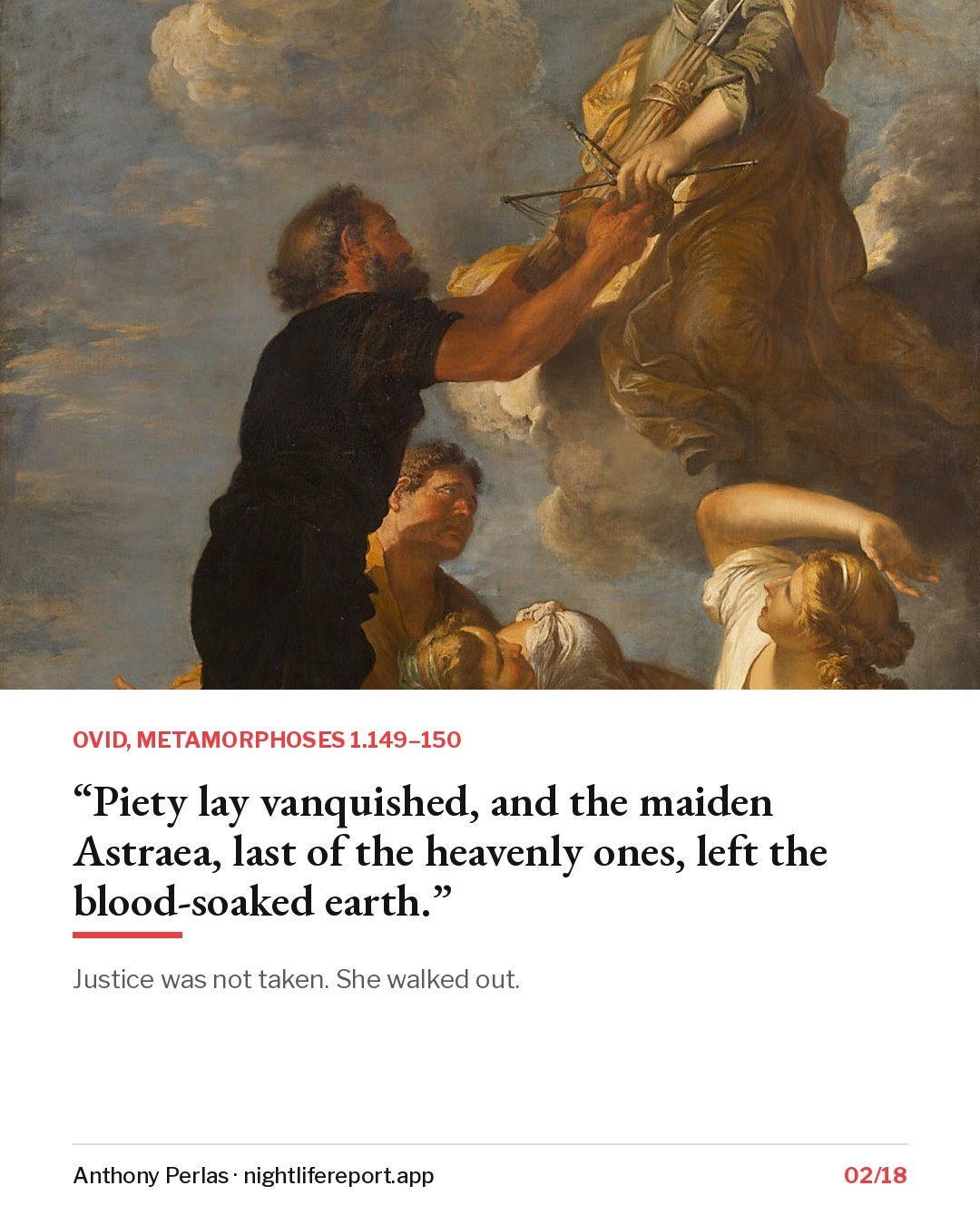
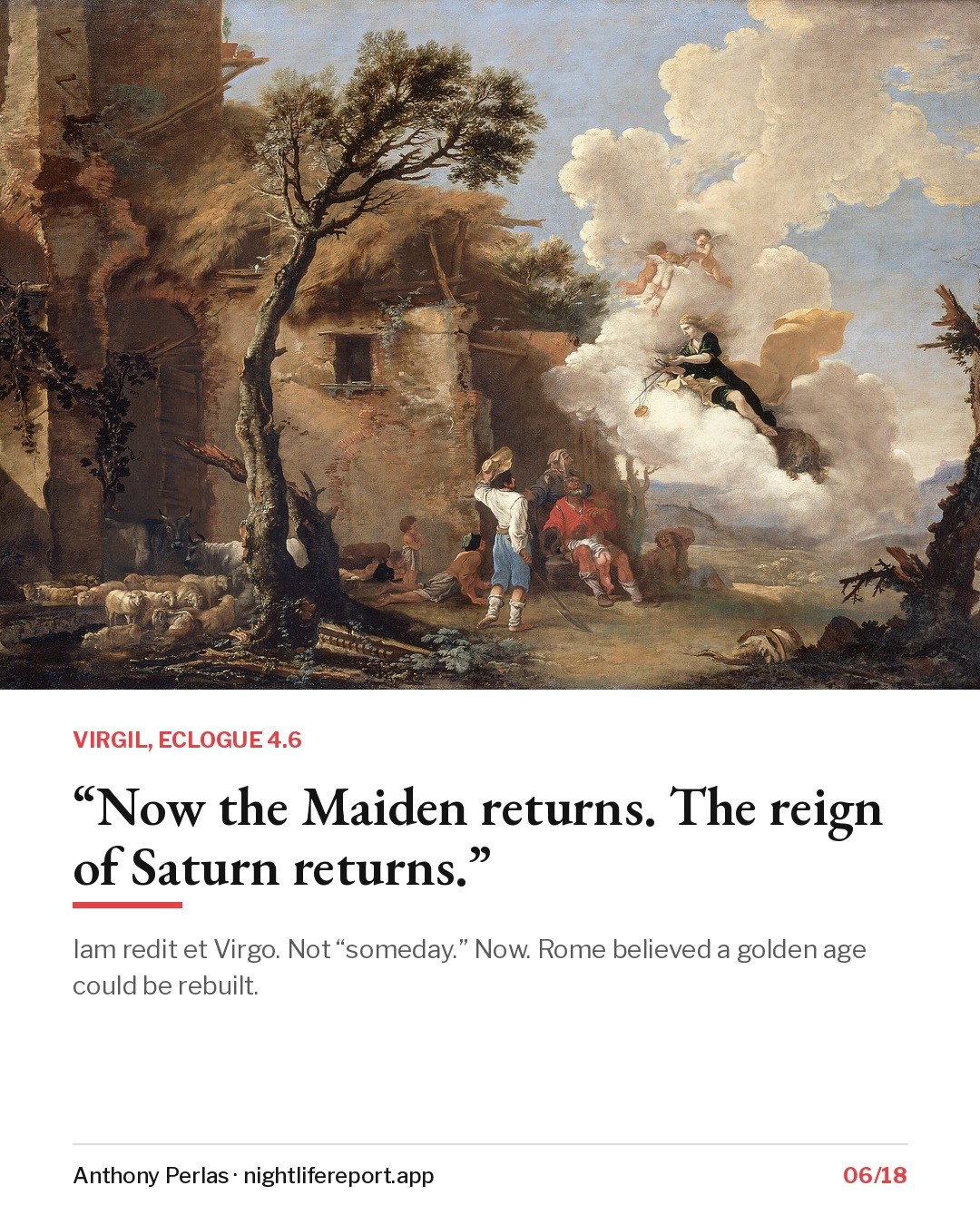
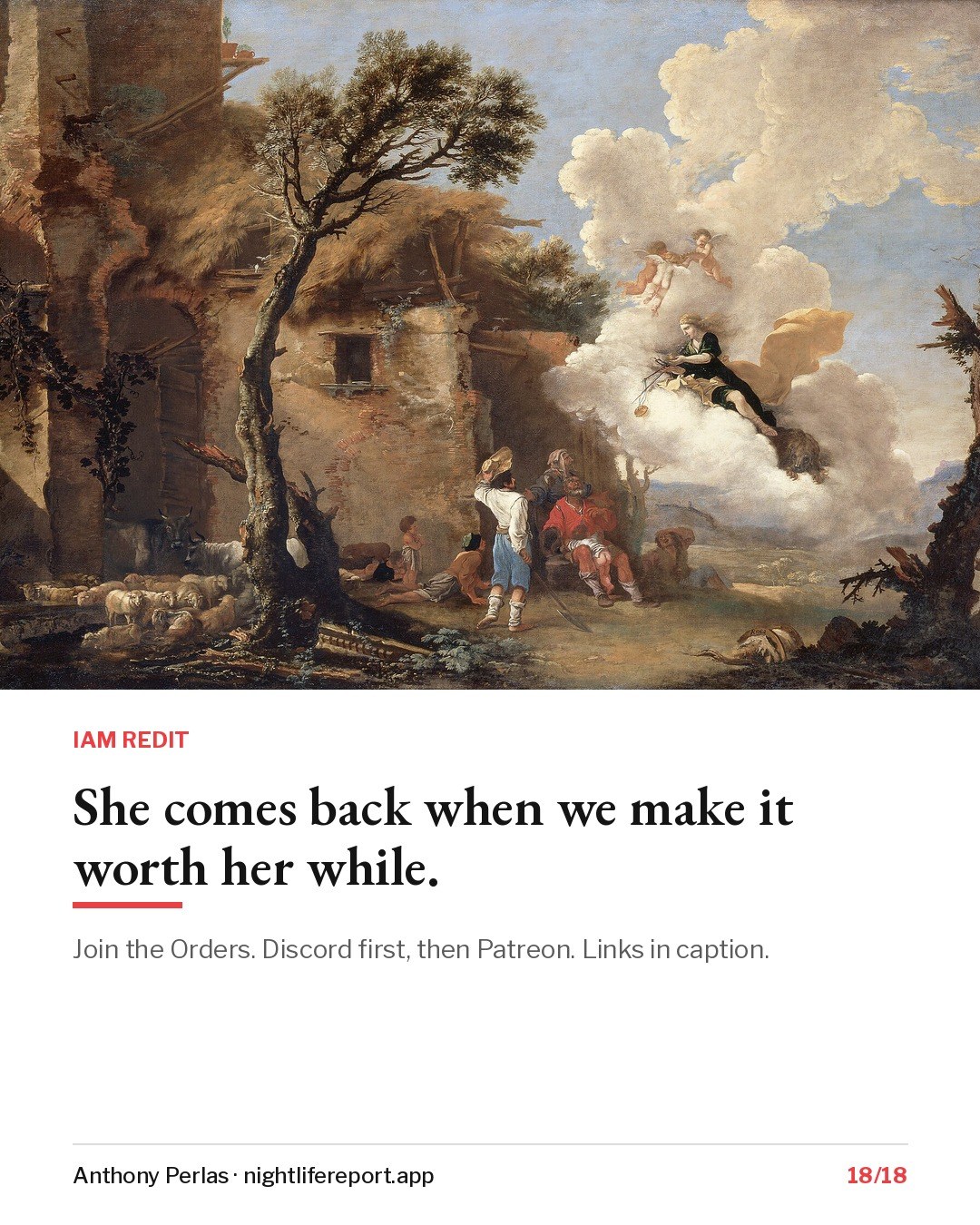
Ovid wrote that piety lay vanquished and Astraea, the star-maiden of justice, last of the heavenly ones, left the blood-soaked earth. Virgil answered: "Now the Maiden returns." Iam redit.
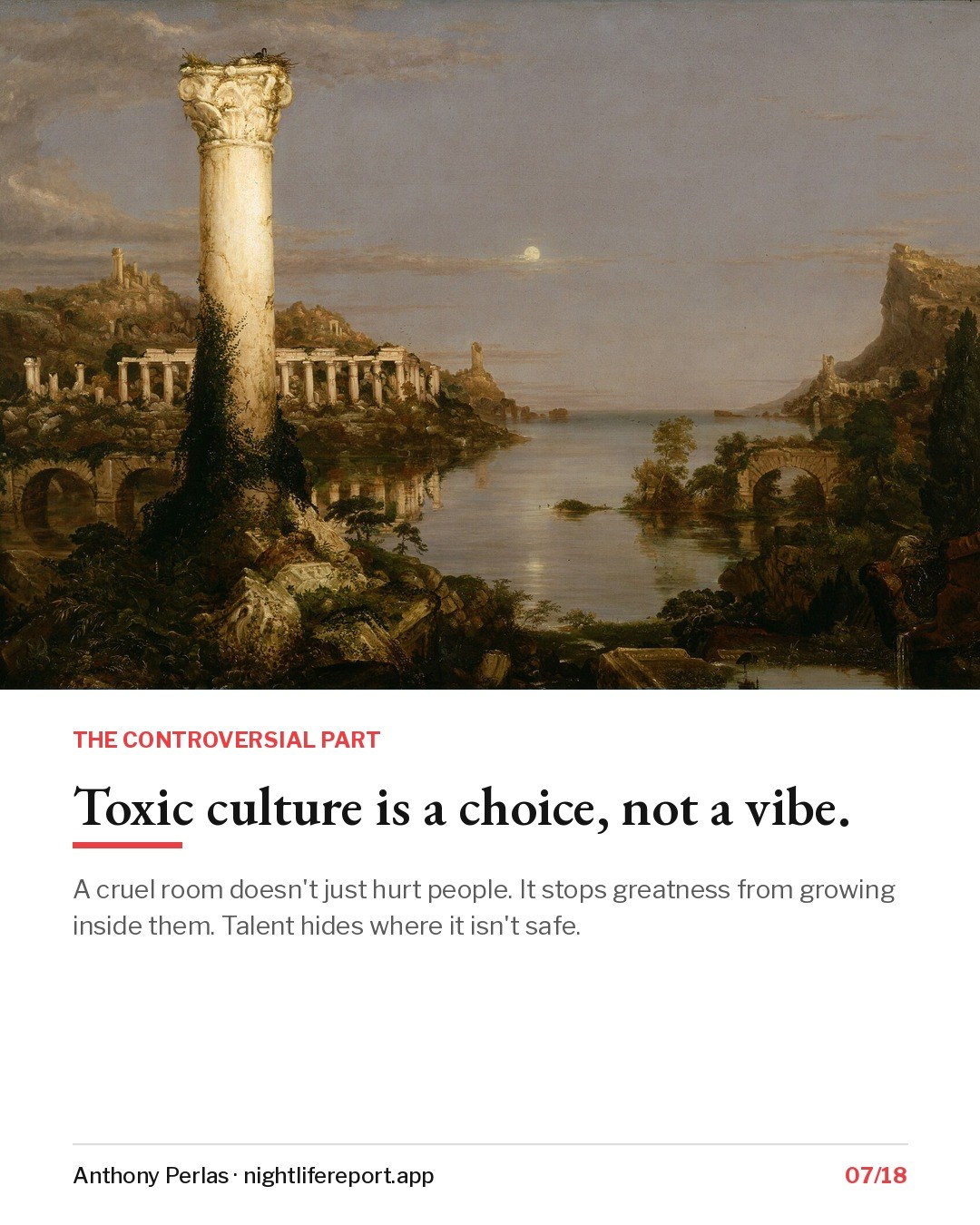
A cruel room doesn't just hurt people. It stops greatness from growing inside them. So we need a standard: keep your word, be kind when nobody's watching, never join a pile-on, call cruelty by its name, and bow to the spark in everyone. Namasté.
Toxic culture is a choice. Is kindness weakness, or the hardest power there is? Tell us below.
The full read
1. The myth, from the sources
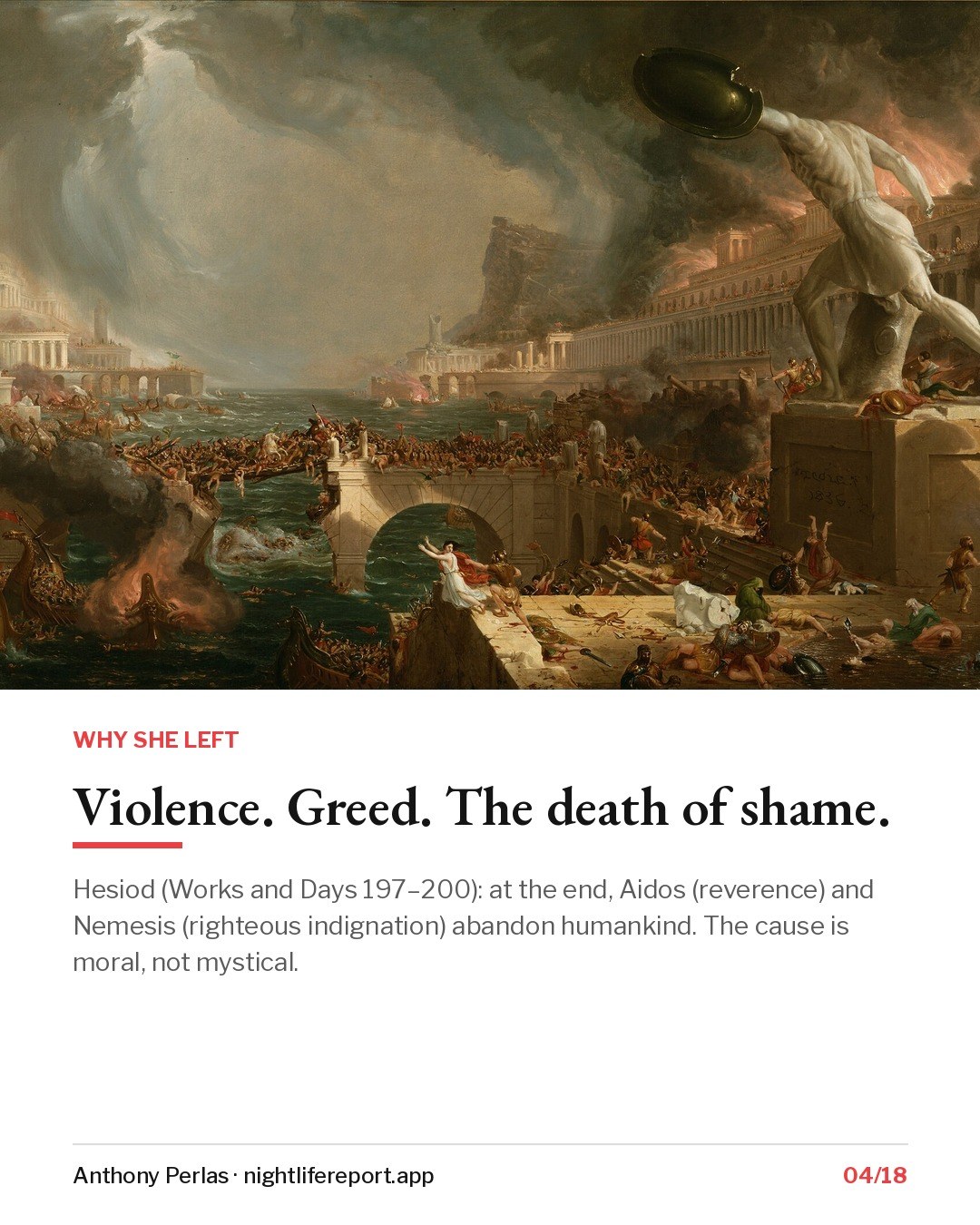
- Hesiod, Works and Days 109–201 (c. 700 BCE): the five ages of humankind — golden, silver, bronze, heroic, iron. At the end of the iron age, Aidos (shame/reverence) and Nemesis (righteous indignation) abandon humankind (lines 197–200).
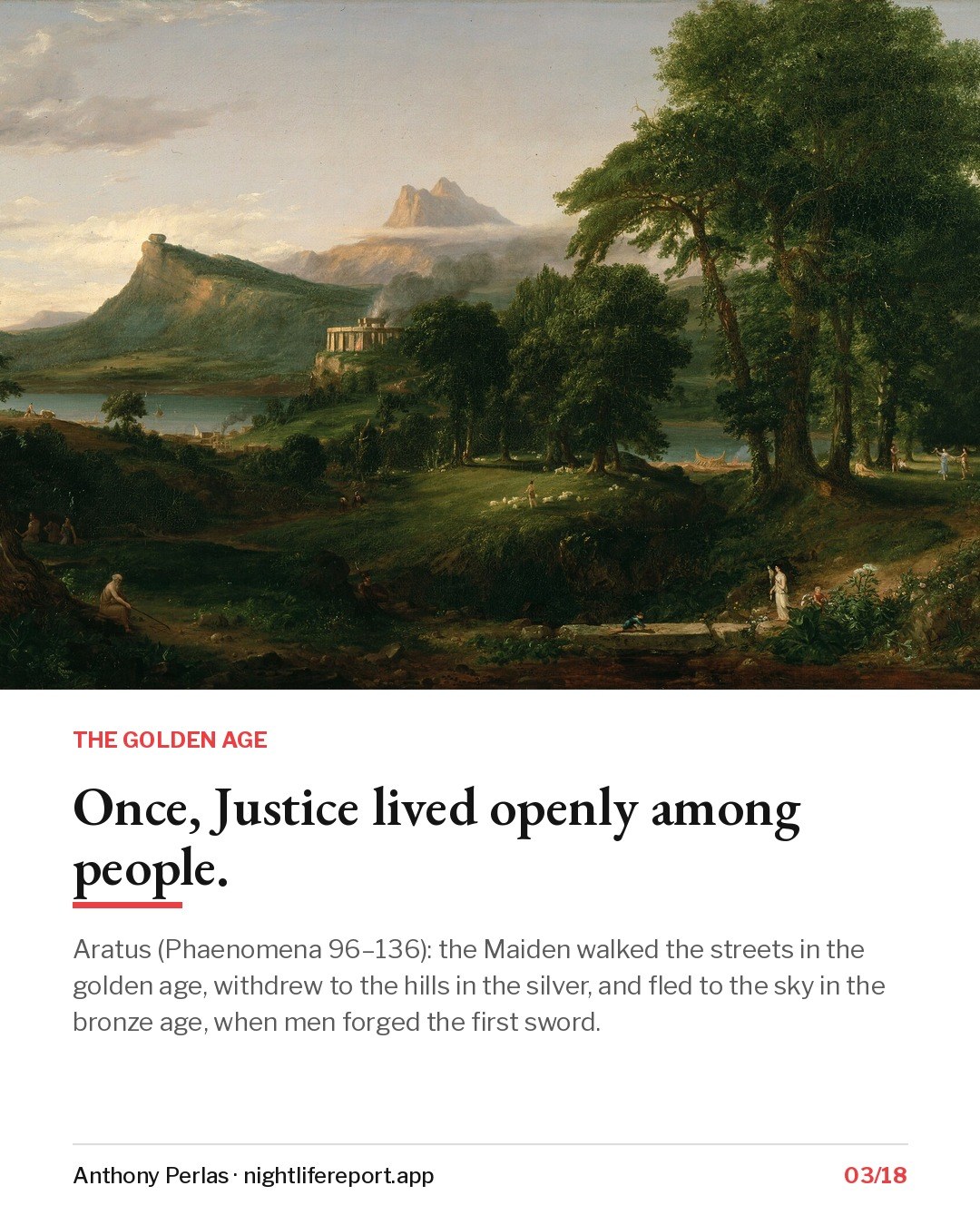
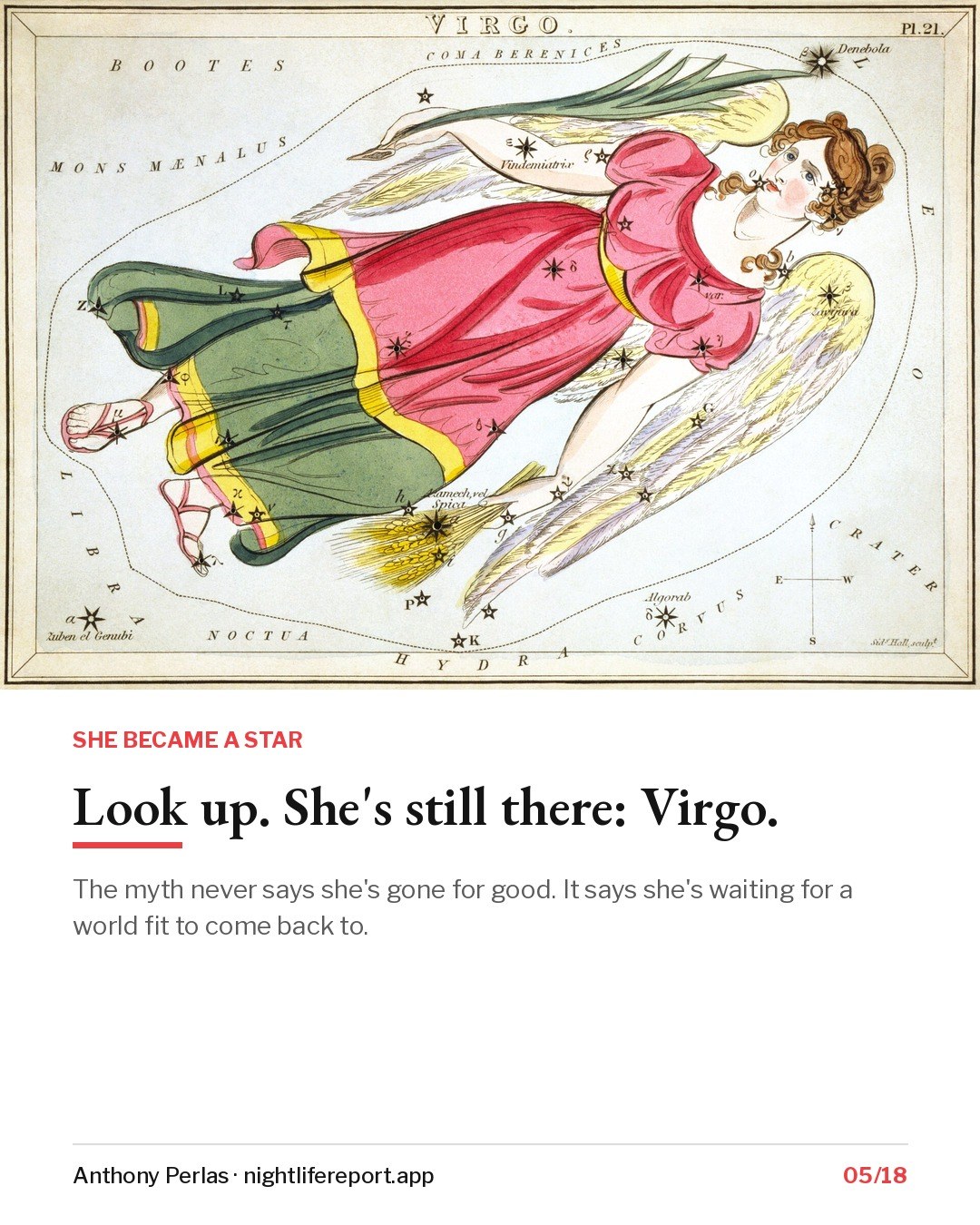
- Aratus, Phaenomena 96–136 (3rd c. BCE): the Maiden (Dikē, Justice) once lived openly among people in the golden age, withdrew to the hills in the silver age, and in the bronze age, when people forged the first sword and ate the plough-ox, she flew to heaven and became the constellation Virgo.
- Ovid, Metamorphoses 1.149–150 (8 CE): “victa iacet pietas, et virgo caede madentes / ultima caelestum terras Astraea reliquit” — “Piety lay vanquished, and the maiden Astraea, last of the heavenly ones, left the blood-soaked earth.”
- Juvenal, Satire 6.19–20: Astraea withdrew to the gods “little by little” (paulatim), with Pudicitia (Modesty) as her companion.
- Virgil, Eclogue 4.6 (c. 40 BCE): “iam redit et Virgo, redeunt Saturnia regna” — “Now the Maiden returns, the reign of Saturn returns.” The poem imagines a new golden age born in Rome.
- Later reception: Frances Yates, Astraea: The Imperial Theme in the Sixteenth Century (Routledge, 1975), traces how European courts reused the Astraea myth as a symbol of a just, renewed order.
What the sources agree on: justice doesn’t get taken from the earth. She leaves once people make the place unlivable — through violence, greed and the loss of shame and reverence. In Ovid the trigger is moral (piety defeated), not supernatural.
2. The thesis
The gods never left because they were cruel. They left because we were. Astraea was the last to go, and the poets’ point is that she can come back. Virgil didn’t write “the Maiden is gone forever.” He wrote iam redit: she is returning, now.
RelatedWhy Wednesday Is Mercury’s Day: Dies Mercurii and the Seven-Day Week
So the job isn’t waiting for a miracle. It’s building a culture that greatness can actually live in. A toxic room doesn’t just hurt people; it stops excellence growing inside them. Talent needs safety to show itself, the way a seed needs soil. That’s why we need a standard of conduct. Not rules forced on outsiders, but a code we choose for ourselves.
3. The golden might within [SOURCE + THESIS]
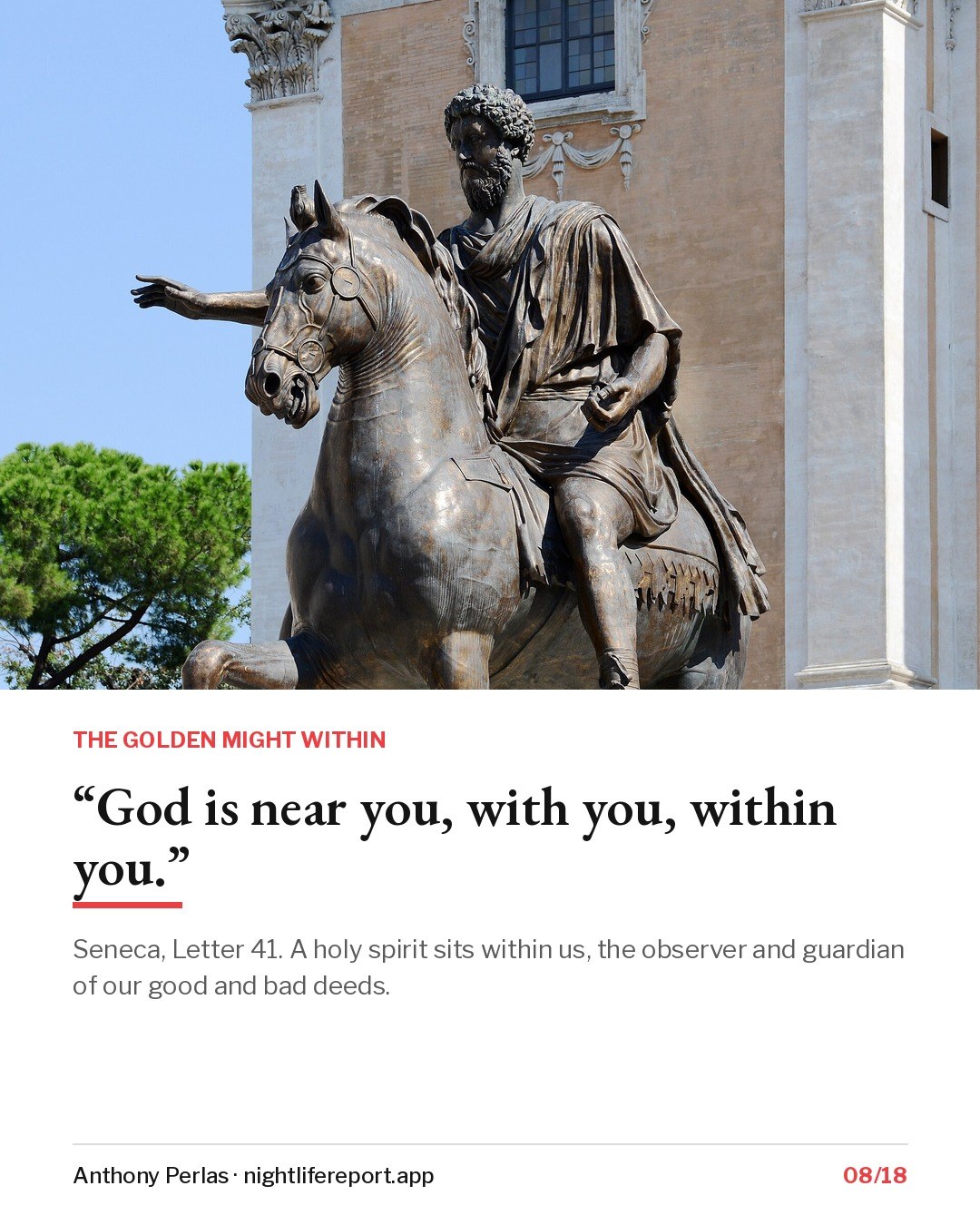
- Seneca, Letter 41.1–2: “prope est a te deus, tecum est, intus est … sacer intra nos spiritus sedet” — “God is near you, with you, within you … a holy spirit sits within us, the observer and guardian of our good and bad deeds.”
- Marcus Aurelius, Meditations 2.1: we were made to work together, “like feet, like hands, like eyelids, like the rows of upper and lower teeth”; to work against one another is contrary to nature.
- Seneca, Letter 95.52: “membra sumus corporis magni” — “we are members of one great body.”
- Terence, Heauton Timorumenos 77: “homo sum, humani nihil a me alienum puto” — “I am human; I consider nothing human foreign to me.”
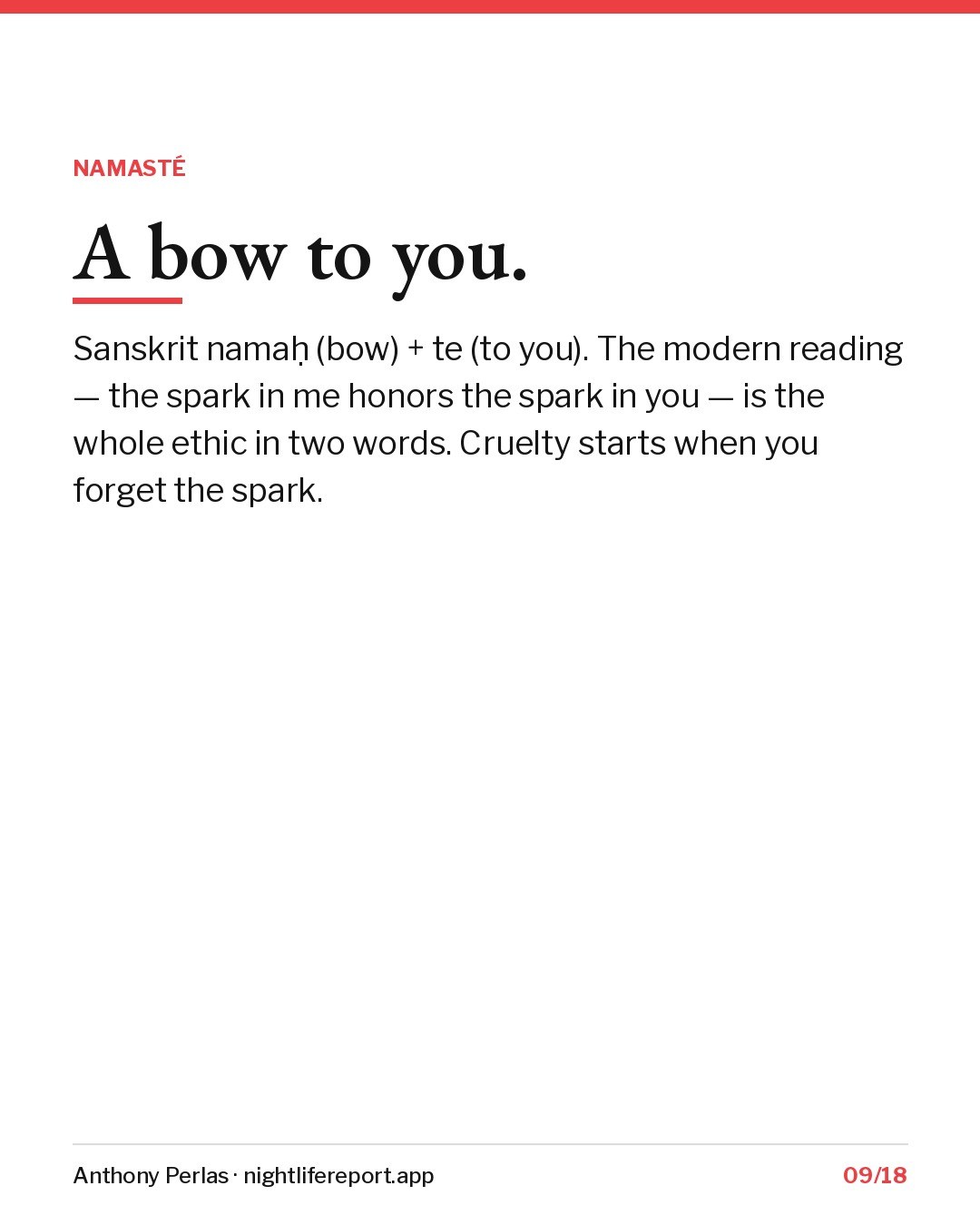
- Namasté: Sanskrit namaḥ (“bow, obeisance”) + te (“to you”), literally “a bow to you.” The popular gloss “the divine in me honors the divine in you” is a modern interpretation, not a literal translation. We use it as that modern gloss and label it that way.
Thesis: every person carries a spark worth bowing to. Cruelty is just forgetting that.
4. The laws: ethics, kindness, gentleness
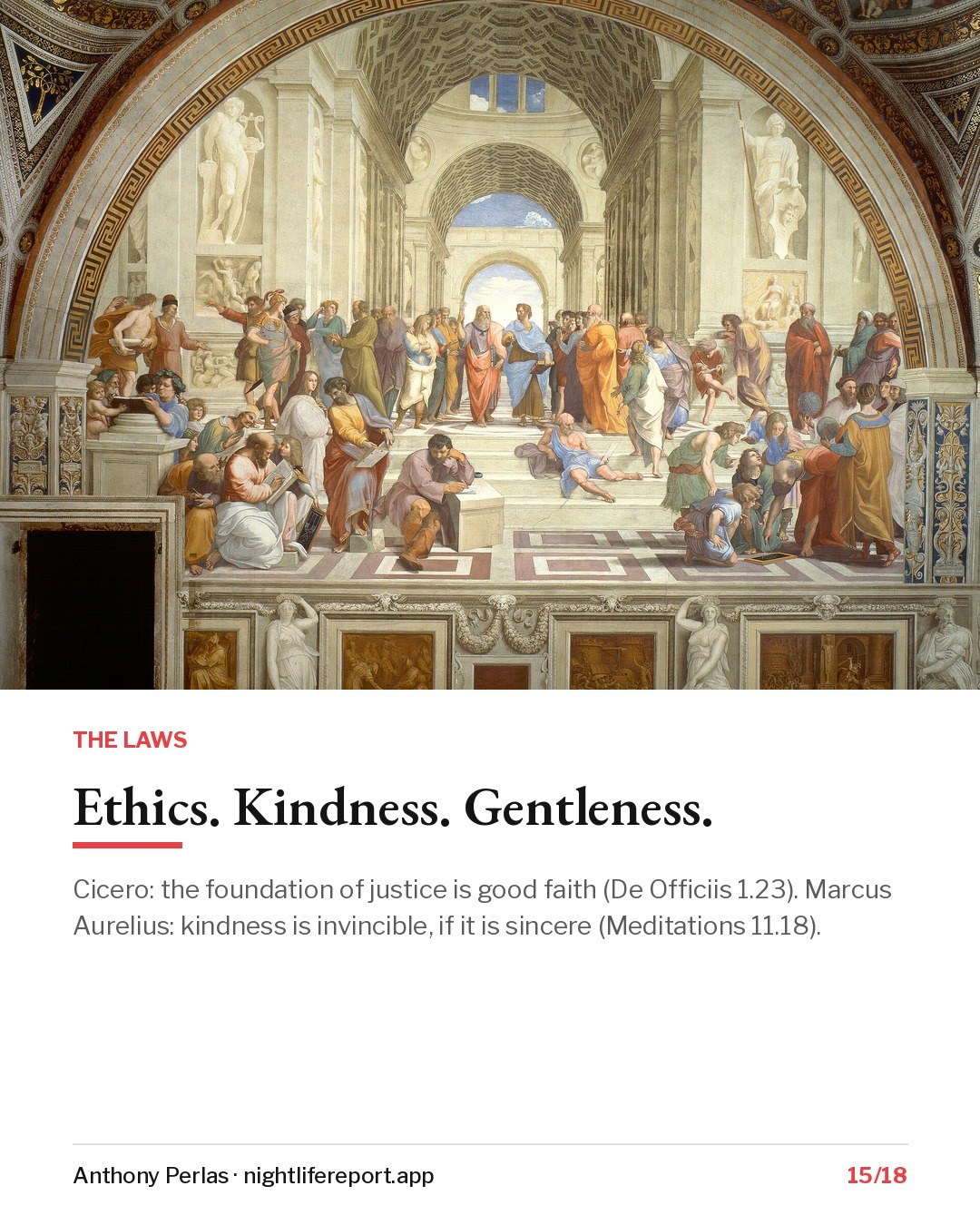
- Cicero, De Officiis 1.23: “fundamentum autem est iustitiae fides” — “the foundation of justice is good faith” (keeping your word).
- Marcus Aurelius, Meditations 11.18: kindness is invincible, if it is sincere and not a fake smile or an act.
- Seneca, De Ira (On Anger): anger is a short madness that wrecks the person who feels it. The cure is delay and reflection.
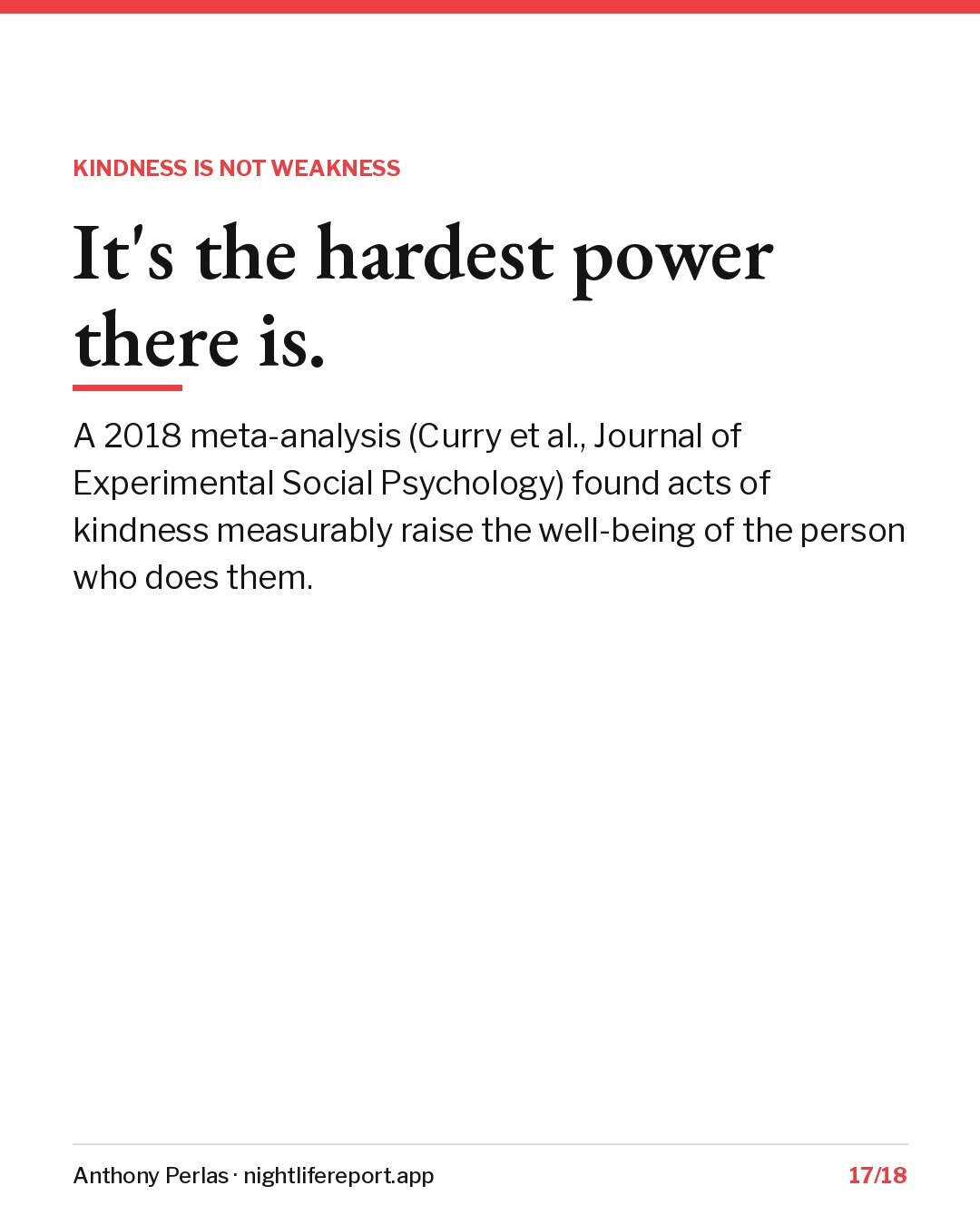
- Evidence on kindness: Curry, O. S., et al. (2018), “Happy to help? A systematic review and meta-analysis of the effects of performing acts of kindness on the well-being of the actor,” Journal of Experimental Social Psychology 76, 320–329. They found a small-to-medium positive effect of kindness on the wellbeing of the person being kind.
5. The common ways people are cruel, and how to break them
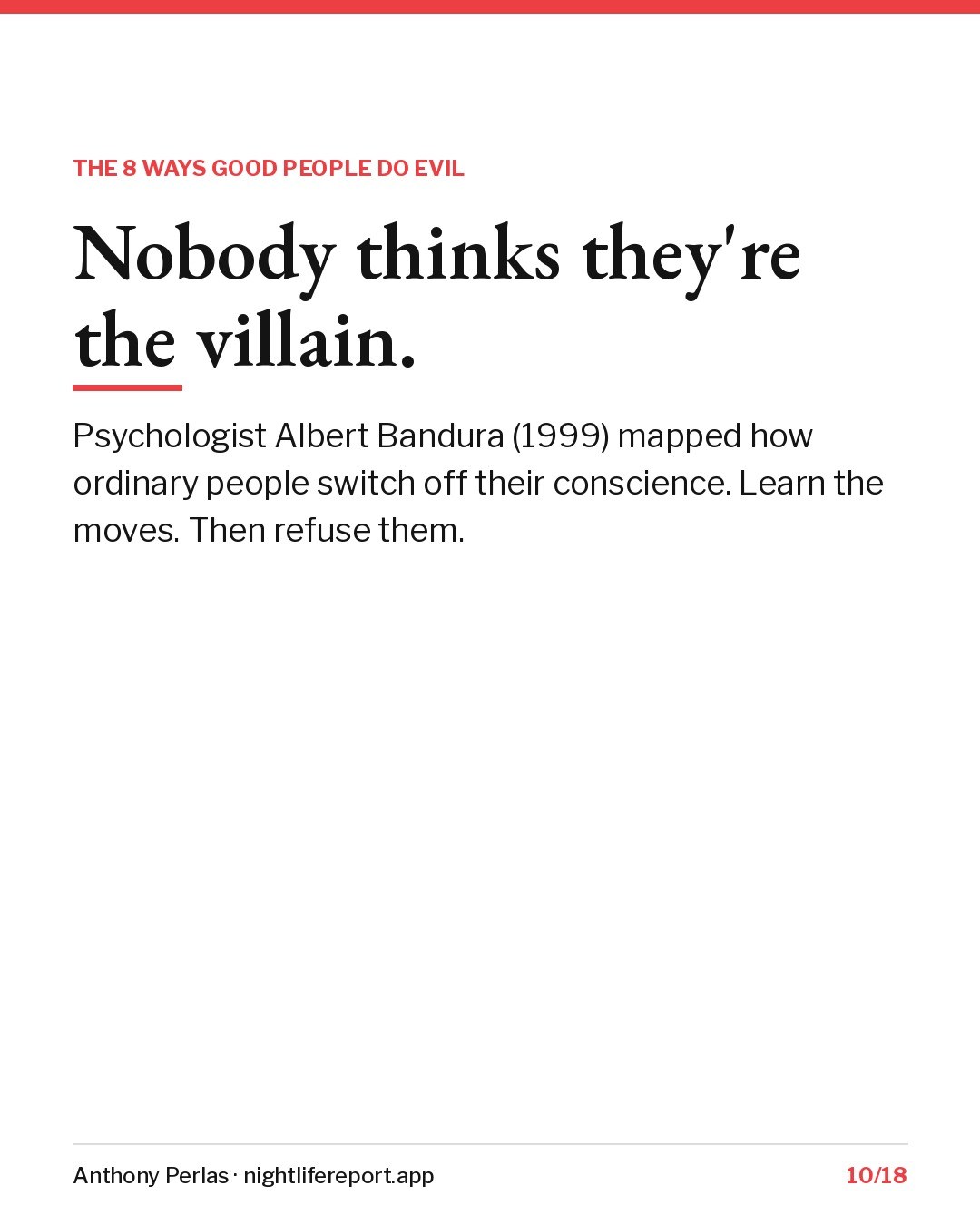
Main framework: Albert Bandura (1999), “Moral disengagement in the perpetration of inhumanities,” Personality and Social Psychology Review 3(3), 193–209. Ordinary people do harm without feeling like bad people through these mechanisms:
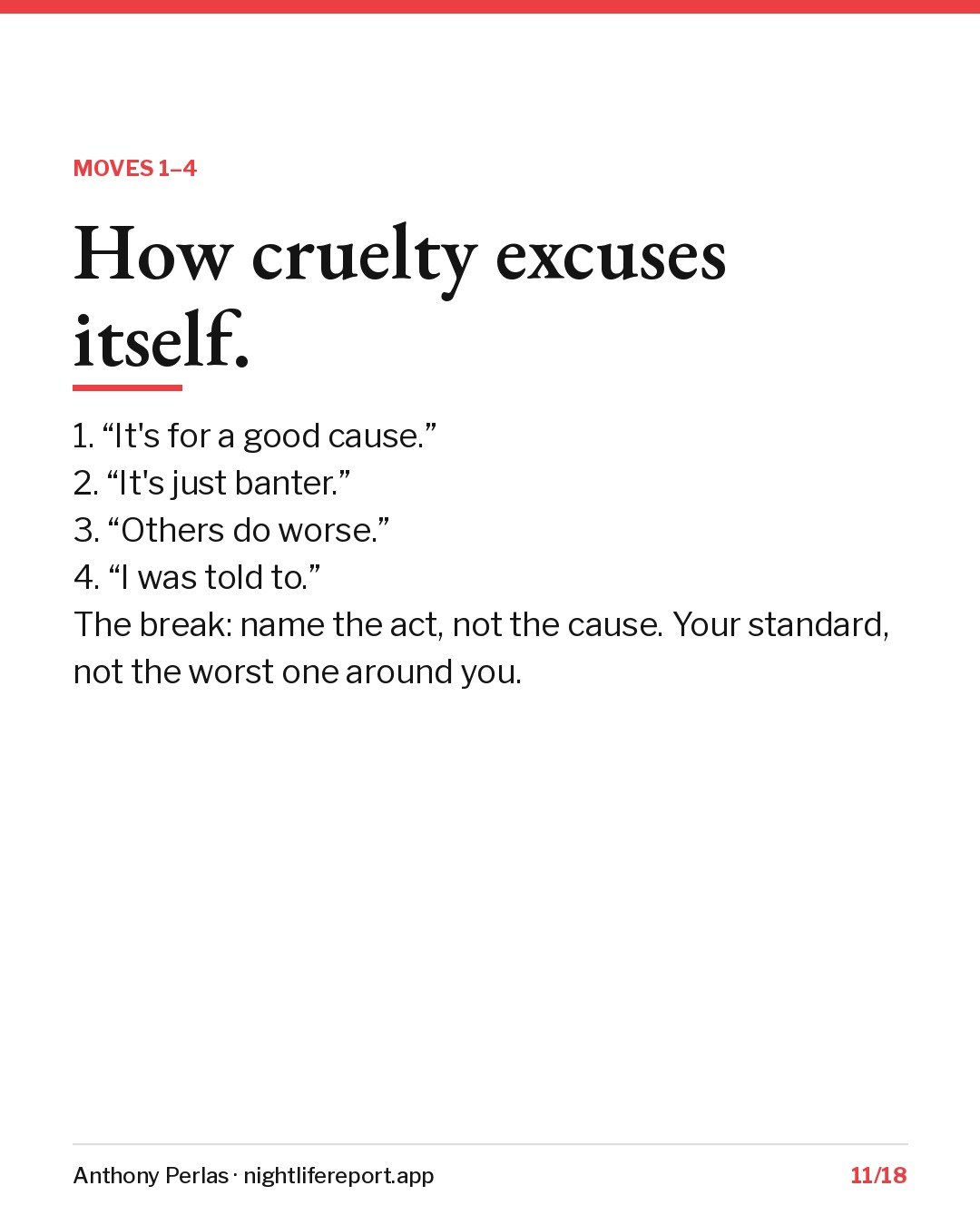
| Pattern (Bandura) | What it sounds like | The break |
|—|—|—|
| Moral justification | “It’s for a good cause.” | No cause is served by cruelty. Name the act, not the cause. |
| Euphemistic labeling | “It’s just banter.” | Call it what it is. |
| Advantageous comparison | “Others do worse.” | Judge yourself by your standard, not the worst person around you. |
| Displacement of responsibility | “I was told to.” | Orders don’t move the guilt off you. |
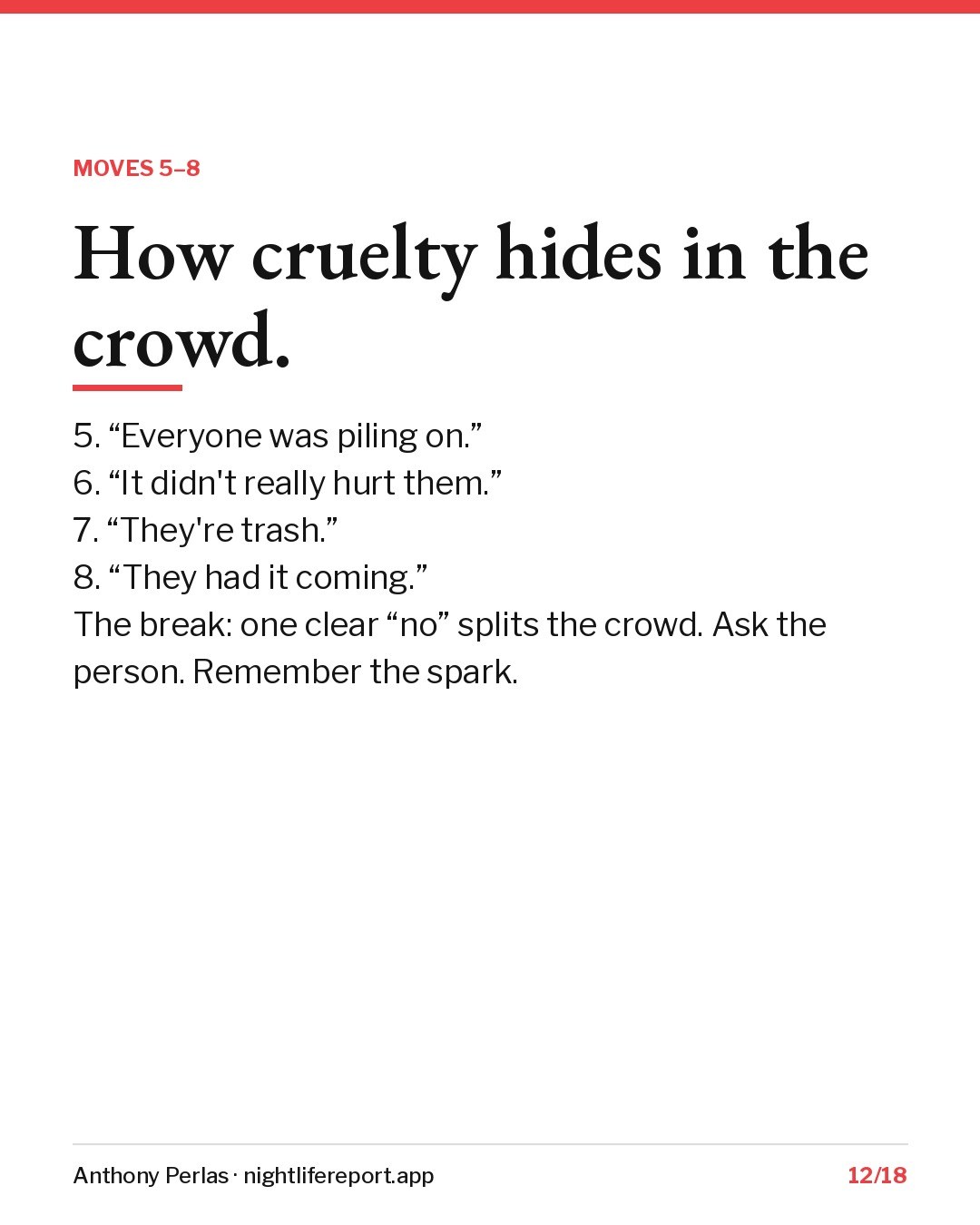
| Diffusion of responsibility | “Everyone was piling on.” | One clear “no” breaks the crowd. |
| Distorting consequences | “It didn’t really hurt them.” | Ask the person. |
| Dehumanization | “They’re trash / NPCs.” | Remember the spark within. Namasté. |
| Attribution of blame | “They had it coming.” | Their faults don’t give you permission. |
Supporting studies:
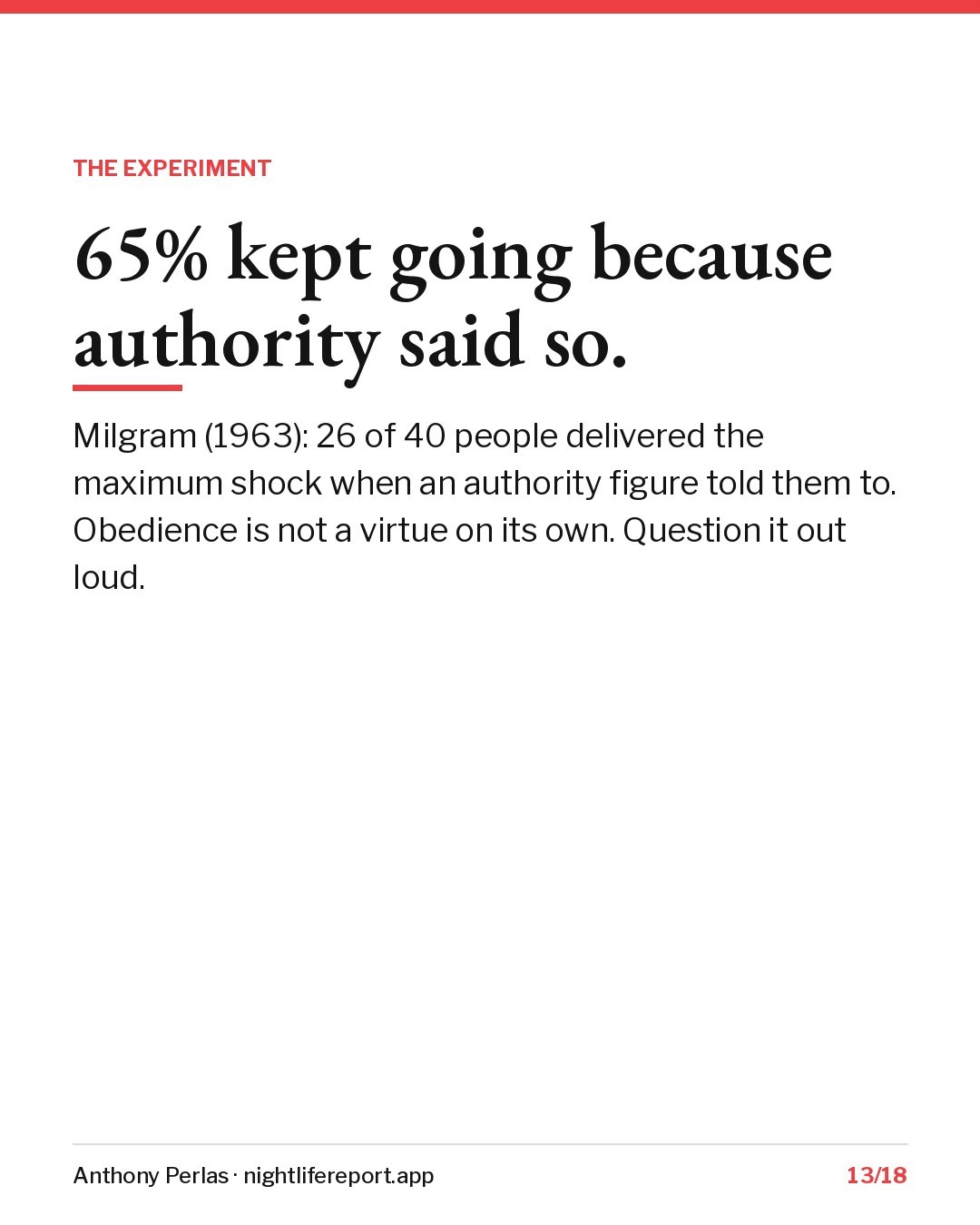
– Obedience: Milgram, S. (1963), “Behavioral study of obedience,” Journal of Abnormal and Social Psychology 67(4), 371–378. 26 of 40 participants (65%) went to the maximum shock level when an authority told them to. The break is to question authority out loud.
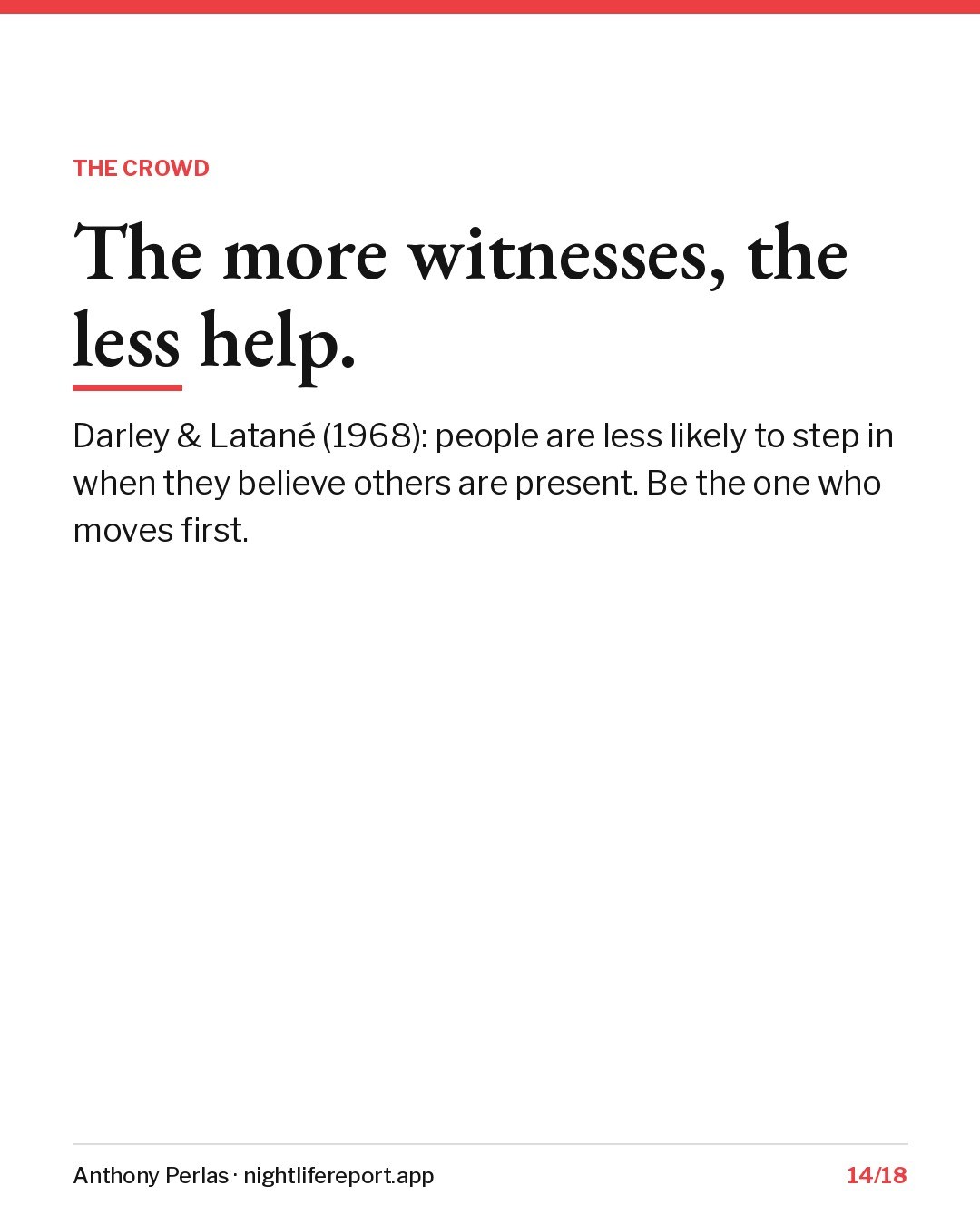
– Bystanders: Darley, J. M., & Latané, B. (1968), “Bystander intervention in emergencies: Diffusion of responsibility,” JPSP 8(4), 377–383. People are less likely to help when they believe others are present. The break is to be the one who acts.
– Mobbing: Leymann, H. (1990), “Mobbing and psychological terror at workplaces,” Violence and Victims 5(2), 119–126. This is group-coordinated hostility toward one target. The break is to refuse to join in and to document it.
– Contempt: Gottman, J. M., & Levenson, R. W. (2000), “The timing of divorce,” Journal of Marriage and Family 62(3), 737–745. Contempt and criticism predict relationships breaking down. The break is to replace contempt with curiosity.
6. The standard of conduct (a draft code for the Orders)
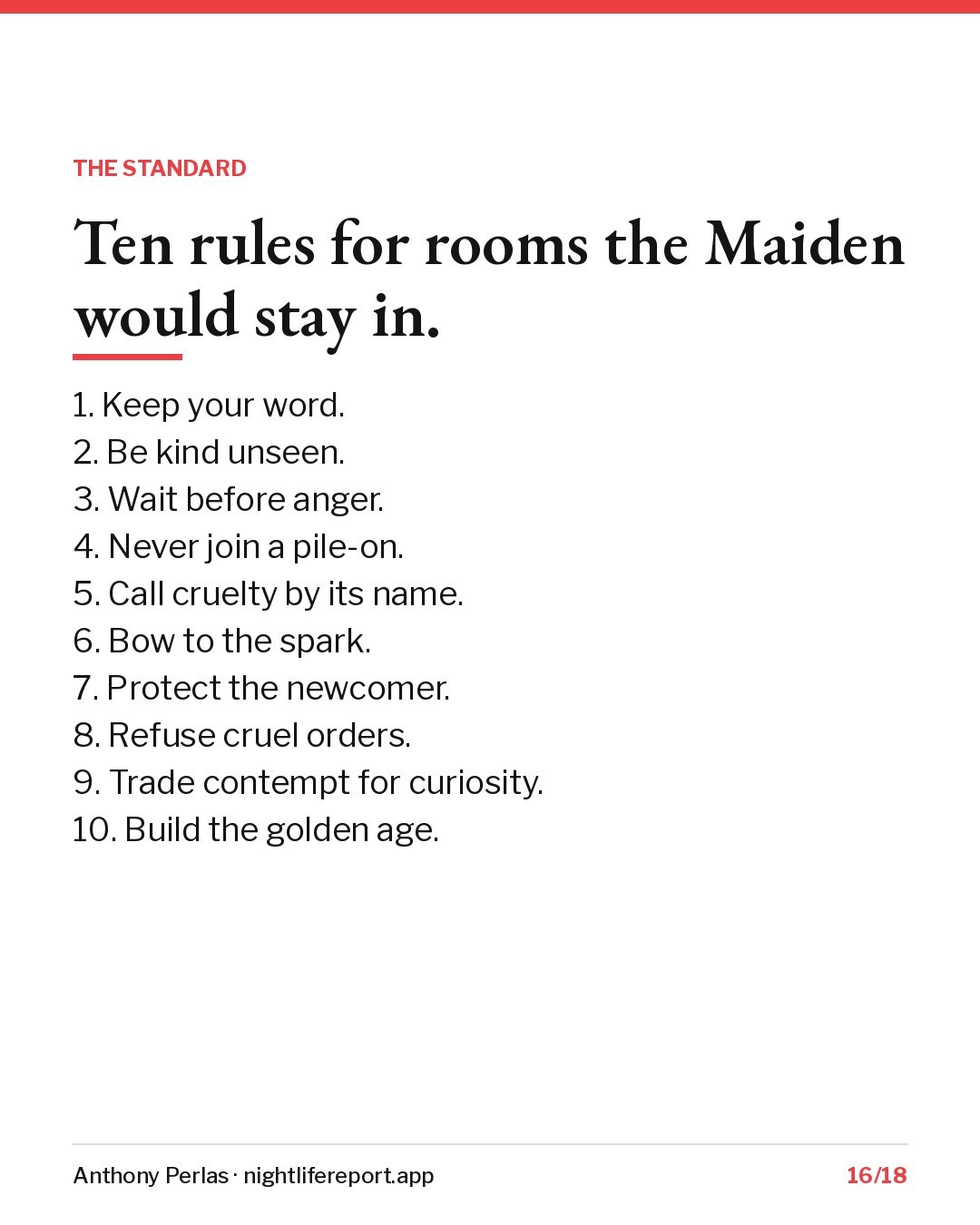
- Keep your word (Cicero’s fides).
- Be kind when nobody’s watching (Marcus 11.18).
- Wait before you get angry (Seneca, De Ira).
- Never join a pile-on (Darley & Latané; Leymann).
- Call cruelty by its real name (Bandura: no euphemisms).
- Bow to the spark in everyone (Seneca 41; Namasté).
- Protect the newcomer, because that’s where greatness grows.
- Refuse an order that requires cruelty (Milgram).
- Swap contempt for curiosity (Gottman).
- Build rooms where the Maiden would stay (Virgil, iam redit).
7. Why this is controversial, said honestly
- Claim: “Toxic culture is a choice, not a vibe.” Most people blame “the times.” Ovid blames the people.
- Claim: “Being nice isn’t weakness. It’s the hardest power there is.” That pushes back on internet tough-guy culture.
- What we don’t claim: we don’t say gods or angels literally live in rooms. That’s the poets’ image, and we use it as a metaphor for excellence and trust.
Notes on sources
Art (all public domain, Wikimedia Commons)
- Salvator Rosa, Astraea Leaves the Earth, Kunsthistorisches Museum, GG 9823
- Salvator Rosa, The Return of Astraea, Kunsthistorisches Museum, GG 1613
- Thomas Cole, The Course of Empire: The Arcadian State, Destruction, Desolation (1836)
- Sidney Hall, Urania’s Mirror: Virgo (1824)
- Equestrian statue of Marcus Aurelius, Capitoline Hill (photo, public domain)
- Raphael, The School of Athens (1509–11)
The carousel, slide by slide
First published as a carousel on Instagram @lillithmagic.
Credits
- Research, text and slide design: Anthony Perlas / Nightlife Report · original work
- Art: Salvator Rosa, Astraea Leaves the Earth and The Return of Astraea (Kunsthistorisches Museum); Thomas Cole, The Course of Empire; Sidney Hall, Urania’s Mirror: Virgo; Raphael, The School of Athens; equestrian statue of Marcus Aurelius · Wikimedia Commons · public domain
- Texts: Hesiod, Aratus, Ovid, Juvenal, Virgil, Seneca, Cicero, Marcus Aurelius; studies by Bandura, Milgram, Darley and Latané, as cited in the article
Join the room
Talk it through with us on Discord. Then back the work on Patreon.
Anthony Perlas · nightlifereport.app
You might also like
 Field ReportsBen Franklin Was Joking. We Changed the Clocks Anyway.
 GuidesLA Tennis and Getaways: Courts to Play On, Spa Days and Coastal Escapes
 NightlifeBelief Won’t Save You. Building Will.
 NightlifeAruba Fashion Week at 10: The Island That Built Its Own Runway
 NightlifeThe Dance-Floor Calendar: Los Angeles From Thanksgiving Week to New Year’s Eve
 VideoWhy Thursday Is Jupiter’s Day: Dies Iovis and the Spiritual Forecast
Leave a Reply